Sonotube Calculator: Concrete Volume, Bags & Cost (2026)
Calculate exactly how much concrete you need to fill a Sonotube — in cubic feet, cubic yards, and 60 lb or 80 lb bags. Enter the tube diameter, height, and number of tubes to get your total volume and cost estimate instantly.
Formula: π × (Diameter ÷ 2)² × Height = Volume per tube. 2026 concrete bag pricing included.
Sonotube calculator
How to calculate Sonotube concrete volume
A Sonotube is a cylindrical concrete form. Volume calculation is based on two measurements: the inside diameter of the tube and the pour height. Getting both right before you order bags saves a second trip to the hardware store on pour day.
Volume (cu ft) = π × (Diameter in ft ÷ 2)² × Height in ft
Example: 10-inch diameter × 42-inch depth = π × (0.833 ÷ 2)² × 3.5 = 0.19 cu ft per tube
For 4 tubes with 10% waste: 0.19 × 4 × 1.10 = 0.84 cu ft → 2 × 80 lb bags
The Sonotube diameter listed on the packaging is the outside diameter. The inside diameter — which is what determines concrete volume — is typically 1/8 inch to 1/4 inch smaller. For most residential jobs this difference is negligible. On large-diameter tubes (18 in and above) the wall thickness is worth checking on the manufacturer's spec sheet.
Step-by-step Sonotube calculation
- 1Determine your frost depth. The bottom of the footing must sit below the local frost line — otherwise freeze-thaw cycles will heave the footing and shift your structure. Frost depth in the northern US and Canada ranges from 36 inches (3 ft) in moderate climates to 72 inches (6 ft) in Minnesota, Manitoba, and similar zones. Check your local building code — it is the single most important input in the calculator.
- 2Select the correct tube diameter for your load. A 6-inch tube suits light fence posts and small garden structures. An 8- to 10-inch tube covers most residential deck posts. A 12-inch tube is standard for heavier decks and pergolas. Anything carrying a structural load — a room addition, a covered porch, a beam — typically requires 12 inches minimum and may require an engineer's specification.
- 3Count the exact number of tubes. Count every post location in your plan — including corner posts, mid-span posts, and stair posts. Missing one post is the most common cause of under-ordering on pour day. Add one tube to your count as a buffer if you are pouring alone or in hot weather where fast setup limits your working time.
- 4Choose 80 lb bags for efficiency. An 80 lb bag yields 0.60 cu ft of mixed concrete and costs roughly the same per cubic foot as a 60 lb bag. Use 60 lb bags only if you are mixing by hand without a mixer and cannot safely lift 80 lb. On any job with 6 or more tubes, a rented electric mixer pays for itself in time and back strain.
- 5Add 10% wastage minimum. Wastage on Sonotube pours comes from uneven tube bottoms, spillage around the tube top, and residual concrete in the mixing tub that cannot be fully scraped out. Round up to whole bags — never round down. A leftover bag of concrete costs $7. A second hardware store run costs you two hours.
Sonotube sizes: volume, bags & coverage (2026)
| Tube diameter | Volume per foot of depth | 80 lb bags per foot | Typical application | Load capacity (guide) |
|---|---|---|---|---|
| 6 inch | 0.196 cu ft | 0.33 bags | Fence posts, light pergola | Light — garden structures |
| 8 inch | 0.349 cu ft | 0.58 bags | Deck posts (small deck) | Medium — residential deck |
| 10 inch | 0.545 cu ft | 0.91 bags | Deck posts (standard) | Medium — residential deck |
| 12 inch | 0.785 cu ft | 1.31 bags | Heavy deck, pergola column | Medium-heavy |
| 14 inch | 1.069 cu ft | 1.78 bags | Commercial post base | Heavy |
| 16 inch | 1.396 cu ft | 2.33 bags | Structural column footing | Heavy — engineer spec |
| 18 inch | 1.767 cu ft | 2.95 bags | Large structural column | Heavy — engineer spec |
| 24 inch | 3.142 cu ft | 5.24 bags | Commercial / industrial | Very heavy — engineer spec |
Volumes above are calculated using the nominal inside diameter. Actual inside diameter may vary by manufacturer by up to 1/4 inch. For tubes 16 inches and above, confirm inside diameter on the tube label before calculating.
Concrete bag cost per Sonotube size — 2026 pricing
| Tube size | Depth (frost line) | 80 lb bags needed | Cost at $7.50/bag | Cost at $9.00/bag |
|---|---|---|---|---|
| 8 inch | 42 in | 2 | $15 | $18 |
| 10 inch | 42 in | 3 | $22.50 | $27 |
| 10 inch | 48 in | 4 | $30 | $36 |
| 12 inch | 42 in | 4 | $30 | $36 |
| 12 inch | 60 in | 7 | $52.50 | $63 |
| 14 inch | 42 in | 6 | $45 | $54 |
| 16 inch | 48 in | 12 | $90 | $108 |
Bag prices reflect 2026 retail pricing at major home improvement retailers (Home Depot, Lowe's, Rona). Quikrete 80 lb bags run $7.00–$8.50. Sakrete 80 lb bags run $7.50–$9.00. Prices vary by region — western Canada and remote US locations carry a delivery surcharge of $1.50–$3.00 per bag.
When to order ready-mix instead of bags: If your project requires more than 1 cubic yard (27 cu ft) of concrete total, ready-mix delivery is almost always cheaper per cubic foot than bagged concrete. A typical ready-mix minimum load is 1 yard. For a deck with 8 × 10-inch tubes at 42-inch depth, total volume is approximately 0.48 cu ft — bagged concrete is correct. For 16 × 12-inch tubes at 60-inch depth, total volume is approximately 1.05 cu ft — price a ready-mix load against the bag cost before ordering.
Common mistakes when filling Sonotubes
Setting the tube above the frost line. The most expensive Sonotube mistake is also the most common. If the bottom of the footing sits above the frost line, frost heave lifts the footing every winter — shifting posts, cracking beams, and eventually destroying the structure. Check local frost depth before digging, not after. In Winnipeg and Minneapolis, the frost line is 60–72 inches. In Atlanta, it is 12 inches. These are not interchangeable.
Leaving the cardboard form in the ground. Sonotube is designed to be stripped after the concrete cures — typically 24 to 48 hours after the pour. Leaving the cardboard tube in the ground allows moisture to wick along the tube, which accelerates rot at the concrete-soil interface and can cause the footing to shift over time. Peel the tube off before backfilling.
Pouring into a water-filled hole without pumping first. Standing water in a footing hole dilutes the cement paste at the base of the pour — reducing the water-cement ratio and weakening the bottom of the footing. Pump or bail the hole dry before pouring. If groundwater refills faster than you can pump, add a perforated pipe sleeve or consult a contractor about a wet-pour mix design.
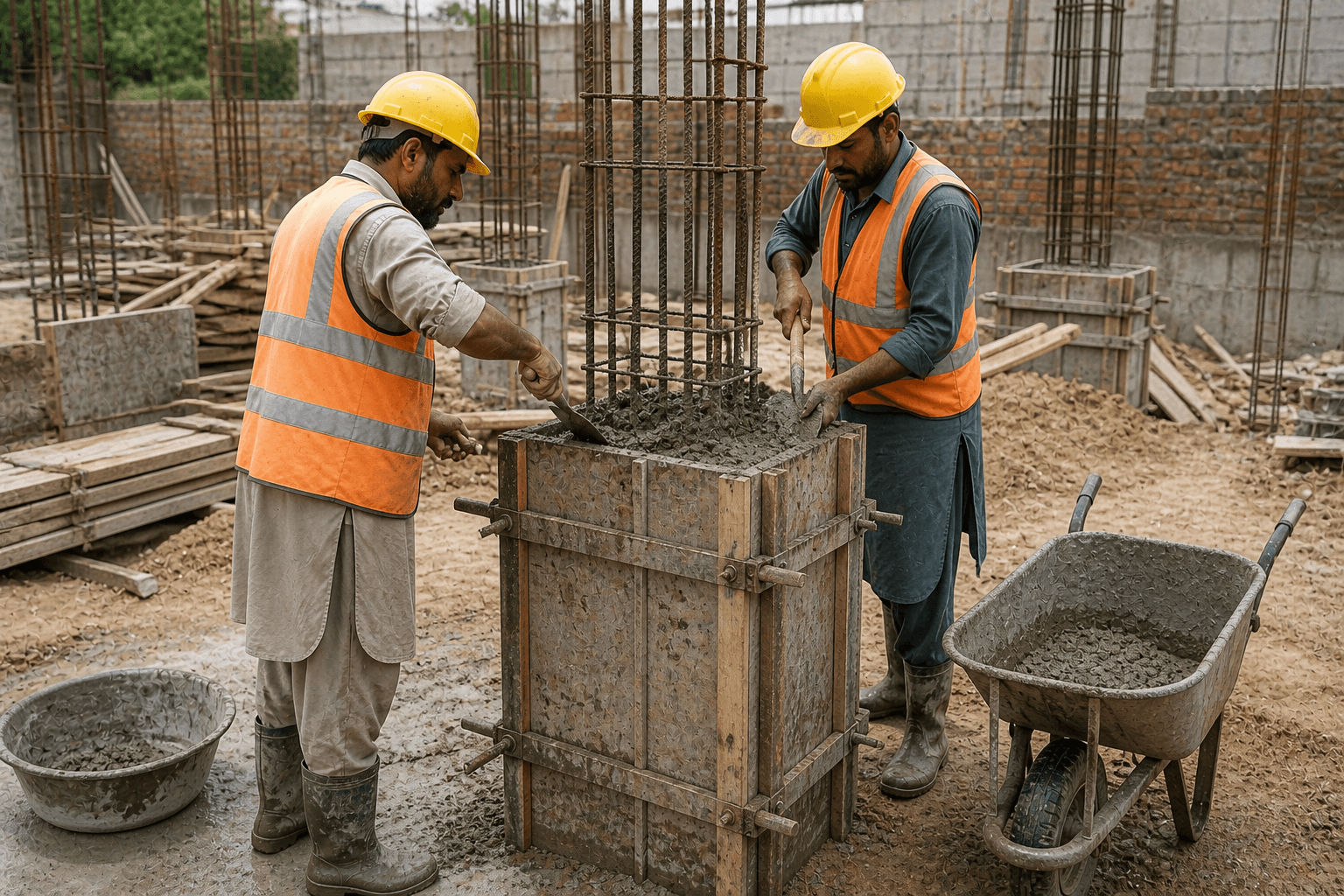
Not rodding or vibrating the pour. Air voids trapped in the concrete reduce strength and create pathways for moisture. After each bag is poured, rod the concrete with a piece of rebar or a stick — insert it 10–12 times around the tube perimeter to release trapped air. On larger tubes (14 inch and above), a concrete vibrator rented from a tool hire shop produces a significantly stronger result.
Installing the post anchor before the concrete is fully cured. Quikrete and Sakrete 80 lb bags reach initial set in 20–40 minutes and full working strength in 24–48 hours. Setting the post anchor or J-bolt immediately after the pour — while the concrete is still plastic — is fine and necessary for alignment. Applying load to the anchor (attaching the post beam) before 24 hours risks shifting the anchor before the concrete has enough strength to hold position.