Pool Cost Estimator: Calculate Your Inground Pool Cost in 60 Seconds (2026)
A standard inground pool costs $35,000–$100,000+ to build in 2026. The final number depends on 7 variables — pool type, size, location, soil, deck, permits, and add-ons. This free calculator gives you a phase-by-phase budget range before you talk to a single contractor. No sign-up. No sales call.
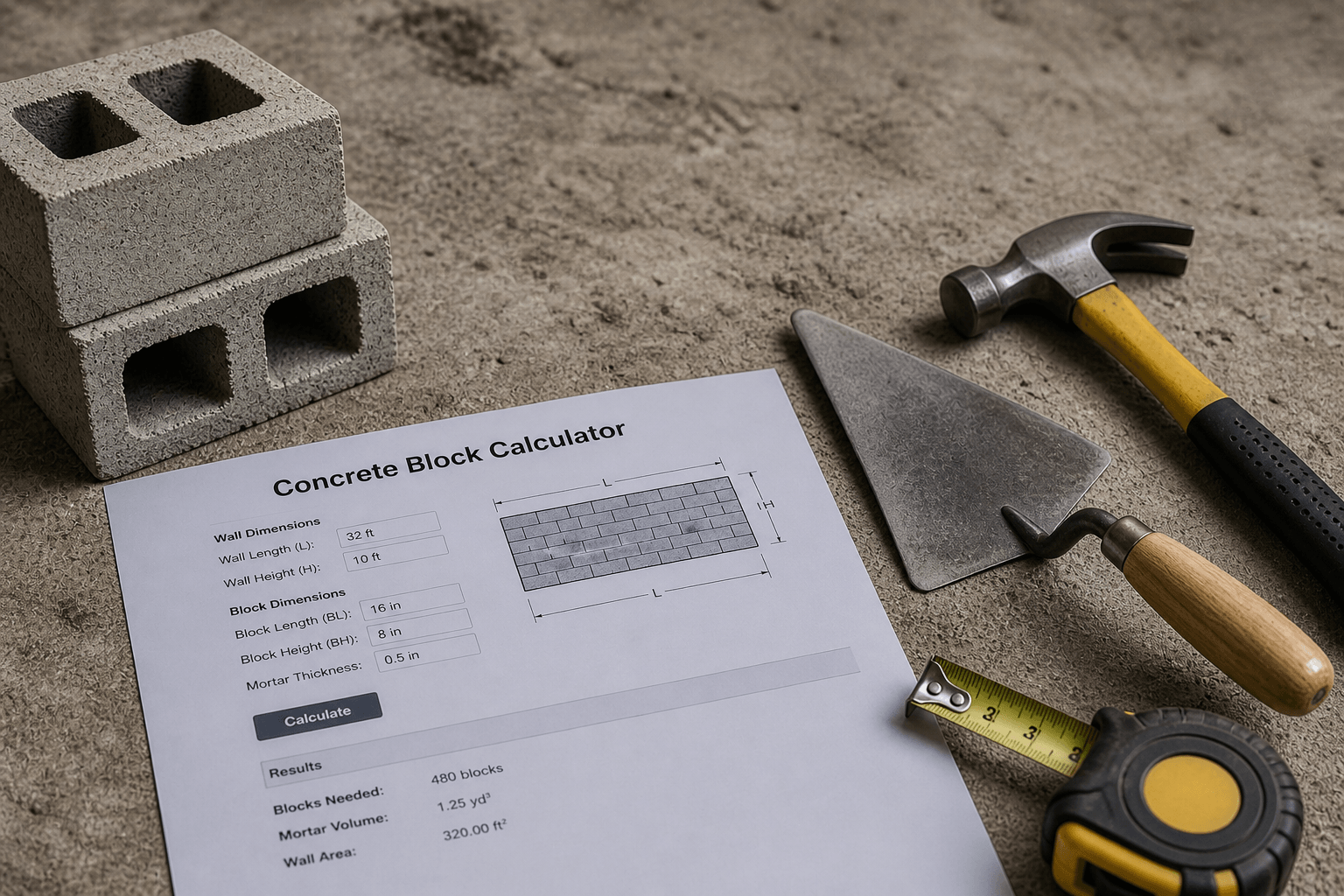
Calculate your pool budget
Every field updates the estimate on the right in real time.
Estimated total range
4 inputs in, 5 cost phases out
Most homeowners walk into contractor meetings with no numbers. Contractors know this. Getting a baseline estimate first puts you in control of every conversation.
4 inputs the calculator needs
- Pool type — concrete, fiberglass, vinyl liner, or above-ground
- Dimensions — length × width × average depth in feet
- State — labor rates vary up to 40% between California and Arizona
- Add-ons — heater, saltwater system, lighting, spa, or deck
What the estimator outputs
- Base shell cost, low to high
- Excavation cost based on volume
- Materials and interior finish
- Permits and mechanical equipment
- A total range — not a single number, so you know where flexibility exists
Pool cost by type: 2026 national averages
4 main pool types exist, and the price gap between the cheapest and most expensive is $90,000. Picking the right type before you build is the single biggest cost decision you make.
Concrete / gunite pool cost
Concrete pools cost $50,000–$100,000 for a standard 14×28 ft build. Custom shapes, beach entries, integrated spas, and infinity edges push the total to $120,000+. PebbleTec and quartz aggregate finishes add $4,000–$8,000 but last 15–20 years before resurfacing.
Concrete pools require acid washing every 3–5 years ($150–$400) and full resurfacing every 10–15 years ($5,000–$15,000). Budget for these costs from day one.
Fiberglass pool cost
Fiberglass pools cost $30,000–$60,000 installed, including excavation and basic decking. The shell arrives factory-made and drops into the excavated hole in 1–3 days — no curing time, no plaster.
The non-porous gelcoat surface resists algae, cutting chemical costs by $300–$600 per year compared to concrete. The trade-off: shapes are fixed to manufacturer catalogs — no custom curves or depth changes.
Vinyl liner pool cost
Vinyl liner inground pools cost $25,000–$45,000 to build, giving you shape flexibility at a lower price than concrete or fiberglass. The liner itself costs $4,000–$16,000 to replace every 7–10 years — factor that into 10-year ownership math.
Sharp objects, aggressive pool chemicals, and rough play accelerate liner wear. Dogs with claws are a known liner risk.
Above-ground pool cost
Above-ground pools cost $1,500–$12,000, including a basic deck. Steel frame, resin, and aluminum are the 3 structural materials — resin resists rust in humid climates, while steel corrodes in high-humidity states like Florida and Louisiana.
Intex and Bestway dominate the budget segment ($300–$800 for the pool alone). Semi-permanent above-ground pools from brands like Doughboy or Sharkline run $3,000–$8,000 and last 15–20 years with proper care.
Pool cost per square foot by size
Pool cost per square foot ranges from $50 to $125, depending on pool type and regional labor. Larger pools cost less per square foot because excavation and mechanical equipment costs are fixed regardless of size. Includes excavation, basic decking, pump, filter, and standard electrical — add-ons billed separately.
| Pool size | Area | Concrete | Fiberglass | Vinyl liner |
|---|---|---|---|---|
| 10×20 ft | 200 sq ft | $38,000–58,000 | $28,000–42,000 | $22,000–34,000 |
| 12×24 ft | 288 sq ft | $44,000–66,000 | $32,000–50,000 | $25,000–38,000 |
| 14×28 ft | 392 sq ft | $52,000–80,000 | $38,000–58,000 | $28,000–44,000 |
| 16×32 ft | 512 sq ft | $62,000–95,000 | $44,000–65,000 | $32,000–50,000 |
| 20×40 ft | 800 sq ft | $80,000–120,000 | $55,000–80,000 | $40,000–62,000 |
7 factors that determine your final pool price
7 variables set your pool's final cost — and contractors can only control 3 of them. The other 4 depend on your property.
- 01Pool typeConcrete costs 2× more than vinyl liner to build but lasts 3× longer.
- 02Pool sizeEvery additional 100 sq ft adds $4,000–$8,000 in concrete and excavation.
- 03Soil conditionRocky or unstable soil adds $2,000–$10,000 in excavation costs; a geotechnical test ($500–$1,500) reveals this before you commit.
- 04Geographic locationCalifornia pools cost 30–40% more than Arizona pools for identical builds.
- 05Permit requirementsPermit fees range from $200 in rural counties to $1,500+ in regulated metros like Los Angeles and New York City.
- 06Deck and copingTravertine pavers cost $15–$30 per sq ft; basic concrete runs $6–$10 per sq ft. A 600 sq ft deck = $3,600–$18,000 in deck cost alone.
- 07Add-on featuresA spa adds $8,000–$20,000; a gas heater adds $2,000–$4,500; a salt chlorine generator adds $800–$2,000.
Pool installation cost by phase
Pool construction runs across 6 distinct phases, each billed separately by most contractors. Knowing what each phase costs prevents surprise invoices mid-build. The shell phase carries the most negotiation room — getting 3 bids on shell installation alone saves the average homeowner $4,000–$9,000.
| Phase | What happens | Cost range |
|---|---|---|
| Design & permits | Engineering drawings, HOA approvals, city permits | $500–3,500 |
| Excavation | Digging the hole, soil hauling (15–30 cubic yards) | $1,500–8,000 |
| Shell installation | Gunite application, fiberglass shell drop, or vinyl frame build | $18,000–55,000 |
| Interior finish | Plaster, PebbleTec, quartz aggregate, or gelcoat | $3,000–10,000 |
| Mechanical equipment | Pump, filter, heater, SCG, automation system | $3,500–12,000 |
| Decking & coping | Concrete, pavers, travertine, or wood around the perimeter | $3,500–20,000 |
| Total installed | $30,000–108,500 |
Pool cost by state, 2026
Pool prices vary by up to 45% across US states. Labor union rates, permit complexity, and contractor density drive regional differences. Building in winter (November–February) saves an additional 8–15% in most non-freeze states.
| State | Cost tier | Vs. national avg. | Avg. concrete pool |
|---|---|---|---|
| California | High | +30–40% | $78,000–128,000 |
| New York | High | +25–35% | $72,000–118,000 |
| Massachusetts | High | +20–30% | $68,000–112,000 |
| Texas | Medium | 0–5% | $52,000–85,000 |
| Florida | Medium | +5–10% | $54,000–88,000 |
| Georgia | Medium | −5% | $48,000–78,000 |
| Arizona | Low | −15–20% | $40,000–68,000 |
| Nevada | Low | −10–15% | $44,000–72,000 |
| Oklahoma | Low | −15–20% | $40,000–65,000 |
Pool cost vs. home value: does a pool pay off?
Yes — a pool increases home value by $20,000–$40,000 in warm-climate states, though the return varies sharply by location, home price tier, and buyer demographics. In Arizona, Florida, and Southern California, pools return 50–70 cents on every dollar spent because buyers expect them. In Minnesota or Michigan, the same pool returns just 10–30 cents on the dollar — cold-climate buyers see pools as a maintenance liability, not an amenity. Pool cost estimates do not factor into most automated home valuation tools; a licensed appraiser accounts for pools correctly, but Zillow and Redfin often do not.
3 conditions that maximize ROI
- Climate — 6+ months of swimmable weather per year
- Neighborhood — 30%+ of comparable homes already have pools
- Home price tier — pools add proportional value in homes priced $350,000+; they add little in homes under $200,000
10-year total pool ownership cost
Owning a pool costs $3,600–$7,200 per year beyond the build price. Over 10 years, annual maintenance, chemicals, utilities, and equipment replacement add $36,000–$72,000 to your total investment. Switching from a gas heater to a heat pump ($3,000–$6,000 installed) cuts annual heating costs by 50–70%, saving $6,000–$12,600 over 10 years — the heat pump pays for itself in 4–6 years.
| Cost category | Annual cost | 10-year total |
|---|---|---|
| Chemicals (chlorine, acid, shock, stabilizer) | $800–1,800 | $8,000–18,000 |
| Electricity (pump + filtration) | $480–960 | $4,800–9,600 |
| Heating (gas heater, 6 months/yr) | $600–1,800 | $6,000–18,000 |
| Pool service (weekly cleaning) | $1,200–2,400 | $12,000–24,000 |
| Equipment repair/replacement | $300–800 | $3,000–8,000 |
| Vinyl liner replacement (yr 8–10) | — | $4,000–16,000 |
| Concrete resurfacing (yr 10–12) | — | $5,000–15,000 |
| Total 10-year cost | $42,800–108,600 |
Estimator vs. contractor quote: what's the difference?
A pool cost estimator gives you a planning range. A contractor quote gives you a build price. Both serve different purposes — and using one without the other costs money. The estimator works with averages: regional labor coefficients, standard material costs, and typical permit ranges. It cannot see your yard's slope, your soil type, or your HOA's fence setback requirements.
A contractor quote accounts for site-specific conditions — that's why 2 identical pools in the same city can carry quotes $15,000 apart. One yard has a steep slope requiring a retaining wall ($3,000–$8,000); the other is flat. Use this tool to narrow your budget range, decide between pool types, compare size options, and prepare smart questions before contractor meetings. Get a minimum of 3 contractor quotes for every pool project — bids on identical specifications regularly vary by $8,000–$20,000. The lowest bid is rarely the best choice; check license status, insurance certificates, and completed project references before signing.
5 ways to cut pool build cost without cutting corners
Cutting pool cost the right way saves $8,000–$25,000. Cutting the wrong way means rework, liner tears, and failed inspections.
- →Build in fall or winter — contractors discount labor 8–15% in off-peak months.
- →Choose fiberglass over concrete — saves $15,000–$30,000 to build and $300–$600 a year to maintain.
- →Reduce pool length by 4 ft — dropping from 32 ft to 28 ft saves $4,000–$8,000 with almost no usable swim space lost.
- →Install mechanical hookups now, equipment later — run conduit for a heater and spa now ($800–$1,500), install later.
- →Use concrete deck instead of travertine — saves $5,400–$12,000 on a 600 sq ft deck.
Frequently asked questions
How accurate is a pool cost estimator?
Within 15–25% of your final contractor bid — accurate enough for budget planning, not accurate enough to replace an on-site quote. Actual costs shift based on soil conditions, yard slope, and permit complexity that no online tool can assess remotely.
What is the cheapest inground pool to build in 2026?
Vinyl liner pools start at $25,000 — the most affordable inground option. Fiberglass starts at $30,000. Concrete starts at $50,000. Above-ground pools cost $1,500–$12,000 but do not add permanent home value.
Does pool size significantly affect cost?
Yes — every extra 100 sq ft adds $4,000–$8,000. A 12×24 ft pool costs $10,000–$20,000 less than a 16×32 ft pool of the same type. Depth matters too — each extra foot of depth adds $2,000–$4,000 in excavation and concrete volume.
Which states have the highest pool installation costs?
California, New York, and Massachusetts cost 25–40% above the national average. Arizona, Nevada, and Oklahoma cost 10–20% below average. The difference on a standard concrete pool is $25,000–$40,000 for the exact same build.
How long does it take to build an inground pool?
Fiberglass pools take 3–6 weeks. Concrete pools take 8–16 weeks. Permit approval adds 2–8 weeks before groundbreaking. Building in peak summer season (May–August) adds 2–4 weeks due to contractor scheduling backlogs.