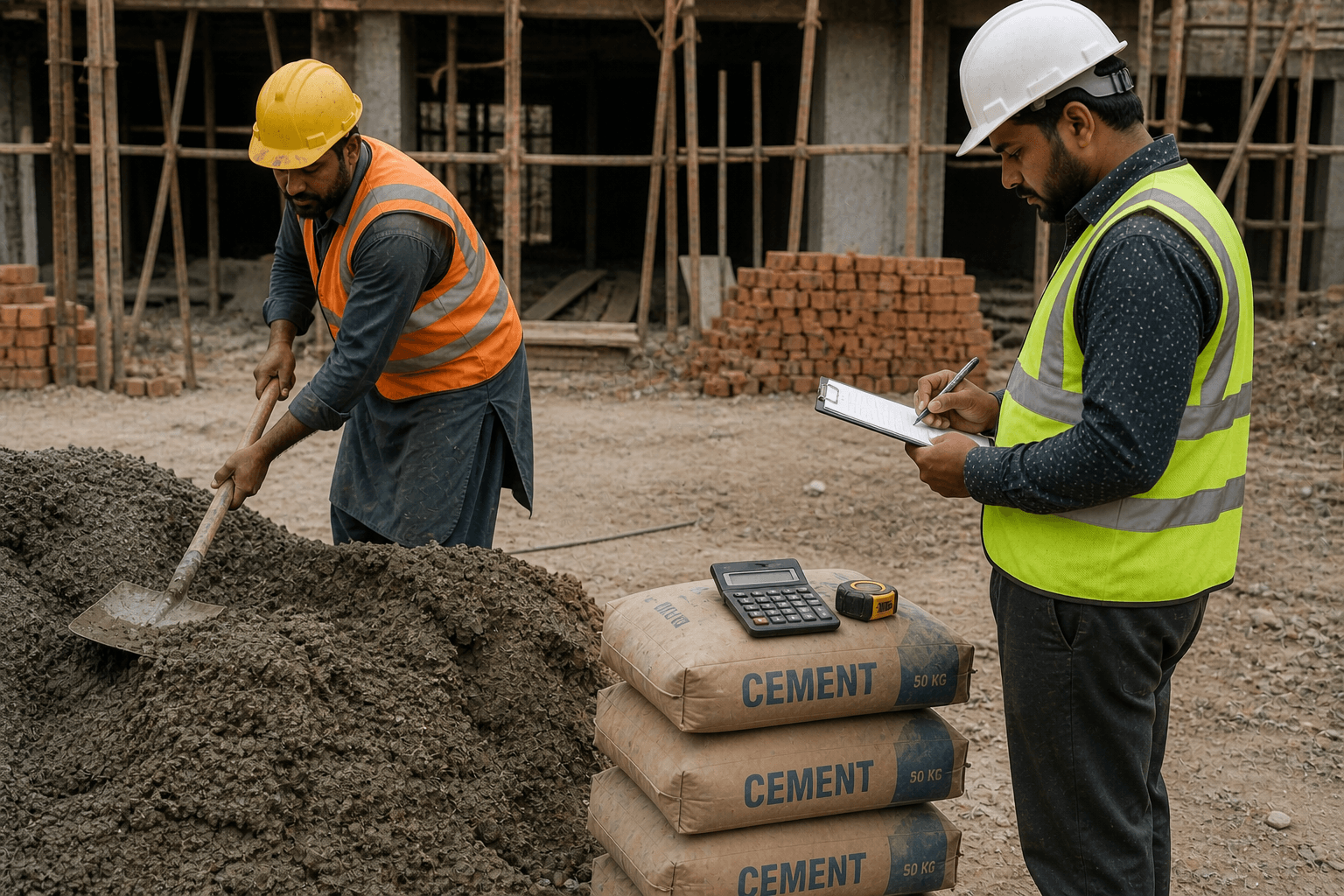
What is a plaster calculator?
A plaster calculator estimates material quantity using: Surface Area (sq ft) × Coat Thickness (in ÷ 12) = Volume (cu ft), then converts that volume into bags of plaster, sand, and cement based on the mix ratio and waste factor. It covers cement plaster, gypsum plaster, and lime plaster for interior walls, ceilings, and exterior render.
Plastering is a surface-area job, not a guess-and-buy job. Under-ordering means a stalled crew waiting on a second delivery mid-pour — and a visible seam where the batch changes color slightly. Over-ordering by more than 15% wastes money on a material that does not store well once mixed. Getting the quantity right the first time matters more here than on almost any other material.
How to use this calculator — 6 inputs explained
- 1Surface area. Measure the actual wall or ceiling area to be plastered — length × height for walls, length × width for ceilings. Deduct large openings like windows and doors over roughly 10 sq ft each; smaller openings are typically absorbed into the waste factor.
- 2Plaster type. Cement plaster is the most common and economical choice for exterior and interior walls in most climates. Gypsum plaster sets faster and gives a smoother interior finish but is not suitable for damp or exterior conditions. Lime plaster is breathable and traditional, often used in historic restoration work.
- 3Coat thickness. A standard single-coat interior finish runs 1/2 inch. Rough or uneven masonry surfaces need a thicker base coat, sometimes reaching a full inch across multiple coats, to achieve a flat finished surface.
- 4Number of coats. A 3-coat system (scratch, brown, finish) is standard for exterior cement plaster and gives the strongest, most crack-resistant result. Interior gypsum work often uses 1–2 coats since the substrate is typically flatter than exterior masonry.
- 5Mix ratio. A 1:4 cement-to-sand ratio is standard for most interior and exterior walls. A leaner 1:6 mix is common on ceilings, where the lower cement content reduces weight and shrinkage cracking risk.
- 6Waste factor. Smooth, flat drywall or block surfaces need only 5% extra. Rough stone, brick, or heavily textured masonry absorbs more material in the first coat and should use 15%.
The formula behind the calculator
Volume (cu ft) = Surface area (sq ft) × Coat thickness (in ÷ 12) × Number of coats
Dry volume = Wet volume × 1.33 (accounts for bulking and shrinkage during mixing)
Cement volume = Dry volume × (1 ÷ sum of mix ratio parts)
Sand volume = Dry volume × (ratio parts of sand ÷ sum of mix ratio parts)
Order quantity = Total volume × Waste factor (1.10 standard)
Source: ASTM C926, Portland Cement Association Plaster Application Guidelines
Coverage rate by plaster type
| Plaster type | Coverage per 80 lb bag | Best use | Dry time per coat |
|---|---|---|---|
| Cement plaster (1:4 mix) | ~22 sq ft at 1/2 in | Exterior render, interior masonry | 24–48 hours |
| Gypsum plaster (ready-mix) | ~30 sq ft at 1/2 in | Interior smooth finish | 2–4 hours (sets fast) |
| Lime plaster (traditional) | ~18 sq ft at 1/2 in | Historic restoration, breathable walls | 72+ hours per coat |
Worked examples
Example 1 — Interior wall, cement plaster, 500 sq ft, single 1/2 in coat
Wet volume: 500 × (0.5 ÷ 12) = 20.8 cu ft
Dry volume (×1.33): 20.8 × 1.33 = 27.7 cu ft
Cement (1:4 mix, 1 part of 5): 27.7 ÷ 5 = 5.5 cu ft ≈ 4 bags (94 lb)
Sand (4 parts of 5): 27.7 × 4 ÷ 5 = 22.2 cu ft
Add 10% waste: total bags ordered = 23 bags of plaster mix, ~4.5 bags cement equivalent
Mixing tip: Mix only what you can apply within 30–45 minutes for cement plaster. Adding water to a partially-set batch to "revive" it weakens the final cured strength significantly and is never recommended.
Example 2 — Ceiling, gypsum plaster, 300 sq ft, single coat
Surface area: 300 sq ft
Coverage rate: ~30 sq ft per 80 lb bag at 1/2 in
Bags needed: 300 ÷ 30 = 10 bags
Add 10% waste: 10 × 1.10 = 11 bags
Estimated material cost: 11 × $18 = ~$198
Ceiling tip: Ceiling plaster work always needs 10–15% more waste allowance than wall work — overhead application drops more material than vertical application, regardless of skill level.
Example 3 — Exterior render, cement plaster, 800 sq ft, 3-coat system at 3/4 in total
Wet volume: 800 × (0.75 ÷ 12) = 50 cu ft
Dry volume (×1.33): 50 × 1.33 = 66.5 cu ft
Cement (1:4 mix): 66.5 ÷ 5 = 13.3 cu ft ≈ 11 bags (94 lb)
Sand: 66.5 × 4 ÷ 5 = 53.2 cu ft
Add 10% waste, total estimated cost (cement + sand + labor materials): ~$680
2026 material cost reference (US)
| Item | Unit | Low | High | Notes |
|---|---|---|---|---|
| Cement plaster mix (80 lb bag) | Per bag | $10 | $16 | Covers ~22 sq ft at 1/2 in |
| Gypsum plaster (ready-mix, 80 lb) | Per bag | $15 | $22 | Covers ~30 sq ft at 1/2 in |
| Lime plaster (traditional, 50 lb) | Per bag | $22 | $35 | Specialty/restoration pricing |
| Portland cement (94 lb bag) | Per bag | $13 | $18 | For site-mixed cement plaster |
| Plaster sand (bulk) | Per cu yd | $35 | $55 | Delivery fee may apply |
| Metal lath (for new substrate) | Per sq ft | $0.80 | $1.50 | Required over open framing |
| Labor — apply plaster | Per sq ft | $3.50 | $8.00 | Varies by coat count and finish |
| Full install — materials + labor | Per sq ft | $6.00 | $14.00 | All-in plastered wall cost |
*Prices last verified May 2026. Always get 3 local supplier quotes before ordering bulk material.
5 plastering mistakes that cause callbacks
Applying plaster over a dusty or dry substrate without dampening it first. A dry substrate pulls moisture out of fresh plaster too fast, causing weak bond and surface cracking within weeks. Always dampen masonry or concrete substrates before the first coat.
Skipping metal lath over open framing or unstable substrates. Plaster needs a mechanical key to grip when there is no solid masonry behind it. Skipping lath on stud framing leads to sagging and eventual separation from the wall.
Applying a finish coat before the base coat has properly cured. Cement plaster base coats need at least 24–48 hours before the next coat. Rushing this sequence traps moisture between layers and causes the finish coat to blister or delaminate.
Mixing more material than can be applied before it begins to set. Cement plaster typically has a 30–45 minute working window. Large batches mixed for convenience often go to waste once the crew falls behind on application speed.
Ignoring curing requirements in hot or windy conditions. Cement plaster cured too fast in direct sun or strong wind develops surface cracking known as crazing. Cover fresh exterior render or mist it lightly during the first 48 hours in hot weather.