How to Calculate Fill Dirt: Cubic Yards, Tons & Cost
Fill dirt volume equals length times width times depth, divided by 27 to convert cubic feet into cubic yards. A space measuring 20 feet long, 10 feet wide, and 1 foot deep needs 7.4 cubic yards of fill dirt (20 × 10 × 1 = 200 cubic feet; 200 ÷ 27 = 7.4 cubic yards). Suppliers price fill dirt by the cubic yard or the ton, so converting between both units matters before placing an order.
Step 1: Measure Length, Width, and Depth
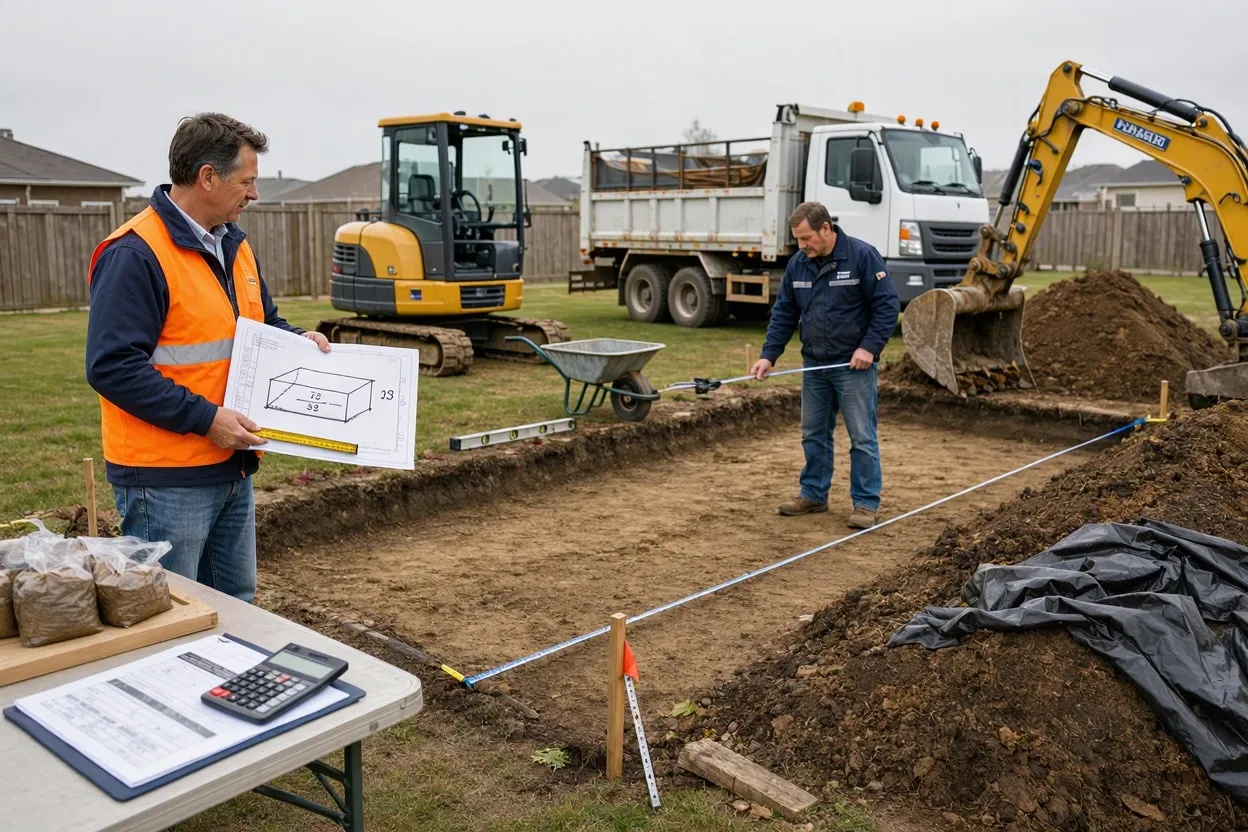
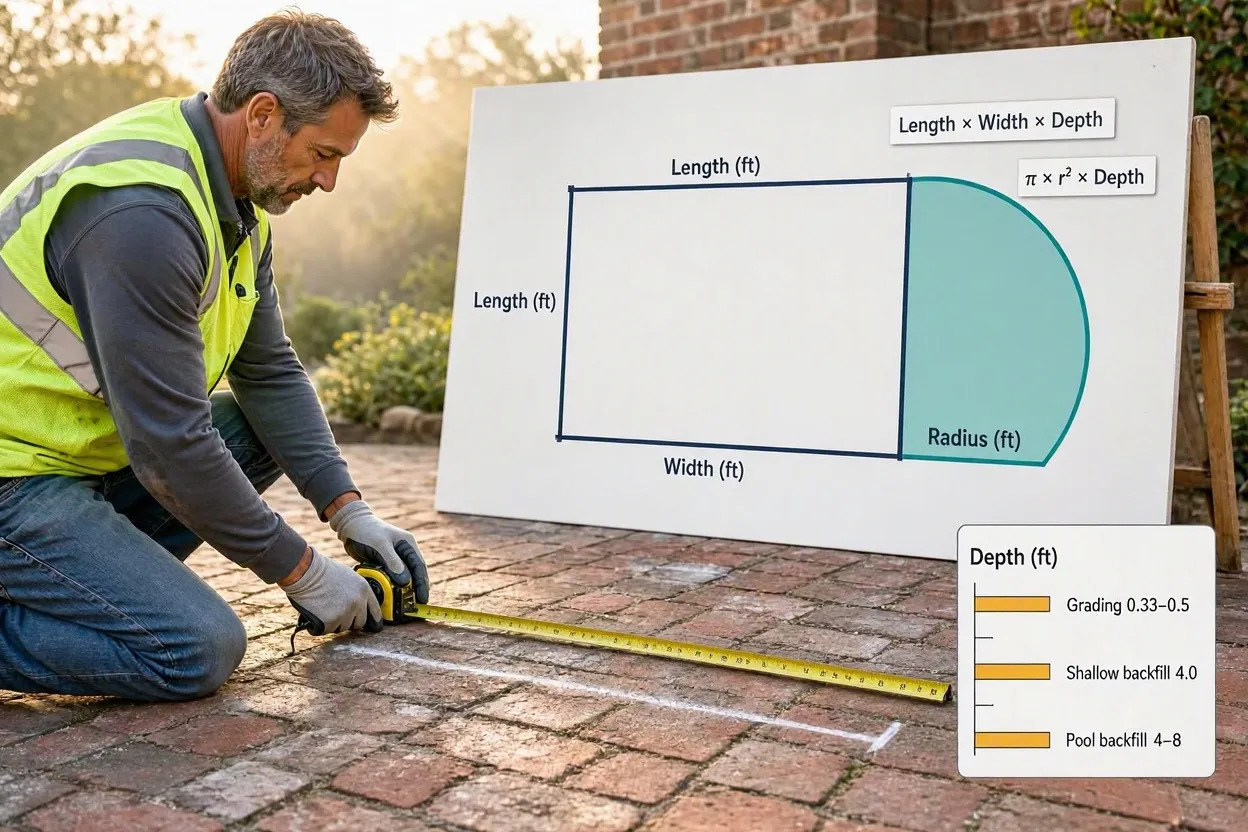
Use a tape measure to record the length and width of the area in feet, then decide on a fill depth based on the project. Grading projects typically need 4-6 inches (0.33-0.5 feet) of fill, while pool backfills often require 4-8 feet, depending on the pool’s original depth.
For irregular areas, break the space into rectangles and squares, measure each section separately, then add the individual volumes together. A curved garden bed with a straight side and a rounded end, for example, splits into one rectangle and one half-circle, calculated separately using length × width × depth for the rectangle and π × radius² × depth for the half-circle.
Step 2: Convert Cubic Feet to Cubic Yards
Multiply length × width × depth in feet to get cubic feet, then divide by 27 (since 3 feet × 3 feet × 3 feet = 27 cubic feet in one cubic yard). Round the result up rather than down, since suppliers rarely sell partial yards and shortfalls delay a project.
Metric measurements convert the same way: multiply length × width × depth in meters to get cubic meters, then multiply by 1.308 to convert to cubic yards.
Step 3: Convert Cubic Yards to Tons
Fill dirt weighs 2,000-2,400 pounds per cubic yard when dry and loose, and 2,700-3,000 pounds per cubic yard when wet or compacted. Multiply the cubic yard total by the material’s density in tons per cubic yard to find the order weight.
One cubic yard of standard fill dirt weighs roughly 1.0-1.2 tons dry and 1.35-1.5 tons wet. A 7.4 cubic yard order therefore weighs between 7.4 and 8.9 tons, depending on moisture content, which changes the delivery cost since many suppliers charge per ton for bulk truckloads.
Step 4: Add Compaction Percentage
Loose fill dirt settles by 10- 30% once compacted, so the volume ordered needs to exceed the finished volume required. Contractors commonly add 20-30% to raw calculations for structural fill beneath retaining walls or foundations, while lighter grading work only needs an extra 10-15%.
A pool-removal project that requires 75 cubic yards of finished, compacted fill needs 90-98 cubic yards of loose material ordered, based on a 20-30% compaction allowance. Skipping this step causes the most common ordering mistake: running short mid-project and paying for a rushed second delivery.
Step 5: Choose the Right Fill Material
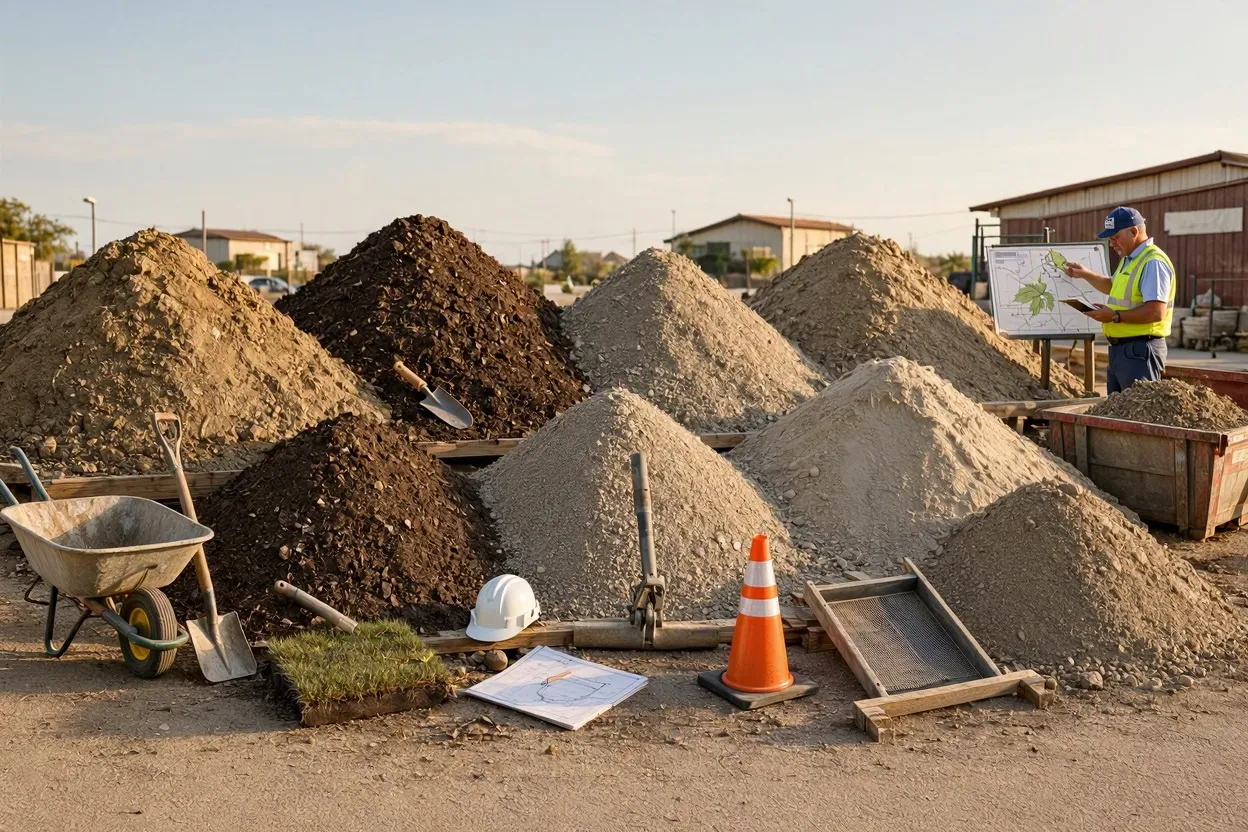
Fill dirt, topsoil, and structural fill serve different purposes despite looking similar in a supplier’s yard. Fill dirt contains sand, clay, and rock with no organic matter, making it stable for filling holes, levelling yards, and backfilling pools. Topsoil contains organic material and nutrients, suited to lawns, gardens, and planting beds rather than structural support. Structural fill, sometimes labelled ‘select fill’ or ‘A-3 material’ under Florida Department of Transportation (FDOT) specifications, meets granular compaction standards required for retaining walls and load-bearing applications.
Clean fill refers to dirt certified free of construction debris, asphalt, and contaminants, a distinction some states regulate separately from general fill dirt. Screened fill dirt has been passed through a mesh screen to remove rocks and clumps, producing a finer, more consistent material for tighter grading tolerances. Checking local Department of Environmental Protection (DEP) or Environmental Protection Agency (EPA) guidelines matters before accepting fill from an unknown source, since contaminated soil carries liability for the property owner who accepts delivery.
Step 6: Calculate Truckloads and Delivery
Suppliers typically deliver fill dirt using single-axle trucks that carry 10-12 tons, tandem-axle trucks that carry 15-18 tons, and tri-axle trucks that carry 20-25 tons per load. A 90-cubic-yard order at 1.2 tons per cubic yard totals 108 tons, requiring 5-6 tri-axle truckloads or 9-11 single-axle truckloads depending on the hauler’s fleet.
Pricing for fill dirt runs $10-$25 per cubic yard for material alone in most U.S. regions as of 2026, with delivery adding $50-$150 per truckload based on distance from the pit. A full 20-25 ton tri-axle load costs $300-$600 total in many markets, though clay-heavy regions with fewer local pits often run higher due to hauling distance.
Step 7: Account for Regional Soil Density
Fill dirt density varies by region: sandy soils common in Florida and coastal states weigh closer to 2,200-2,400 pounds per cubic yard, while clay-heavy soils in the Midwest and Northeast weigh 2,600-2,900 pounds per cubic yard when compacted. Requesting the exact density figure from a local supplier produces a more accurate tonnage estimate than relying on a national average.
Freeze-thaw cycles in cold-climate states cause additional settling below the frost line, so contractors in these regions often add another 5-10% to compaction estimates for fill placed below grade. Warm-climate states without a frost line skip this adjustment, since ground temperatures stay above freezing year-round.
Quick Reference Formula
| Calculation | Formula |
| Cubic fee | Length (ft) × Width (ft) × Depth (ft) |
| Tons | Cubic yards × Density (tons/yd³) |
| Cubic yards | Cubic feet ÷ 27 |
| Compacted volume needed | Finished volume × 1.20 to 1.30 |
| Truckloads | Total tons ÷ Truck capacity (tons) |
Running the calculation manually takes five steps, but the sequence stays consistent regardless of project size: measure, convert to cubic yards, convert to tons, add compaction percentage, then confirm the material type matches the project’s structural or landscaping requirements.
FAQs

Related Posts