Home Renovation Cost Estimator: 2026 Budget Guide by Room
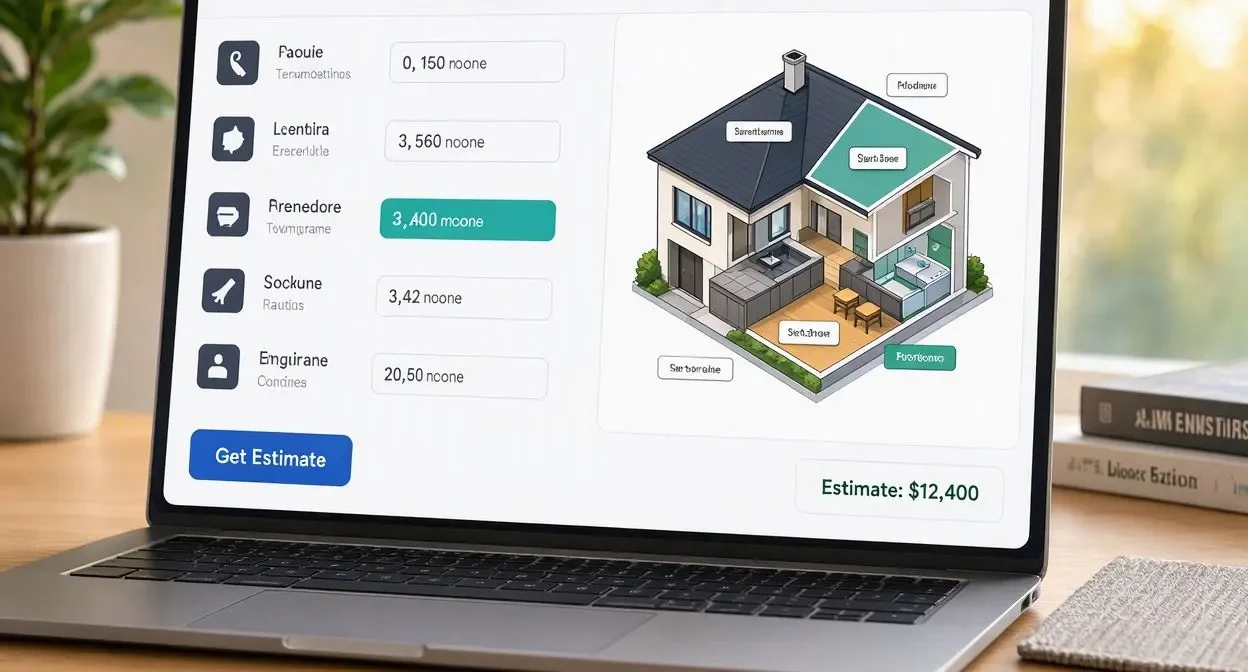
A home renovation cost estimator turns square footage, room type, and material grade into a dollar range before a contractor ever shows up. The median American renovation runs about $24,000, though projects at the 90th percentile climb as high as $150,000. Kitchens and bathrooms carry the highest cost per square foot; a coat of paint stays under $1,000 a room.
Pricing swings more than most homeowners expect. The same kitchen remodel costs noticeably less in Austin than it does in San Francisco. Material choice alone can push a bathroom budget anywhere from $6,600 to $28,000. Below is a room-by-room, region-by-region breakdown of real 2026 numbers, so you can build an estimate that actually holds up once the quotes start coming in.
How Much Does a Home Renovation Cost in 2026?
A full home renovation runs $18,000 to $200,000+, depending on square footage and scope. Cosmetic work, paint, fixtures, hardware, starts around $1,500 per room. Mid-range jobs that replace cabinetry, flooring, or drywall land between $15,000 and $75,000. Anything down to the studs, especially with structural changes, tends to blow past $100,000 once you’re over 1,000 square feet (93 square meters).
Square footage, material grade, and local labor rates drive most of that spread. Paint a 200-square-foot room in a single color and you’re looking at $200 to $500 total, materials and labor combined. Add custom millwork and premium flooring to that same room and the price climbs 10 to 20 times higher.
Renovation Cost by Room
| Room | Typical Cost Range |
| Kitchen | $12,000–$50,000+ |
| Bathroom | $6,600–$28,000 |
| Bedroom | $1,500–$20,000 |
| Living room | $5,000–$15,000 |
| Basement | $20,000–$70,000+ |
| Garage conversion | $6,000–$30,000 |
| Home addition | $20,000–$100,000 |
Kitchens cost more than any other room because plumbing, wiring, cabinetry, and appliances all stack up in one 100- to 300-square-foot space. Bathrooms follow the same logic at a smaller scale, and even a cramped 40-square-foot bathroom still needs a licensed plumber, a tile installer, and an electrician on the job.
Material Grade Changes Your Budget by 3x or More
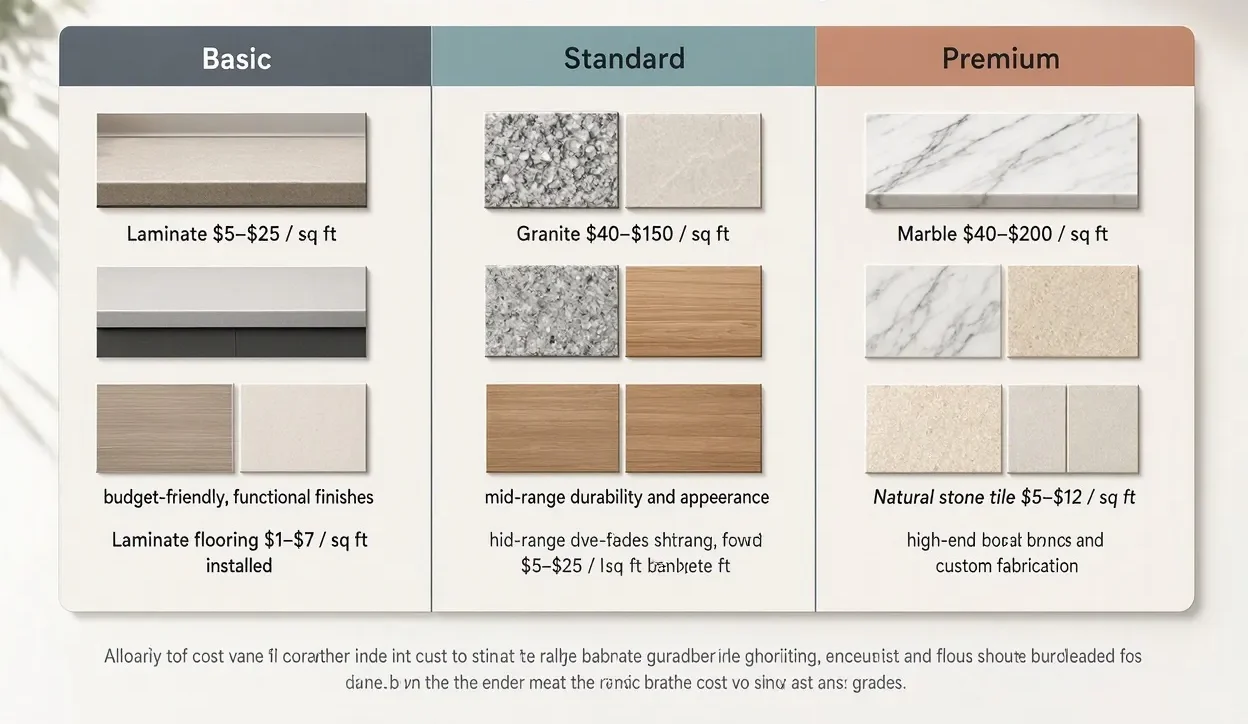
Material grade alone can shift a project’s total cost by 300% to 500% within the same room. Countertops make this obvious: laminate runs $5 to $25 per square foot, granite runs $40 to $150, and marble runs $40 to $200. Flooring tells a similar story. Laminate costs $1 to $7 per square foot installed; natural stone tile costs $5 to $12 per square foot before labor even enters the picture.
Most material categories break into three grade tiers:
- Basic – budget-friendly, functional finishes suited to rentals or first-time renovations
- Standard – mid-range durability and appearance, the default for owner-occupied homes
- Premium – high-end brands and custom fabrication, priced for resale value or long-term ownership
Choose standard-grade materials across an entire kitchen instead of premium, and you’ll typically save $15,000 to $25,000 on the exact same layout.
Hidden and Additional Costs to Budget For
Permits, waste removal, and unforeseen structural repairs eat up 10% to 20% of most renovation budgets on top of whatever the contractor quotes upfront. A few categories tend to get missed in early planning:
- Permitting and inspection fees, which vary by municipality
- Debris removal and dumpster rental
- Temporary housing if the renovation makes the home unlivable
- Contingency funds for mold, asbestos, or outdated wiring discovered mid-project
- Property tax increases after a completed addition or major upgrade
A contingency fund of 10% to 15% of total project cost covers most surprises on renovations under $50,000. Larger projects deserve a 20% cushion, especially basement excavations or foundation work, since underground conditions stay unknown until demolition actually starts.
How to Finance a Home Renovation
Five financing paths cover most renovation budgets in the US: home equity loans, HELOCs, cash-out refinancing, personal loans, and credit cards.
| Financing Type | Collateral | Payout | Best For |
| Home equity loan | Home | Lump sum | Large renovations with a fixed budget |
| HELOC | Home | Revolving credit line | Ongoing or phased renovations |
| Cash-out refinance | Home | Lump sum | Large renovations when refinancing lowers your rate |
| Personal loan | None | Lump sum | Small to mid-size renovations |
| Credit card | None | Revolving credit line | Small projects or emergency purchase |
Interest paid on a home equity loan or HELOC used for home improvement qualifies for a tax deduction under current IRS rules for tax years 2018 through 2025. Check with a tax professional before you count on that deduction, since eligibility depends on the renovation’s scope and exactly how the loan money gets used.
Does Renovation Cost Vary by Region?
Yes, by a lot. Renovation costs in the US swing 20% to 40% between the priciest and cheapest metro areas, and labor rates account for most of that gap. A licensed electrician in a high-cost coastal city simply bills more per hour than one in a lower-cost inland market. Rural and hard-to-reach areas add another layer of variation, since suppliers often tack on freight surcharges for bulky deliveries like cabinetry and countertop slabs.
Skip the national average when you’re actually budgeting. It compresses a 40% regional spread into a single number that may not resemble your project at all. Three local quotes will get you much closer to the truth.
DIY vs. Hiring a Licensed Contractor

Painting, hardware swaps, and basic flooring installation suit most homeowners fine without professional help. Electrical work, gas line connections, and structural changes are a different story: building codes require a licensed contractor for anything safety-critical, no exceptions.
Before choosing between DIY and hired labor, weigh four things: how much time you actually have, whether the savings are worth that time, how confident you are in your own work, and what happens if something goes wrong. A common middle ground is splitting the project, doing the cosmetic work yourself and hiring out the licensed trades, which keeps costs down without cutting corners on code compliance.
FAQs

Related Posts