How to Clean Concrete Floors: The Complete 2026 Guide
Cleaning concrete floors correctly comes down to three things: clear away dry debris first, apply a pH-neutral solution second, and dry the surface fully afterward. Skip any one of those steps and dirt works its way back into the surface within days, no matter how hard you scrubbed.
Concrete looks indestructible from the outside. Underneath, it’s porous, and that single fact explains almost every cleaning mistake homeowners make. Dirt, oil, and cleaning chemicals don’t sit on top of concrete the way they do on tile or vinyl. They soak in. That’s why the method matters more than whatever cleaner happens to be sitting under your sink.
Why Does Concrete Get Dirty Faster Than Other Flooring?
Concrete gets dirty faster because its surface is riddled with microscopic pores that pull in liquid through capillary absorption, the same mechanism that lets a paper towel soak up a spill.
Sealed concrete has far fewer open pores than unsealed concrete does. A sealer fills the surface channels with a protective coating, which cuts down on how much dirt, oil, and water the slab can pull in. Unsealed garage floors and unfinished basement slabs absorb liquid at a much higher rate. That’s exactly why oil stains sink in fast and set within hours instead of sitting on the surface waiting to be wiped away.
Do You Need Special Products to Clean Concrete Floors?
No, but the wrong product will damage the surface permanently. Plain water mixed with pH-neutral dish soap cleans most concrete floors just fine. The real problem is acidic or highly alkaline cleaners. Vinegar, ammonia, and citrus sprays react with the minerals in concrete and etch the surface over time. Bleach does the same thing at high concentrations.
A pH-neutral cleaner won’t strip a sealer, and it won’t dull a polished finish either. Check the label for “pH neutral” or “safe for sealed concrete” before buying anything marketed as an all-purpose floor cleaner. Plenty of general household cleaners carry neither claim and still get sold on the same shelf.
What Tools and Materials Do You Need to Clean Concrete Floors?
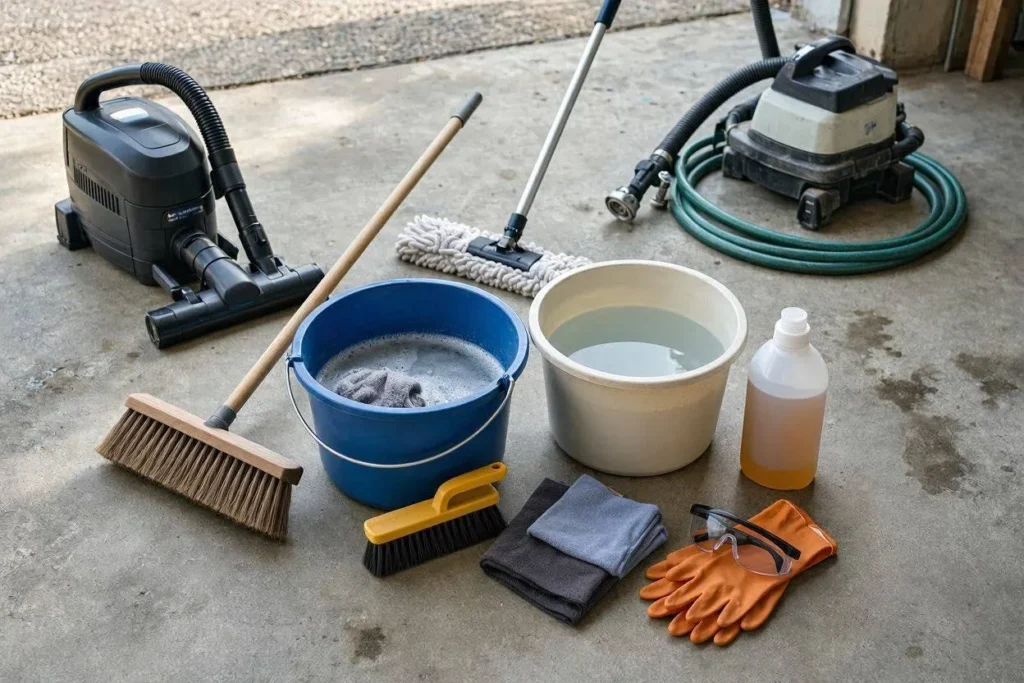
A basic concrete cleaning kit covers nearly every job in this guide:
- Soft-bristle broom or a vacuum with a hard-floor attachment
- Microfiber mop and microfiber cloths
- Two buckets, one for cleaning solution and one for rinse water
- pH-neutral concrete cleaner or mild dish soap
- Stiff nylon brush for stains and grout-line texture
- Rubber gloves and safety glasses
- Garden hose or wet vacuum for outdoor slabs
Two buckets matter more than they sound like they should. Dip a mop back into the same bucket you just rinsed it in, and you’re spreading dirty water across the floor instead of lifting it off. That’s the most common reason a freshly mopped concrete floor still looks streaky once it dries.
How to Clean Concrete Floors (Step-by-Step)
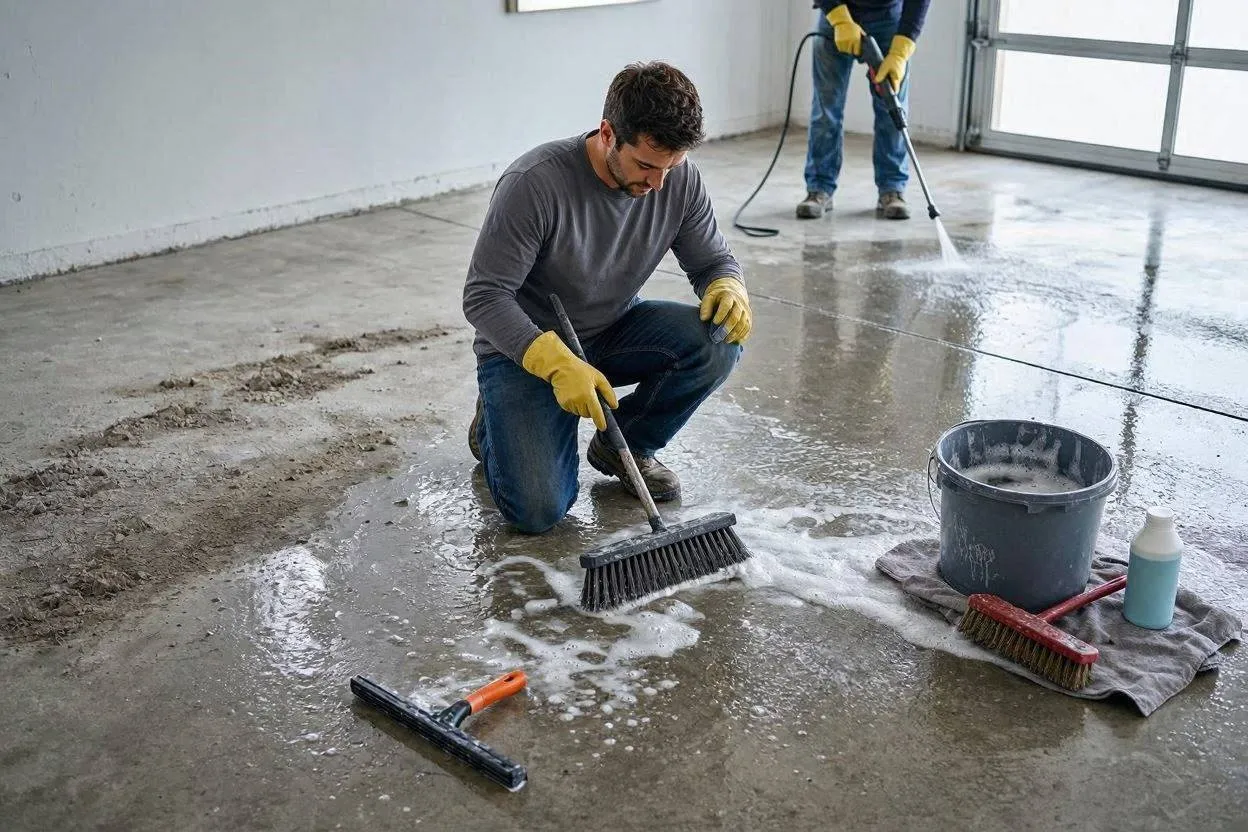
These five steps work for routine cleaning whether the floor sits in a garage, a basement, or a living room.
- Clear the floor. Move furniture, boxes, and mats out of the area before starting.
- Sweep or vacuum. Remove loose dirt, dust, and grit with a soft-bristle broom or a hard-floor vacuum attachment.
- Mix the solution. Combine 1 gallon (3.8 liters) of warm water with 2–3 tablespoons of mild dish soap or a pH-neutral concrete cleaner.
- Mop in sections. Work across a 4-foot by 4-foot (1.2-meter by 1.2-meter) area at a time, using a damp microfiber mop and wringing it out well before each pass.
- Rinse and dry. Go over the same sections with clean water, then dry with a microfiber cloth or let the floor air-dry before foot traffic resumes.
Skip the drying step and a damp concrete floor traps moisture in its pores. Mildew or a dull, cloudy finish tends to follow once it dries on its own.
How Often to Clean Concrete Floors
Frequency depends on the room, not a fixed calendar.
- Living rooms and indoor floors: once a week, with a quick dry-mop pass every 2–3 days in high-traffic homes.
- Garages: once or twice a year for a deep clean, plus spot-treatment whenever oil or fluid drips show up.
- Patios and driveways: every 3–4 months, more often near trees or in regions with heavy pollen.
- Basements: monthly. Below-grade concrete holds humidity longer and shows mold faster than floors above ground.
How to Remove Specific Stains from Concrete
A single all-purpose cleaner handles tire marks and rust rings poorly, and it barely touches mildew at all. Different stains need different treatments.
Oil and grease stains. Cover the stain with cat litter or cornstarch and let it sit for 24 hours to absorb the oil. Sweep up the absorbent material, then scrub what’s left with a degreaser and a stiff nylon brush.
Rust stains. Mix lemon juice with a little salt, apply it directly to the rust ring, and let the paste work for 15 minutes before scrubbing with a soft brush. Rinse thoroughly, since leftover acid residue etches the surface if it’s allowed to dry.
Mold and mildew. A solution of 1 part oxygen bleach to 5 gallons (19 liters) of warm water kills surface mold on unsealed concrete. Scrub with a stiff brush, then rinse twice.
Paint splatter. Scrape off loose paint with a plastic putty knife first, then follow with a citrus-based paint stripper made specifically for concrete. Standard citrus cleaners aren’t strong enough for paint, and standard paint strippers will damage sealers instead of just lifting the paint off.
Tire marks. Trisodium phosphate (TSP), sold as a powder at most hardware stores, cuts through tire rubber residue better than dish soap does. Mix 1/2 cup of TSP into 1 gallon (3.8 liters) of hot water, apply with a stiff brush, and rinse well. Dried TSP residue leaves a chalky film if you leave it sitting.
What Materials Damage Concrete Floors?
Five categories of cleaners and tools cause lasting damage:
- Acidic cleaners: vinegar, muriatic acid, phosphoric acid
- Bleach at high concentrations or left standing too long
- Abrasive scrubbers and wire brushes
- Ammonia-based degreasers and solvent cleaners
- Oil-based cleaning products, which leave a residue that attracts more dirt
Steam cleaners belong on this list too. High heat combined with moisture makes concrete expand and contract, and repeated cycles crack the surface over months of use.
How to Clean Polished Concrete Floors
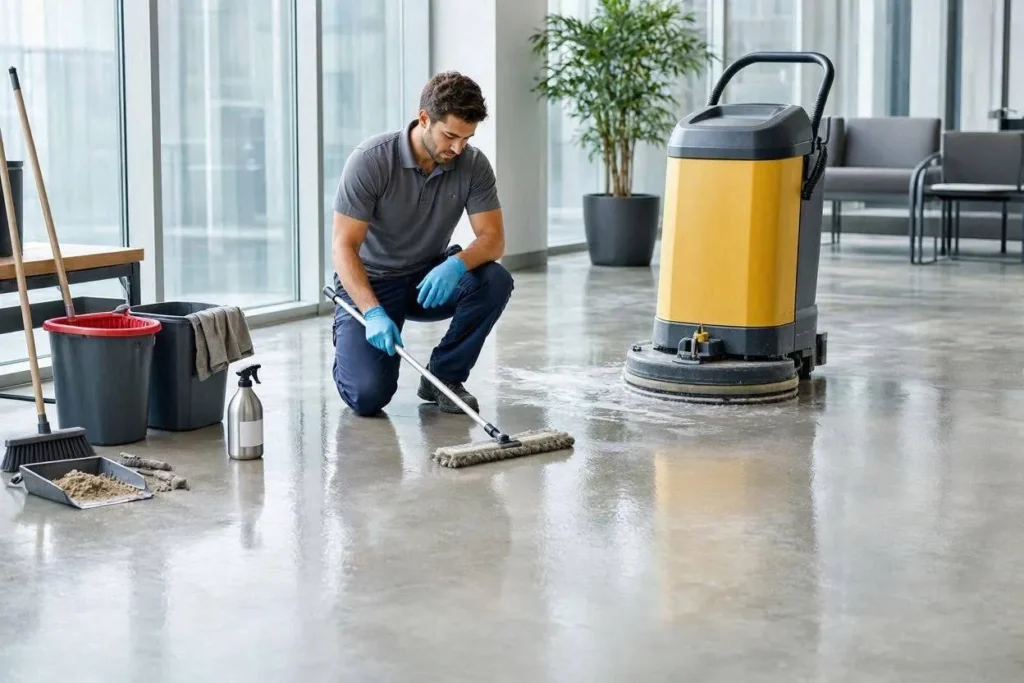
Polished concrete needs a lighter touch than unfinished or sealed concrete. Dust mop first with a microfiber pad that won’t scratch the reflective surface, then damp mop with plain water or a manufacturer-approved neutral cleaner. Skip wax-based products entirely. Wax dulls polish rather than protecting it.
To restore shine, buff with a dry microfiber cloth or a floor buffer fitted with a soft pad. Buffing lifts light surface haze without adding a new coating, so it’s a faster fix than resealing for floors that just look tired rather than damaged.
How to Clean Unsealed or Rough Concrete
Unsealed concrete absorbs far more water and cleaning solution than sealed concrete does. Expect to use 20–30% more solution per square foot on unfinished garage floors than on a sealed equivalent, since the extra liquid gets pulled straight into the pores instead of sitting where a mop can reach it.
Rough, broom-finished concrete traps dirt in its texture grooves, and a push broom works cleaning solution into those grooves better than a flat mop does. Follow with a hose rinse on a low setting rather than a high-pressure one. Unsealed concrete pits under concentrated water pressure.
What Is Efflorescence and How Do You Remove It?
Efflorescence is a white, powdery mineral deposit that forms when water carries salts to the concrete surface and evaporates, leaving the salts behind. It shows up most on basement floors and unsealed garage slabs, especially after stretches of high humidity.
Removing it takes a mild acid wash. Mix 1 part white vinegar with 4 parts water, apply with a sponge, and scrub gently with a nylon brush, then rinse twice with clean water. Leftover acid draws in more moisture and brings the deposit right back within weeks.
Sealing the concrete afterward stops the mineral migration that caused the problem in the first place.
Does Weather Affect Concrete Floor Cleaning?
Yes. Temperature swings and humidity both change how concrete holds onto dirt and moisture. Freeze-thaw cycles force water trapped inside surface pores to expand and contract repeatedly, and that widens hairline cracks over a single winter. Unsealed outdoor concrete in regions with hard freezes needs a sealer applied before the first freeze to keep water out entirely.
Humidity works differently indoors. Basements and garages with poor airflow hold moisture against the slab for hours after mopping, and that stretch of dampness is exactly when mold spores take hold. Running a fan across a freshly mopped floor cuts drying time by roughly half, which matters most during the months when indoor humidity climbs above 60%.
What Type of Sealer Works Best for Concrete Floors?
Acrylic sealer works best for most residential floors. It costs less and reapplies easily every 2–3 years, sitting on the surface as a thin protective film that blocks water and oil from reaching the pores underneath without changing the floor’s natural texture.
Epoxy coating suits garages and workshops better. A cured epoxy layer resists chemical spills, hot tire pickup, and heavy foot traffic far longer than acrylic does, though the tradeoff is a slicker surface that needs a grit additive for safe walking when wet. Polyurethane splits the difference: it resists UV fading better than epoxy, which makes it the better pick for patios and driveways that sit in direct sun for years at a stretch.
Reapplying any sealer starts the same way regardless of type. Strip old wax or degraded sealer with a stripping solution made for that sealer category, rinse the slab twice, and let the concrete dry completely. Sealer applied over even slight surface moisture peels within months, so a moisture meter reading below 4% is your cue that the slab’s ready.
Safety Precautions When Cleaning Concrete
Wear rubber gloves and safety glasses any time acid-based cleaners or bleach solutions touch concrete, and open a window or garage door for ventilation. Muriatic acid and concentrated bleach both release fumes that irritate the lungs in enclosed spaces.
A wet concrete floor gets slippery fast. Its coefficient of friction, the measurement of surface traction, drops once water sits on top of a sealed or polished finish. Keep foot traffic off until it’s fully dry, particularly in garages where oil residue lowers traction even further.
DIY Cleaner vs. Commercial Concrete Cleaner: Cost Comparison
A homemade solution of dish soap and water costs under $1 per gallon (3.8 liters) and handles routine dirt and dust just fine. Commercial pH-neutral concrete cleaners run $10–$20 per 32-ounce (950-milliliter) bottle, but they include surfactants built to lift ground-in oil and tire marks that dish soap won’t fully touch.
The DIY mix works for light maintenance. Garages with regular vehicle traffic, or driveways that have taken years of grime, get more out of a commercial cleaner: scrubbing time drops, and fewer passes lift the same stain.
Why Does My Concrete Floor Still Look Dirty After Mopping?
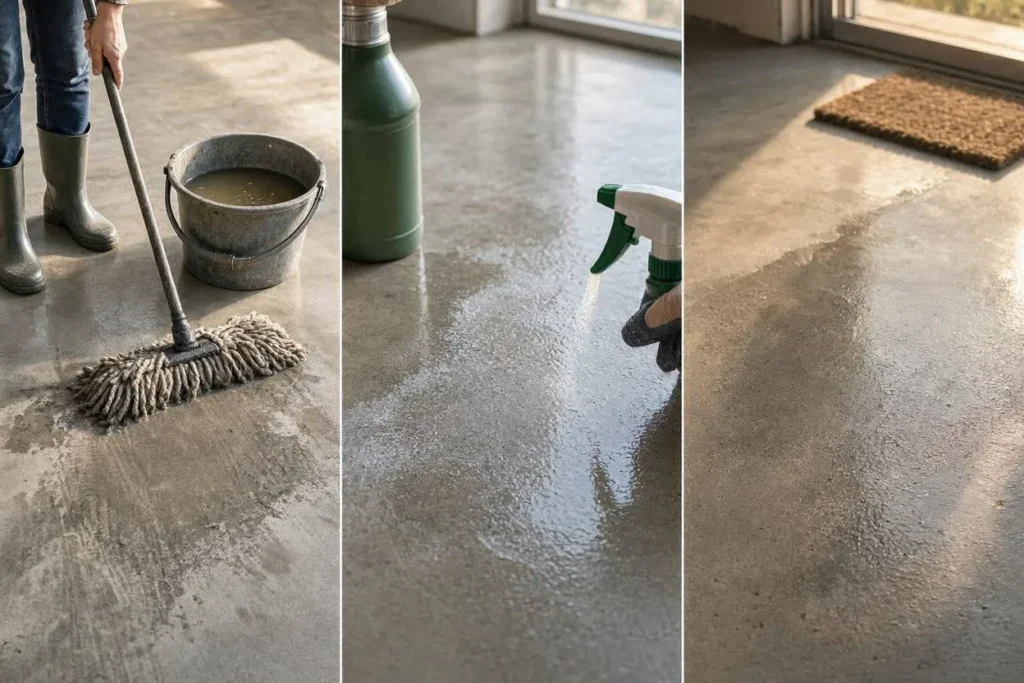
Usually one of three things is going on. Dirty mop water gets reapplied across the floor instead of rinsed out between passes, which just spreads grime around rather than removing it. A cleaner with the wrong pH leaves behind a filmy residue that traps new dust the moment foot traffic returns. Or unsealed concrete pulls old, ground-in dirt back up to the surface as it dries, an effect that looks like the floor never got cleaned even though the dirt on top is brand new.
Switch the mop water every two sections, confirm the cleaner is pH-neutral, and seal any bare unsealed concrete. That solves all three issues at once.
Conclusion
Concrete floors reward steady, gentle upkeep over aggressive one-time deep cleans. A weekly sweep, a monthly mop, and a sealer applied at the first sign of bare concrete will head off nearly every stain and surface issue in this guide before it has a chance to start.
FAQs

Related Posts