How Much Concrete Per Fence Post? Exact Bag Counts for 2026
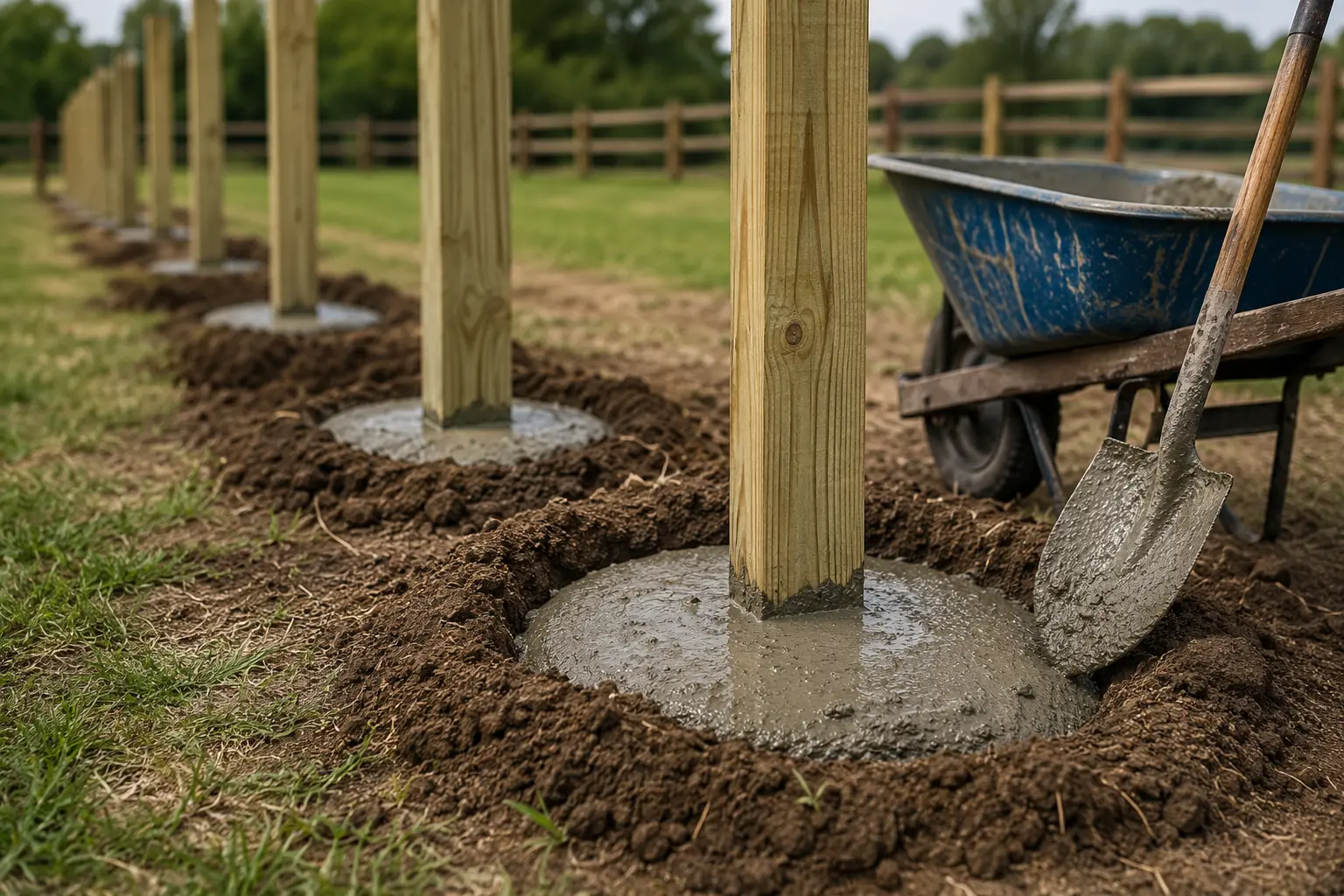
A standard 4×4 wood or steel fence post needs 3 to 5 bags of 50-pound concrete mix, and larger 6×6 posts or gate posts need anywhere from 8 to 12 bags. The exact number depends on three variables: hole diameter, hole depth, and the size of the post itself. A 4-inch post set in a 12-inch-diameter hole that’s 30 inches deep, for example, needs about 5 bags once you subtract the space the post itself takes up. Contractors setting a 150-foot residential fence with 19 posts typically buy 85 to 95 bags total to cover line posts, corners, and one gate.
Knowing how much concrete per fence post you’ll need before you dig saves a second trip to the hardware store, and it keeps a half-mixed batch from sitting in a wheelbarrow while someone runs out for more bags. The numbers below come from the same cylinder-volume formula concrete brands use to size post footings, worked through step by step so you can check your own hole against it.
How to Calculate Concrete Volume for a Fence Post
Concrete volume per post equals the volume of the hole minus the volume of the post sitting inside it. Three steps get you from a tape measure reading to a bag count.
Step 1: Measure the Hole
Hole diameter should run 3 times the width of the post, and hole depth should reach roughly one-third of the post’s total length above ground. A 4-inch-wide post needs a 12-inch-diameter hole. Once you have those two numbers, plug them into the cylinder formula: volume = π × radius² × depth. A 12-inch-diameter hole (6-inch radius) at 30 inches deep works out to about 3,390 cubic inches, or 1.96 cubic feet (0.055 cubic meters).
Step 2: Subtract the Post’s Volume
The post itself displaces space inside that hole, so its volume comes out of the total. A 4×4 post, 3.5 inches actual width rather than a full 4 inches, occupies about 0.21 cubic feet over 30 inches of depth. Subtract that from the 1.96 cubic feet of hole volume and you’re left with roughly 1.75 cubic feet that actually needs filling with concrete.
Step 3: Convert Cubic Feet to Bags
Bag yield varies by weight, so match your remaining volume to the right bag size. A 50-pound bag yields about 0.375 cubic feet, a 60-pound bag yields 0.45 cubic feet, and an 80-pound bag yields 0.6 cubic feet. Dividing 1.75 cubic feet by 0.375 comes out to 4.6, so you round up to 5 bags of 50-pound mix for that hole, or 3 bags if you’re using 80-pound bags instead. Round up every time. A short pour mid-project costs more time than an extra bag costs money.
Concrete Bags Needed by Post Size (Reference Table)
Hole depths below assume a 6-inch gravel base has already been subtracted. Bag counts are for standard 50-pound premixed concrete, calculated with the same formula as above at the low and high end of each hole-size range.
|
Post Size |
Hole Diameter |
Hole Depth |
Bags Needed |
|
3″ round steel |
9 in |
24 in |
3 bags |
|
4×4 wood (3.5″ actual) |
10-12 in |
24-30 in |
3-5 bags |
|
6×6 wood (5.5″ actual) |
12-16 in |
30-36 in |
4-10 bags |
|
2.5″ steel (residential) |
10 in |
24-36 in |
3-5 bags |
|
Gate/corner post (4×4-6×6) |
14-16 in |
36-42 in |
8-12 bags |
The 6×6 and gate-post rows carry the widest spread on this table, and that’s expected rather than sloppy. Diameter drives volume by the square of the radius, so a hole that swings from 12 to 16 inches doesn’t just add a little concrete, it very nearly doubles it.
How Hole Diameter and Depth Change the Concrete Total
Increasing hole diameter by just 2 inches can add a full bag of concrete per post, because volume scales with the square of the radius, not the diameter itself. A 10-inch hole holds noticeably less concrete than a 12-inch hole at the same depth. Going from a 5-inch radius to a 6-inch radius pushes the volume up by roughly 44 percent. Depth has a more linear effect: a hole that’s 6 inches deeper adds a proportional amount of concrete, without the compounding jump you see when diameter increases.
If your soil crumbles easily and forces you to widen the hole beyond the standard 3-times-post-width rule, budget for at least one extra bag per post. Clay-heavy yards in states like Georgia and Texas often need that wider hole to keep the sides from collapsing during digging, which changes the concrete math before you’ve even mixed the first batch.
Does Frost Line Depth Change How Much Concrete You Need?
Yes. Colder regions require deeper post holes to sit below the frost line, and deeper holes take more concrete regardless of post size. Frost line depth ranges from 0 to 12 inches in southern states, 12 to 24 inches in the mid-Atlantic, 30 to 36 inches through the Midwest, and 48 inches or more in the northernmost states. A homeowner in Minnesota setting a 6-foot fence might need a 42-inch hole to clear the frost line, while a homeowner in Florida can often stop at 24 inches for the same fence height.
Posts set above the frost line heave upward as the ground freezes and thaws each winter. That movement tilts fences within a single season in cold climates, so the extra concrete a deeper hole requires isn’t optional in those regions. It’s the difference between a fence that lasts decades and one that needs resetting after year one.
Does Soil Type Affect Concrete Requirements?
Soil type changes hole diameter, and hole diameter changes how much concrete per fence post you’ll need. Sandy soil drains fast but offers less lateral resistance, so installers often widen holes by 2 to 4 inches to compensate, which alone can add half a bag to a full bag per post. Clay soil holds moisture and expands with temperature swings, which pushes against posts over time and calls for the same kind of wider, more stable footing. Rocky soil behaves differently: large stones already provide bearing strength, so some installers get away with slightly shallower holes once the rock layer is reached.
Loam, the balanced mix of sand, silt, and clay found across much of the Midwest, needs no adjustment at all. Most published concrete tables assume loam conditions by default, so a soil test or a conversation with a local installer matters more in sandy coastal areas or heavy clay regions than it does in typical Midwestern yards.
Does a Gravel Base Reduce the Concrete You Need?
Yes. A 4- to 6-inch gravel layer at the bottom of the hole reduces the concrete depth you need to fill, cutting total concrete volume by roughly 20 percent. A 30-inch hole with 6 inches of compacted gravel only needs concrete for the remaining 24 inches. Gravel also drains water away from the base of the post, which matters more for long-term post health than the concrete savings does.
Skipping gravel isn’t a shortcut worth taking in clay soil or anywhere water tends to pool. Standing water trapped against a wood post can accelerate rot within 3 to 5 years, and that repair cost dwarfs whatever a bag of gravel would have cost upfront.
Do Gate Posts and Corner Posts Need More Concrete?
Gate posts and corner posts need roughly two to three times the concrete of a standard line post, because they absorb lateral stress that line posts never experience. A gate swinging open and closed thousands of times a year pulls at its post with repeated torque, while corner posts anchor tension from two directions of fence line at once. Installers typically dig gate-post holes 14 to 16 inches in diameter and 36 to 42 inches deep, a jump from the standard 10- to 12-inch line-post hole that translates directly into several extra bags.
Undersized gate footings show their weakness gradually rather than all at once. The gate binds against the latch first, then sags visibly within a year or two, and by that point the fix usually means breaking out the old concrete and starting over rather than adding a patch. Budgeting the extra bags at installation costs far less than that redo.
Wet Pour vs. Dry Pour: Which Uses Concrete More Efficiently?
Wet pour and dry pour use the same amount of concrete, but wet pour produces a stronger, more consistent set because the water mixes evenly through the batch before it goes in the hole. Dry pour involves dumping the bag directly into the hole around the post, then adding water on top and letting it soak down, a method several concrete manufacturers still recommend for fast-setting mixes designed for it. Standard mixes poured dry risk uneven hydration, leaving pockets of weak, powdery concrete that never reach full strength.
Wet mixing in a wheelbarrow or portable mixer beforehand takes longer per post, roughly 10 to 15 extra minutes, but it eliminates that hydration risk entirely. Gate posts and corner posts, given the extra stress they carry, are worth the additional mixing time even if you dry-pour the rest of the line.
Fast-Setting vs. Standard Concrete for Fence Posts
Fast-setting concrete reaches handling strength in about 4 hours, while standard concrete needs 24 to 48 hours before the post can bear any load. That speed comes at a cost premium of roughly 25 to 30 percent per bag: standard mix runs $4 to $6 a bag, fast-setting typically runs $6 to $7. For a 30-post project averaging 4 bags per post (120 bags total), switching entirely to fast-setting mix adds around $150 to $200 to the material total compared to standard concrete.
Most professional installers split the difference: fast-setting mix on gates and corners, where quick strength matters most, and standard mix on line posts, where a day of curing time changes nothing. Standard concrete also reaches slightly higher ultimate strength once fully cured, so permanent installations benefit from it even where the extra curing wait is inconvenient.
How Much Does Concrete Cost Per Fence Post?
A single 50-pound bag of standard concrete costs $4 to $6, so a typical 4×4 post using 3 to 5 bags runs $12 to $30 in material. Fast-setting mix costs more per bag, usually $6 to $7, which puts the same post closer to $18 to $35 if speed matters more than budget on that particular hole. Gate posts and corner posts, needing 8 to 12 bags apiece, land between $32 and $84 depending on which mix goes into the hole.
Labor changes the total more than the concrete itself does. Professional installers charge $25 to $75 per post for excavation, setting, and finishing, so a 30-post fence with roughly $600 in concrete can still run $1,350 to $2,850 once labor is added on top. Buying concrete in bulk for projects over 100 bags often knocks 10 to 20 percent off the per-bag price, which is worth negotiating before a large commercial job starts.
How Many Bags Do You Need for an Entire Fence Line?
Multiply the bags-per-post figure by your total post count, then add 10 percent for waste and uneven holes. A 150-foot fence with posts spaced 8 feet apart needs about 19 posts, including corners and one gate. At an average of 4 bags per standard line or corner post and 10 bags for the single gate post, that’s roughly 82 bags before the waste buffer, about 90 bags once you round up for spillage and the occasional deeper-than-planned hole.
Post spacing matters here as much as post count does. Fences built with posts every 6 feet instead of 8 feet need more posts to cover the same linear footage, which raises the total bag count even though each individual hole uses the same amount of concrete. Measure your fence line first, divide by your planned spacing, and add one post for the starting corner before pricing out concrete.
Common Mistakes That Waste Concrete or Weaken Posts
The three mistakes that waste the most concrete are adding excess water to the mix, digging holes too shallow, and skipping the 10 percent overage on bag purchases. Each one either weakens the finished post footing or forces a mid-project trip back to the store.
- Adding water beyond the manufacturer’s ratio, which weakens cured strength and extends set time.
- Digging holes shallower than the frost line requires, which invites heaving in year one.
- Buying the exact calculated bag count instead of 10 percent extra, which stops work mid-pour if a hole runs deeper than expected.
- Backfilling with soil instead of finishing concrete above grade, which traps moisture against the post.
- Loading a post, attaching panels or a gate, before curing time has passed, which shifts alignment permanently.
Fixing any of these after the concrete sets means breaking it out and starting the post over, so catching them before the first bag opens costs nothing compared to catching them after.
FAQs
How many bags of concrete does a 4×4 fence post need?
A standard 4×4 post in a 10- to 12-inch hole, 24 to 30 inches deep, uses 3 to 5 bags of 50-pound concrete mix.
Can you use too much concrete on a fence post?
Yes, though it wastes money rather than causing damage. Stick to calculated hole dimensions plus a 10 percent buffer, not a deliberate oversize.
Should a fence post touch the bottom of the hole?
No. Posts should rest on 4 to 6 inches of compacted gravel, not bare soil, for drainage and to prevent uneven settling.
Is fast-setting concrete worth it for a full fence line?
Reserve it for gates and corners. Line posts don’t need the 4-hour strength, so standard mix saves 25 to 30 percent on material cost.
Do metal fence posts need less concrete than wood posts?
Usually yes, since metal posts run narrower than 4×4 wood. A 2.5-inch steel post displaces less hole volume than a 3.5-inch wood post, though the difference in final bag count is smaller than you’d expect once hole size is standardized.
Conclusion
A standard 4×4 fence post takes 3 to 5 bags of 50-pound concrete; a 6×6 post or a gate post can take anywhere from 8 to 12. Hole diameter drives the bag count more than any other variable, since volume scales with the square of the radius rather than the diameter itself, so a 2-inch increase in hole width can add a full bag per post. Measure the hole, subtract the post’s own volume, match the remainder to your bag size, and round up by 10 percent before you buy. That’s the full calculation, and it holds regardless of whether the post going into the ground is wood, steel, or vinyl.

Rachel Park
Rachel Park leads sustainability, roofing, and building materials content at Constructionspedia, drawing on over 10 years of commercial and residential construction experience. She holds an M.S. in Sustainable Building Systems from UC Berkeley and is a LEED AP BD+C, specializing in roofing systems, insulation, waterproofing, and energy-efficient materials. Her research-backed guides help homeowners and industry professionals make informed decisions about construction and green building.
Related Posts