Types of Roof Tiles: 9 Materials, Costs, and Durability Compared
There are 9 main types of roof tiles: clay, concrete, slate, metal, composite, synthetic, solar, copper, and cedar shake. They vary a lot in cost, weight, and lifespan. Clay and slate can outlast the house itself, often going past 100 years, while metal and composite tiles are lighter and cheaper to install. Which one works for you comes down to three things: your climate, your roof pitch, and your budget. A steep coastal roof needs something different from a low suburban ranch.
Pick the wrong roofing material and you’ll pay for it, sometimes twice. Below you’ll find the real numbers for all 9 types of roof tiles: cost per square foot, weight per square, lifespan, and the climates each one handles best.
What Are Roof Tiles Made Of?
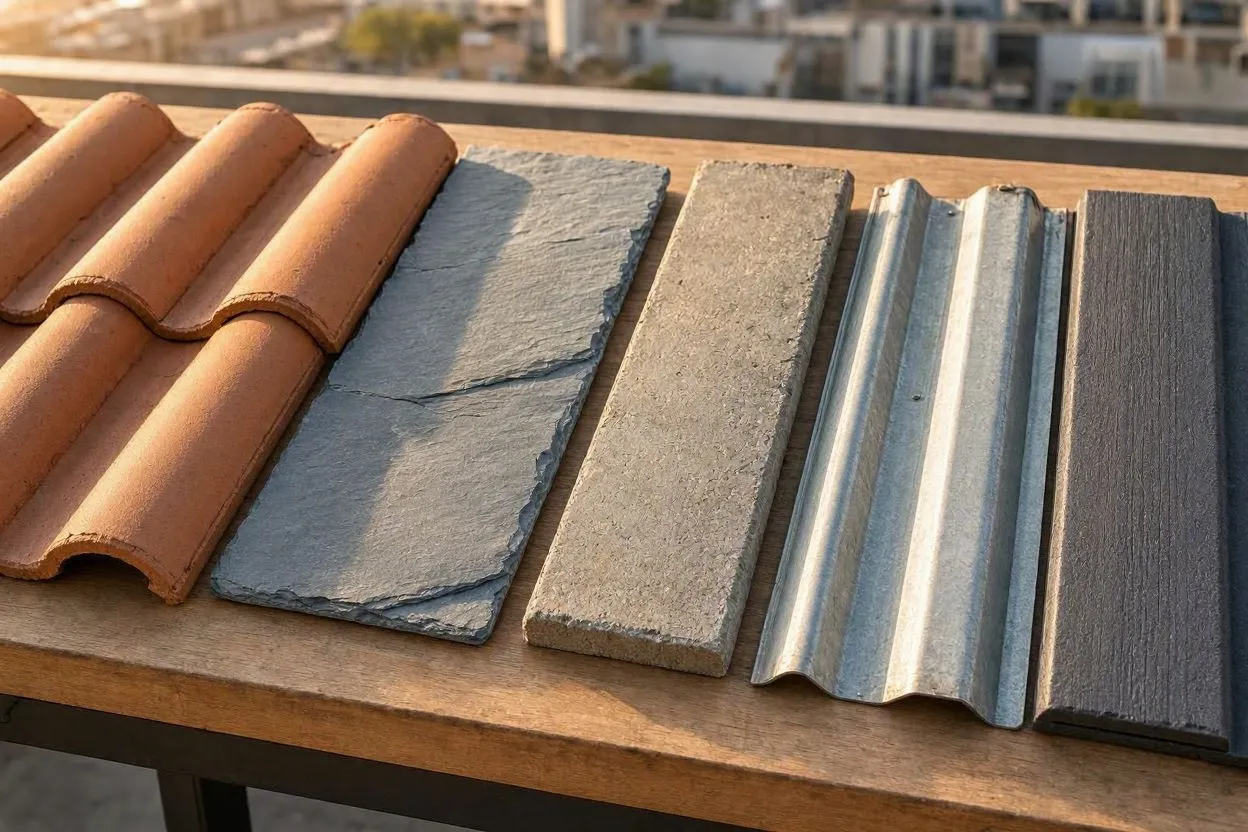
Roof tiles are made from natural stone, fired clay, poured concrete, metal, or engineered composite blends. Clay and slate are the originals. Concrete, metal, and synthetic tiles came much later, once manufacturing caught up.
Clay roofing goes back roughly 10,000 years, which makes it one of the oldest building materials people still use. Slate came later and was common on American roofs by the 1600s. Concrete tiles didn’t appear until the mid-1800s in Bavaria, Germany, where cheap local raw materials made mass production practical. Metal and composite tiles are the newcomers, developed mostly in the last 60 to 80 years as manufacturers figured out how to copy the look of clay and slate at a fraction of the weight.
Material choice drives three decisions more than anything else: how much load your roof structure has to carry, how the tile stands up to fire and wind, and what you’ll spend on installation. Weight is the one people underestimate. Take a 2,000-square-foot roof, which is 20 roofing squares. In slate, that’s somewhere between 16,000 and 30,000 pounds. In metal, it’s 1,000 to 3,000 pounds. That gap often decides whether your home can take a tile roof at all without structural reinforcement first.
9 Types of Roof Tiles Compared
1. Clay Roof Tiles
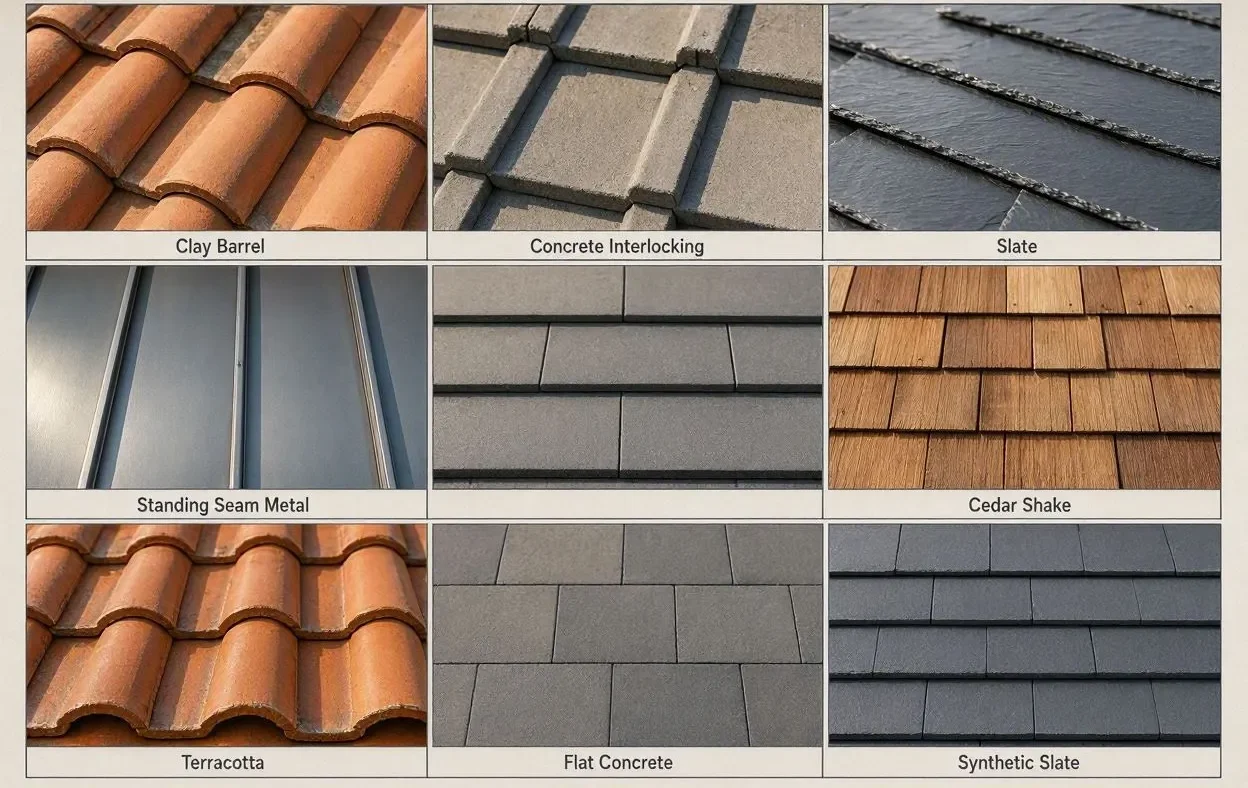
Clay roof tiles are fired ceramic tiles that hold their color and shape for 50 to 100+ years. They resist wind, hail, and fire better than most roofing materials, and they don’t soak up moisture the way untreated wood does. You’ll find them in two main profiles: barrel (the curved, Spanish-style shape) and flat. Both are sealed to keep water out.
The catch is weight. A square of clay tile (100 square feet) usually weighs 600 to 1,100 pounds, or about 270 to 500 kilograms, so most homes need engineered roof reinforcement before installation. Clay also cracks if someone walks on it carelessly. Repairs need a contractor who actually knows the material, not just any roofer. Clay shows up most on Mediterranean, Spanish colonial, and Southwestern homes, partly for the look and partly because it does so well in hot, dry climates.
2. Concrete Roof Tiles
Concrete roof tiles are molded from sand, cement, and water. They cost less than clay and hold up about as well. Manufacturers shape them to look like clay barrel tiles, slate, or wood shake, so you get plenty of visual options without paying clay prices for the material.
Concrete is non-combustible, which makes it a strong pick in wildfire-prone regions. Its weight, similar to clay or a bit heavier, also keeps it in place during high winds. But that same weight means the same structural planning clay needs, and installers need specific training to handle concrete tile without breaking it. Expect $10 to $20 per square foot. That puts concrete in the same price bracket as clay even though the raw material is cheaper, because labor and structural work make up most of the bill.
3. Slate Roof Tiles
Slate roof tiles are cut from natural stone, and with proper maintenance they can last well over 100 years. Very few roofing materials match slate for fire resistance, water resistance, and resistance to mold and fungus. Each tile varies slightly in color, which gives slate roofs a natural, uneven look that manufactured products still struggle to copy.
Installation is where things get complicated. A square of slate can cost $600 to $800, and you need a crew with real stone experience, not a general roofing company. Slate is also the heaviest common tile, usually 800 to 1,500 pounds per square (360 to 680 kilograms), so almost every home needs a structural assessment first. And it cracks if you step on it wrong. Even routine gutter cleaning becomes a job for professionals instead of a weekend DIY task.
4. Metal Roof Tiles
Metal roof tiles are made from steel, aluminum, zinc, or copper. They last 50 to 70 years and weigh far less than clay or slate. Manufacturers press them into shapes that imitate barrel tile, slate, or wood shake, so you can get a similar look with a fraction of the structural load.
A metal tile roof on a standard home usually runs $9,750 to $42,750 installed. Where you land in that range depends mostly on panel style and metal type. Metal sheds snow and rain well and won’t burn. It does have downsides, though. It’s loud in storms unless it’s properly insulated, and hail or falling branches can dent it. Metal also transfers outside temperature easily, so a poorly insulated metal roof can push your energy bills up in extreme climates instead of down.
5. Composite Roof Tiles
Composite roof tiles mix natural and synthetic materials to look like slate, clay, or wood, at a much lower weight. At 150 to 500 pounds per square (roughly 68 to 227 kilograms), most homes can take them without the reinforcement clay or slate would require.
Warranties are strong, sometimes 40 to 50 years, and you don’t need a specialist crew to install them. Color options go further too, since manufacturers can blend pigments precisely in a way natural materials can’t match batch to batch. The honest limitation: composite is young. Its long-term weathering is still being tested over decades, not proven over centuries like clay or slate.
6. Synthetic Roof Tiles
Synthetic roof tiles are engineered polymer products designed to resist UV rays, wind, and moisture while weighing much less than natural materials. Many include recycled content, which matters if you’re after sustainable building materials.
Roof pitch matters more here than with most tile types. According to The Spruce, tile roofing (synthetic included) works best on steep slopes and isn’t recommended below a 4:12 pitch, meaning the roof rises 4 inches for every 12 inches of horizontal run. Go flatter than that and drainage gets unreliable, no matter how good the tile is. Synthetic tiles work for both new construction and remodels, and because they’re light, they bring tile roofing within reach of homes that couldn’t structurally support clay or slate.
7. Solar Roof Tiles
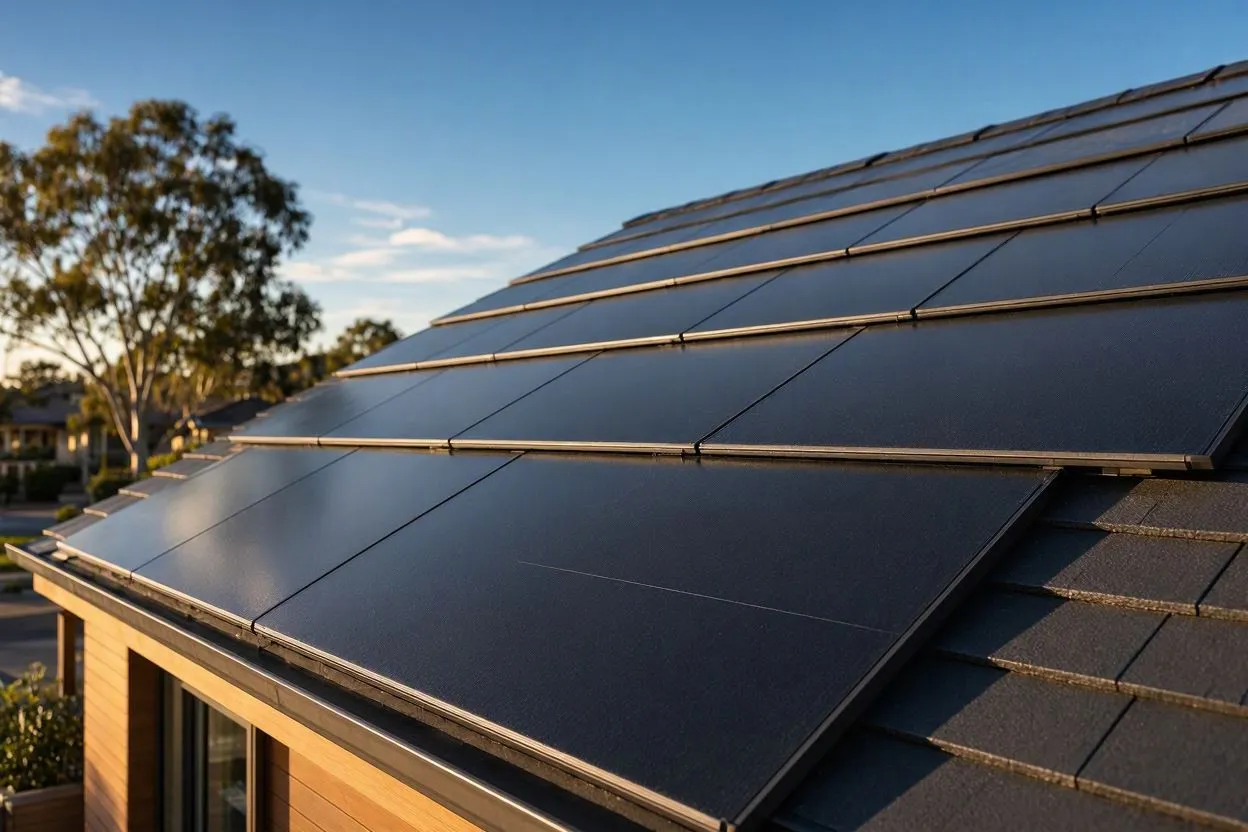
Solar roof tiles generate electricity right from the roof surface, producing 13 to 63 watts per tile depending on the product. Unlike bolted-on solar panels, they sit flush in the roofline. That makes them a practical workaround in neighborhoods where the homeowners association (HOA) bans visible panel arrays.
Price is the obstacle. A solar roof on a standard-sized home costs $60,000 to $75,000, more than any other option on this list. Specialty installers handle both the roofing and the electrical work, so maintenance and repairs cost more than conventional tile too. People who choose solar tiles usually care more about long-term energy offset than upfront cost, and the payback period depends heavily on your local electricity rates and how much sun your roof gets.
8. Copper Roof Tiles
Copper roof tiles resist corrosion, handle heavy rain and snow, and slowly develop a green patina as they weather. That patina does real work. It forms a protective layer that extends copper’s already long service life, which often goes past 100 years on a well-installed roof.
Copper sits near the top of the tile market on price, well above steel and aluminum. There’s also a risk most homeowners don’t think about: copper has scrap value, so in some regions it’s a theft target, especially on outbuildings and empty properties. And not everyone likes the patina. Some people want that original bright finish and are surprised when it changes color over the years.
9. Cedar Shake Roof Tiles
Cedar shake roof tiles resist insects and decay naturally, thanks to oils in the wood. The rustic look fits traditional and contemporary homes alike, and that warmth is hard to fake with manufactured materials.
It’s also the highest-maintenance tile on this list. Cedar needs regular cleaning, treatment, and inspection to keep moss and mildew away, and its fire resistance is far below metal, concrete, or clay. Many wildfire-prone regions restrict or ban cedar shake roofing outright in their building codes, so check local rules before you fall for the look. Composite manufacturers now copy cedar’s texture closely enough that plenty of homeowners pick synthetic shake instead, just to skip the fire risk and upkeep.
Roof Tile Comparison Table: Cost, Weight, and Lifespan
| Tile Type | Cost Range | Approx. Weight (per square) | Typical Lifespan | Best For |
| Clay | $10–$20/sq ft | 600–1,100 lbs (270–500 kg) | 50–100+ years | Hot, dry climates; Mediterranean style |
| Concrete | $10–$20/sq ft | 900–1,200 lbs (410–545 kg) | 50+ years | Wildfire zones; budget-friendly tile look |
| Slate | $600–$800/square | 800–1,500 lbs (360–680 kg) | 100+ years | High-end, long-term investment homes |
| Metal | $9,750–$42,750 total | 50–150 lbs (23–68 kg) | 50–70 years | Snow-heavy or storm-prone regions |
| Composite | Varies by product | 150–500 lbs (68–227 kg) | 40–50 years | Homes needing a lighter structural load |
| Synthetic | Varies by product | 150–400 lbs (68–181 kg) | 40–50 years | Steep-pitch roofs (4:12 minimum) |
| Solar | $60,000–$75,000 total | Similar to standard shingle | 25–30 years (panels) | HOAs that restrict visible panels |
| Copper | Premium pricing | 100–150 lbs (45–68 kg) | 100+ years | Coastal, high-corrosion environments |
| Cedar Shake | Moderate to high | 200–350 lbs (91–159 kg) | 20–40 years | Low wildfire risk, traditional aesthetics |
These figures are commonly cited industry ranges. Actual numbers vary by manufacturer, region, and installation complexity.
How Do You Choose the Right Roof Tile for Your Climate?
Start with the biggest weather threat where you live, whether that’s wildfire, hurricane wind, hail, or heavy snow load, and pick the material that handles it best. In wildfire-prone parts of California or Colorado, clay, concrete, and metal are the safe bets. All three carry a Class A fire rating and won’t catch from embers. On the coast, where hurricane-force wind is the concern, look for tiles rated ASTM D7158 Class H, which certifies wind resistance up to 150 mph (241 km/h), or ASTM D3161 Class F, rated for 110 mph (177 km/h).
Cold, snowy climates favor metal. It sheds snow easily and won’t crack through freeze-thaw cycles the way clay or slate sometimes can. In humid, wet regions, slate and copper hold up against mold, mildew, and rot far better than cedar shake. If you live in tornado alley or along a Gulf Coast hurricane path, look specifically for products tested for wind uplift and impact resistance, ideally Class 3 or Class 4 impact rated. That rating tracks closely with hail damage resistance, and it can sometimes get you an insurance discount.
What Roof Pitch Do You Need for Roof Tiles?
Most types of roof tiles need a minimum roof pitch of 4:12, meaning the roof rises 4 inches for every 12 horizontal inches. Flatter roofs can’t shed water fast enough between tile overlaps, and they leak no matter how good the tile is. Have a roofing contractor check your roof’s exact geometry before you commit, since the minimum can shift a little depending on the product’s overlap design and underlayment system.
Steeper is better, especially for heavy tiles. At 6:12 and above, slate and clay perform even better because gravity helps drainage and wind-driven rain has a harder time getting under the tiles. Low-slope or flat roofs usually rule out traditional tile altogether, and homeowners end up with built-up roofing or a membrane system instead.
Do Roof Tiles Need a Permit or HOA Approval?
Usually, yes. Most jurisdictions require a permit for roof tile installation, and many HOA neighborhoods require separate design approval before any work starts. Permits exist to confirm your roof structure can carry the tile’s weight and that the installation meets local building and fire codes. Skipping one to save time tends to backfire when you sell, because inspectors and buyers’ agents flag unpermitted work.
HOA rules add another layer, usually around color, profile, and material type, since many communities enforce a consistent look across the neighborhood. Some HOAs ban visible solar installations entirely, which is a big reason solar roof tiles have caught on: they sit in the roofline instead of on top of it. Check both the permit and the HOA requirements before you order material. Nobody wants to tear off part of a brand-new roof.
How Much Do Roof Tiles Cost to Install?
Roof tile installation costs run roughly $4 to $20 per square foot, depending on material. Natural stone and clay sit at the top of that range, and metal or rubber-based options come in lower. A full slate roof on an average home can cost $18,000 to $24,000, while a comparable metal tile roof usually falls between $9,750 and $42,750 depending on panel style. Concrete and clay both land at $10 to $20 per square foot, and most of that comes from structural reinforcement and specialized labor rather than the tiles themselves.
Solar roof tiles are in a price class of their own at $60,000 to $75,000 for a standard-sized home, because you’re paying for roofing and electrical integration together. Composite and synthetic tiles sit in the middle: more than basic asphalt shingles, less than natural stone. Their light weight cuts labor time and removes most structural upgrade costs. The only way to get a real number for your roof is to collect quotes from at least three licensed contractors. Regional labor rates move the price more than any national average will.
How Long Do Roof Tiles Last?
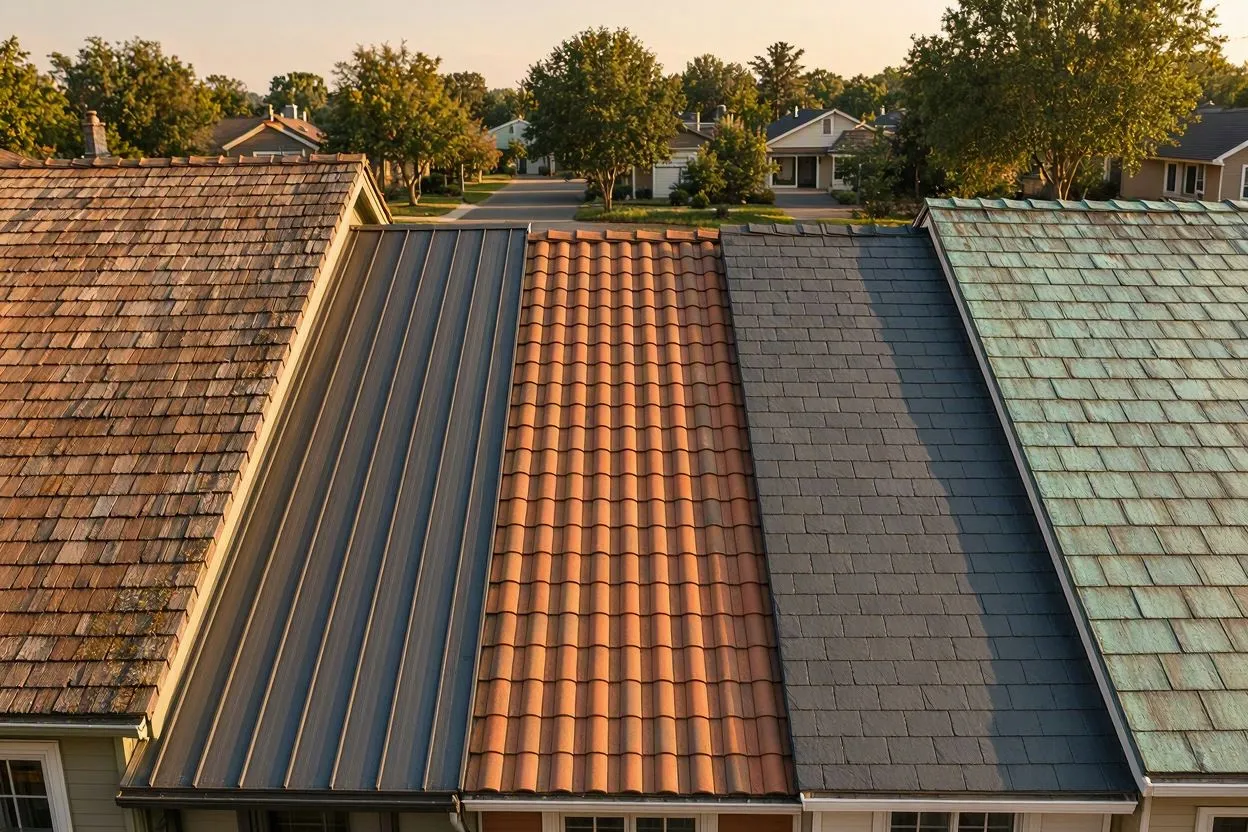
Roof tiles last anywhere from 20 years (cedar shake) to more than 100 years (slate, clay, and copper), depending on the material and how well it’s maintained. Slate holds the longevity record among common roofing materials, with documented roofs still going strong past a century. Clay is close behind at 50 to 100+ years, especially in dry climates where freeze-thaw cycling isn’t an issue.
Metal lands in the middle at 50 to 70 years, which is a good return considering it costs less upfront than slate or clay. Composite and synthetic tiles carry manufacturer warranties of 40 to 50 years, but because they’re newer, there’s no century of real-world data behind them yet. Cedar shake has the shortest life at 20 to 40 years. Wood simply breaks down faster than stone, clay, or metal, however carefully you look after it.
Conclusion
Nine materials dominate the tile roofing market: clay, concrete, slate, metal, composite, synthetic, solar, copper, and cedar shake. Each one balances cost, weight, and lifespan differently. If you want a multi-generational roof and can handle the structural work upfront, slate and clay are worth it. If lighter weight and faster installation matter more, metal and composite make more sense. Whatever you lean toward, get your roof’s pitch and structural load checked by a licensed contractor before you order anything. That one step prevents most of the expensive mistakes people make when choosing between types of roof tiles.
FAQs

Related Posts