Types of Flooring Materials: 9 Options Compared by Cost, Durability and Room
Most people pick flooring the wrong way. They walk into a showroom, fall in love with a sample, and buy it — without checking if it handles moisture, pets, or the specific room they are installing it in.
Three months later, the laminate is swelling in the kitchen. The hardwood is warping near the back door. The carpet already smells like dog. That $2,000 decision becomes a $7,000 problem.
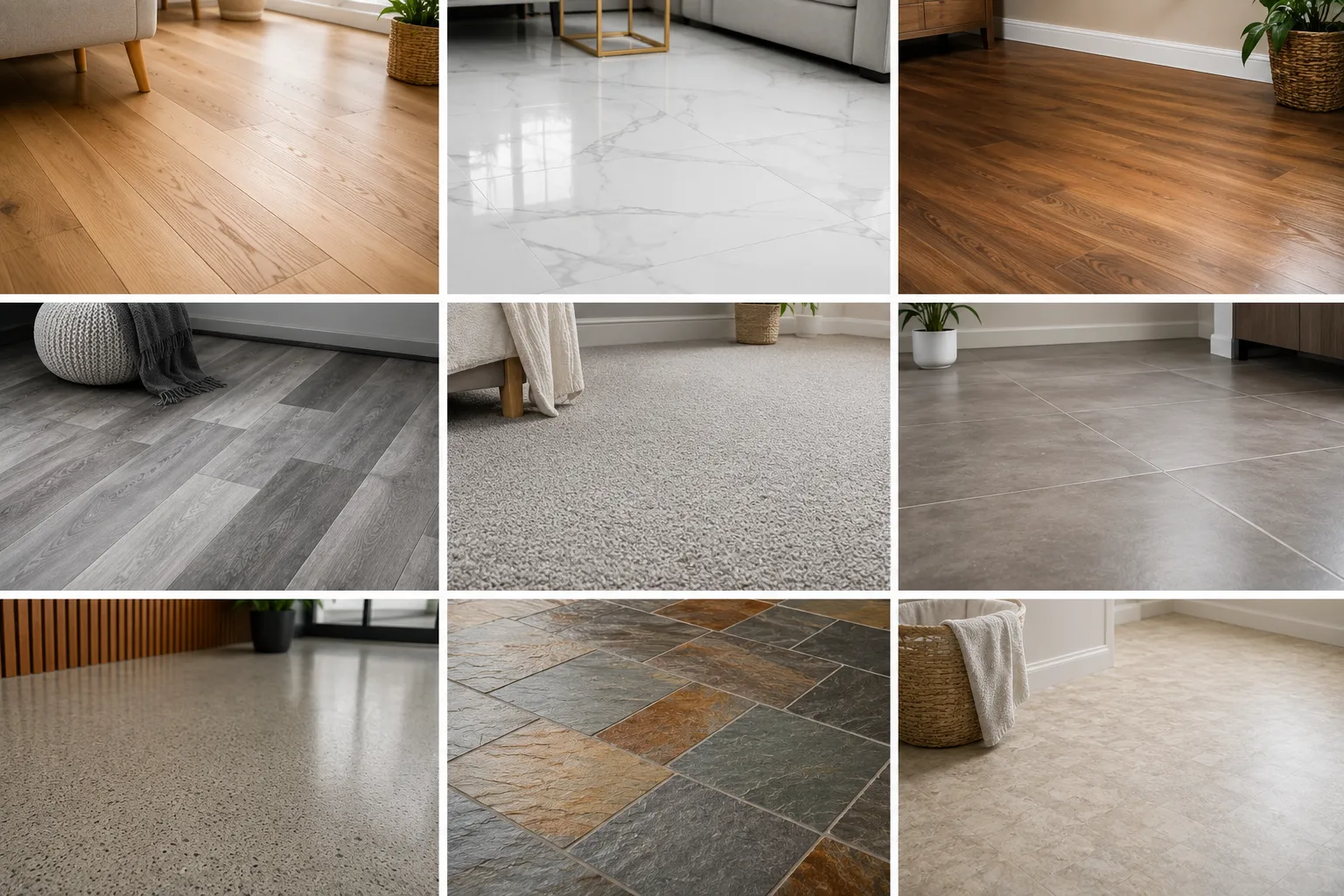
The fix is simple: match the flooring to the room before worrying about color or price. This guide covers all 9 types of flooring materials — with real cost figures, honest lifespan data, and a room-by-room breakdown that tells you exactly what works where. No fluff, no brand pushing. Just the information you need to buy once and buy right.
At a Glance: All 9 Flooring Types Compared
| Flooring Type | Material Cost (per sq ft) | Install Cost (per sq ft) | Lifespan | Waterproof | Best Room |
| Solid Hardwood | $5–$10 | $4–$8 | 30–100 years | No | Living room, bedroom |
| Engineered Hardwood | $3–$8 | $3–$6 | 20–40 years | Partial | Basement, kitchen |
| Laminate | $1–$5 | $2–$4 | 15–25 years | No | Bedroom, living room |
| Luxury Vinyl Plank (LVP) | $2–$7 | $2–$4 | 15–30 years | Yes | Kitchen, bathroom |
| Ceramic Tile | $1–$5 | $4–$7 | 20–50 years | Yes | Bathroom, kitchen |
| Porcelain Tile | $3–$10 | $4–$8 | 30–50 years | Yes | Any room |
| Natural Stone | $5–$20 | $6–$12 | 50–100 years | Partial | Entryway, bathroom |
| Carpet | $1–$5 | $1–$3 | 5–15 years | No | Bedroom, playroom |
| Bamboo | $2–$5 | $3–$5 | 20–30 years | No | Living room, office |
| Cork | $2–$6 | $2–$4 | 10–30 years | No | Bedroom, home office |
1. Solid Hardwood Flooring
Solid hardwood is the only flooring you can refinish 5–7 times, giving it a lifespan of 30–100 years. Each plank is milled from a single piece of oak, maple, walnut, or cherry.
Material cost runs $5–$10 per sq ft ($54–$108 per m²), with installation adding $4–$8 per sq ft. Total project cost for a 500 sq ft living room: $4,500–$9,000.
What solid hardwood does well:
- Increases home resale value by 3–5% on average
- Handles heavy furniture without permanent indentation
- Gets more beautiful with age — grain deepens over decades
Where solid hardwood fails:
- Absorbs moisture and warps — never install in bathrooms or below-grade basements
- Requires refinishing every 7–10 years in high-traffic homes
- Cold underfoot without rugs or radiant heating
Best rooms: living room, dining room, bedroom and above-grade home office.
Species hardness matters. Use the Janka hardness scale to pick the right wood. Brazilian walnut rates 3,680 lbf — the hardest commercial option. Red oak rates 1,290 lbf — fine for light traffic. Softer woods like pine (870 lbf) dent easily and suit low-traffic bedrooms only.
2. Engineered Hardwood Flooring
Engineered hardwood costs $3–$8 per sq ft ($32–$86 per m²) — 30–40% less than solid hardwood — with a real wood veneer on top and 5–9 plywood layers below.
The layered core resists expansion and contraction caused by humidity changes, making engineered hardwood 60% more dimensionally stable than solid wood. This stability allows installation in kitchens, basements, and rooms with radiant underfloor heating.
4 key advantages over solid hardwood:
- Installs over concrete subfloors without moisture barriers in most cases
- Works with radiant heating systems up to 85°F (29°C) floor temperature
- Thinner profile (3/8″–3/4″) fits under existing door frames without trimming
- Available in wider planks (5″–9″) that create a premium look at a lower cost
The 1 major limitation: Engineered hardwood can only be refinished 1–3 times, depending on veneer thickness. A 2mm veneer allows 1 refinish. A 6mm veneer allows 3.
Check the veneer thickness before buying. Most budget options carry a 2mm veneer — enough for 1 light sand. Premium options at $6–$8 per sq ft carry 4–6mm veneers.
3. Laminate Flooring
Laminate flooring costs $1–$5 per sq ft ($11–$54 per m²) and mimics wood, stone, or tile through a high-resolution photographic layer bonded to a high-density fiberboard (HDF) core.
Total installed cost for a 300 sq ft bedroom: $900–$2,700. That is 60–70% cheaper than hardwood for a nearly identical visual result. AC ratings determine durability. Every laminate carries an Abrasion Class (AC) rating from AC1 to AC5:
- AC1–AC2: light residential use — bedrooms, closets
- AC3: heavy residential — living rooms, hallways
- AC4: commercial light use — offices, boutiques
- AC5: heavy commercial — department stores, schools
Buy AC3 minimum for any residential main floor. Buy AC4 for homes with dogs or kids.
The moisture problem: Standard laminate swells when water seeps into seams. Water-resistant laminate handles surface spills with quick cleanup, but is not waterproof. Avoid standard laminate in bathrooms or laundry rooms entirely. The click-lock installation system snaps planks together without glue or nails — a straightforward DIY project for flat, level subfloors.
4. Luxury Vinyl Plank (LVP) Flooring
Yes, LVP flooring is 100% waterproof — the only wood-look flooring that is. This makes LVP the top choice for kitchens, bathrooms, and basements where moisture is a constant concern. LVP costs $2–$7 per sq ft ($22–$75 per m²), with installation adding $2–$4 per sq ft. Total project cost for a 400 sq ft kitchen: $1,600–$4,400.
Construction breakdown:
- Wear layer: 4–40 mil polyurethane — determines scratch resistance
- Design layer: high-resolution wood or stone print
- Core: rigid WPC (Wood Plastic Composite) or SPC (Stone Plastic Composite)
- Underlayment: attached foam pad in premium options
Wear layer thickness is everything. A 6 mil wear layer suit low-traffic bedrooms. A 12 mil suits families with pets and children. A 20+ mil suits commercial spaces or heavy-use kitchens.
SPC core LVP is 3–4x denser than WPC and handles temperature fluctuations better — critical for rooms that get direct sunlight or connect to garages. WPC feels softer underfoot but dents more easily. LVP installs over most existing floors — tile, concrete, or old vinyl — without removal, saving $1–$3 per sq ft in demo costs.
5. Ceramic & Porcelain Tile Flooring
Porcelain tile outlasts ceramic tile in every measurable category. Porcelain fires at 2,372°F (1,300°C) versus 1,832°F (1,000°C) for ceramic, producing a denser, less porous material that absorbs 0.1% moisture versus ceramic’s 0.5–3%.
Ceramic tile costs: $1–$5 per sq ft ($11–$54 per m²), install $4–$7 per sq ft. Porcelain tile costs: $3–$10 per sq ft ($32–$108 per m²), install $4–$8 per sq ft. Tile lifespan: 20–50 years for ceramic, 30–50 years for porcelain with proper grouting.
5 situations where tile wins over every other flooring:
- Bathrooms with wet floors and shower splash
- Kitchens with frequent spills and grease
- Entryways that face mud, rain, and outdoor debris
- Laundry rooms with potential washer overflow
- Homes in hot climates where cool underfoot comfort matters
The grout problem competitors ignore: Grout lines collect bacteria, mold, and stains over time. Epoxy grout solves this — it costs 3x more than cement grout but resists stains permanently and never needs sealing. For kitchens and bathrooms, epoxy grout is worth the extra $0.50–$1 per sq ft.
Larger format tiles (24″×24″ / 61×61 cm) create fewer grout lines and a more spacious visual. Use rectified tiles — cut to precise dimensions — for grout lines under 3mm.
6. Natural Stone Flooring
Natural stone flooring costs $5–$20 per sq ft ($54–$215 per m²), depending on stone type, with installation adding $6–$12 per sq ft. It is the most expensive flooring category, but also the only one that genuinely increases home value by 5–10% in premium markets.
4 main stone types and their differences:
- Marble: $8–$20 per sq ft. Elegant veining, high-gloss polish. Porous and scratches easily. Requires sealing every 1–2 years. Best for low-traffic bathrooms and formal entryways.
- Granite: $5–$15 per sq ft. Hardest natural stone at 2,500–7,000 Mohs hardness equivalent. Resists scratches and heat. Best for kitchen floors and high-traffic entryways.
- Slate: $5–$10 per sq ft. Natural cleft surface provides slip resistance without treatment. Ideal for outdoor patios and mudrooms. Requires sealing annually.Travertine: $3–$10 per sq ft. Warmer tone than marble. Has natural pits that collect dirt — fill with grout or epoxy before installation in kitchens.
All natural stone requires sealing before use and resealing every 1–3 years. Skip this step, and porous stones absorb oil, wine, and cleaning chemicals permanently.
7. Carpet Flooring
Carpet costs $1–$5 per sq ft ($11–$54 per m²), the cheapest installed flooring available. Total cost for a 200 sq ft bedroom, including padding and installation: $400–$1,600.
Carpet is the only flooring that reduces room noise by 25–35 decibels — measurable acoustic insulation that tile and hardwood cannot match. This makes carpet the right choice for bedrooms above living spaces, children’s rooms, and home theaters.
3 carpet fiber types that matter:
- Nylon — most durable, resists crushing and staining, costs $2–$5 per sq ft. Best for living rooms and stairs with heavy foot traffic.
- Polyester (PET) — stain-resistant and made from recycled materials, costs $1–$3 per sq ft. Best for bedrooms with light traffic.
- Wool — natural, hypoallergenic, regulates temperature, costs $5–$20 per sq ft. Best for master bedrooms and formal sitting rooms.
- The lifespan problem: Carpet lasts only 5–15 years — the shortest lifespan of all flooring types. High-traffic hallways and living rooms show wear at 5–7 years. Bedrooms can last 10–15 years with regular vacuuming and professional cleaning every 18 months.
Carpet is not recommended for homes with severe allergies. Carpet fibers trap 8–10x more allergens than hard flooring surfaces.
8. Bamboo Flooring
Bamboo is not wood — it is a grass that reaches harvestable maturity in 5–7 years versus 25–70 years for hardwood trees. This makes bamboo one of the most sustainable flooring options available. Bamboo costs $2–$5 per sq ft ($22–$54 per m²) with installation adding $3–$5 per sq ft.
Strand-woven bamboo is 3x harder than red oak at 3,000–4,000 Janka lbf. This makes strand-woven bamboo more scratch-resistant than most hardwoods, including white oak and maple.
2 types to know:
Horizontal/vertical bamboo — shows natural bamboo grain pattern. Janka rating 1,200–1,800 lbf. Softer and more prone to denting. Costs $2–$4 per sq ft.
Strand-woven bamboo — fibers compressed under extreme pressure. Janka rating 3,000–4,000 lbf. Handles pets and heavy furniture. Costs $3–$5 per sq ft.
Bamboo expands and contracts with humidity changes, similar to hardwood. Maintain indoor humidity at 40–60% RH (relative humidity) to prevent gapping or buckling.
9. Cork Flooring
Cork flooring is harvested from cork oak bark without cutting the tree — the bark regrows every 9 years, making cork one of 3 genuinely renewable flooring materials alongside bamboo and linoleum. Cork costs $2–$6 per sq ft ($22–$65 per m²) with installation adding $2–$4 per sq ft.
Cork’s 4 functional properties competitors rarely mention:
- Natural thermal insulation — R-value of 1.125 per inch keeps rooms 10–15% warmer than tile
- Sound absorption — reduces impact noise by 10 dB, airborne noise by 6 dB
- Anti-microbial — natural suberin compound resists mold, bacteria, and insects
- Cushioned underfoot — compresses 10–15% under weight, reducing joint strain
Cork requires sealing every 3–5 years. Without sealing, cork absorbs moisture and stains permanently. Use water-based polyurethane — 3 coats — for kitchens. For bedrooms, 2 coats suffice. Cork dents under heavy furniture. Use furniture pads under all legs. Avoid cork in bathrooms with a risk of standing water.
Room-by-Room Flooring Guide
Kitchen
Best choice: LVP or porcelain tile. Kitchens average 3–5 spills per day and 400–600 ft of daily foot traffic. LVP handles moisture, stands up to dropped utensils, and installs over existing tile without demo. Porcelain tile lasts longer but costs more and feels harder underfoot. Avoid hardwood, laminate, and carpet in kitchens entirely.
Bathroom
Best choice: Porcelain tile or LVP. Bathrooms need 100% waterproof flooring. Porcelain tile with epoxy grout is the 50-year solution. LVP with SPC core is the budget alternative at half the cost. Natural stone looks premium but requires annual sealing. Never install carpet, hardwood, or standard laminate in bathrooms.
Living Room
Best choice: Hardwood, engineered hardwood, or LVP. Living rooms need flooring that handles foot traffic and looks good for 20+ years. Solid hardwood increases resale value most. Engineered hardwood suits rooms over concrete slabs or with radiant heating. LVP suits homes with pets or young children.
Bedroom
Best choice: Carpet or hardwood. Bedrooms have the lowest foot traffic and benefit most from carpet’s sound absorption and warmth. Polyester carpet suits guest bedrooms. Nylon suits master bedrooms. Hardwood suits homeowners who want a consistent look throughout the home.
Basement
Best choice: LVP with SPC core or ceramic tile. Basements sit below grade and average 60–75% humidity. Only 100% waterproof flooring belongs here. LVP with SPC core handles temperature swings from 45°F–85°F (7°C–29°C). Ceramic tile works for finished basements with climate control.
Entryway / Mudroom
Best choice: Porcelain tile or natural stone. Entryways handle outdoor mud, rain, and sand daily. Porcelain tile’s 0.1% moisture absorption rate handles wet boots and umbrella drips. Slate provides natural slip resistance. Use matte or textured finishes — polished stone becomes dangerously slippery when wet.
Flooring by Budget: 3 Clear Tiers
Tier 1: Under $3 per sq ft total installed
Best options: luxury vinyl tile, basic laminate (AC3), ceramic tile. A 500 sq ft space runs $1,000–$1,500 total. These floors look good and last 10–20 years with normal care. Right for rental properties, starter homes, and temporary living situations.
Tier 2: $3–$8 per sq ft total installed
Best options: LVP with 12+ mil wear layer, engineered hardwood, porcelain tile, bamboo. A 500 sq ft space runs $1,500–$4,000 total. These floors match most homeowner needs — 20–30 year lifespan, good appearance, manageable maintenance.
Tier 3: $8+ per sq ft total installed
Best options: solid hardwood, natural stone, premium porcelain large format tile. A 500 sq ft space runs $4,000–$11,000+ total. These floors increase resale value, last 50–100 years, and suit long-term homeowners who plan to stay 10+ years.
Flooring for Your Climate
Humid climates (above 60% average RH)
High humidity warps wood and grows mold under carpet. Use LVP, porcelain tile, or ceramic tile throughout. If hardwood is desired, choose engineered hardwood with a thick plywood core and acclimate planks for 72 hours before installation.
Dry climates (below 30% average RH)
Dry air causes hardwood and bamboo to shrink and gap. Use a whole-home humidifier to maintain 40–50% RH. LVP and tile perform well without humidity management.
Cold climates
Tile and stone feel extremely cold in winter without radiant underfloor heating. LVP and carpet retain warmth better. If installing tile over radiant heat, use LVP or porcelain — ceramic tile can crack under thermal cycling in climates below 20°F (-7°C).
Hot climates
Direct sunlight fades laminate and LVP over 5–10 years. Use fade-resistant flooring with UV inhibitors, or add window treatments. Stone and porcelain tile handle heat best and cool naturally.
The Bottom Line
9 types of flooring materials exist, and none is universally best. LVP is the most versatile option for most homes — waterproof, durable, affordable, and installable in every room. Solid hardwood delivers the best long-term value for homeowners staying 15+ years. Porcelain tile is the lowest-maintenance choice for kitchens and bathrooms. Match flooring to room conditions first, budget second, and aesthetics third. That order prevents the most expensive mistakes.
Frequently Asked Questions

Related Posts