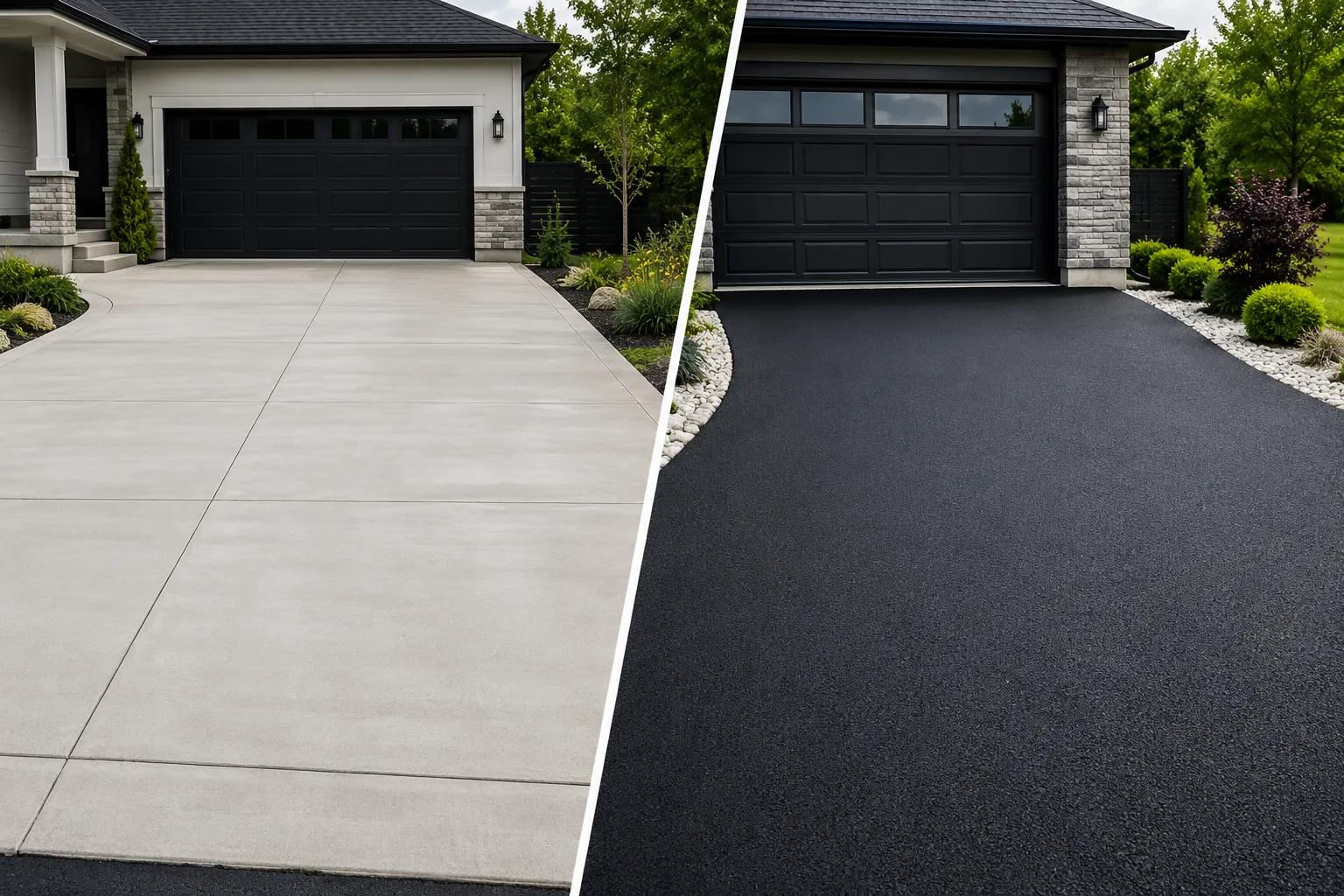
Concrete vs Asphalt Driveway: Which One Is Actually Worth Your Money?
You are about to spend anywhere from $3,000 to $7,000 on a new driveway. Pick the wrong material and you could be spending another $2,000–$3,000 within ten years just to keep it alive. Pick the right one and you forget it exists for the next three decades.
That is the real difference between concrete and asphalt. Not just the look. The money — upfront and over time.
This guide breaks it all down: cost, lifespan, maintenance, climate performance, design, and which one actually fits your situation. No fluff. Just the facts you need before signing any contractor quote.
What Are These Two Materials, Really?
Asphalt is made from petroleum, sand, and stone. Workers heat it until it softens, pour it out, and compact it. It sets within hours. The dark black color is a petroleum byproduct — not a coating.
Concrete is a mix of Portland cement, water, aggregate (gravel or crushed stone), and sometimes sand. Once poured, it needs 7 days to fully cure. The result is a rigid slab with a compressive strength of 4,000 PSI or higher — roughly twice the load capacity of standard asphalt at the same thickness.
Same job. Very different materials. Very different long-term behavior.
Concrete vs Asphalt Driveway Cost: Upfront and Over 30 Years
Installation cost
Asphalt runs $4–$8 per square foot installed. A standard 600 sq ft driveway costs $2,400–$4,800.
-
- Concrete runs $6–$12 per square foot: The same driveway costs $3,600–$7,200. Higher upfront because the material costs more and curing takes longer.
-
- Prices vary by location: In states like Texas and the South, concrete is more common and often priced competitively. In the Northeast and Midwest where asphalt dominates, concrete contractors charge a premium. Always get 3 local quotes before deciding.
The 30-year picture
Asphalt needs sealing every 3–5 years at $500–$1,000 per session. Around year 15 it typically needs resurfacing at $1,500–$3,000. You may replace it entirely at year 20. Total 30-year cost: $8,000–$10,000.
Concrete needs sealing every 5–7 years and occasional crack repair every 10 years or so at $200–$500. Total 30-year cost: $6,500–$8,000. It costs more on day one. Over time, it costs less. If you are staying in this house for 10 or more years, concrete wins on total spend.
| Category | Asphalt | Concrete |
| Cost per sq ft | $4–$8 | $6–$12 |
| 600 sq ft driveway | $2,400–$4,800 | $3,600–$7,200 |
| Sealing frequency | Every 3–5 years | Every 5–7 years |
| Cost per year (avg) | $125/yr | $94/yr |
| 30-year total cost | $8,000–$10,000 | $6,500–$8,000 |
How Long Does Each Driveway Last?
A properly installed asphalt driveway lasts 15–20 years with regular maintenance. Push that to 25 years if you are diligent about sealing and live in a mild climate.
Concrete lasts 25–50 years. The Michigan Department of Transportation (MDOT) reports that concrete pavement averages 27.5 years before major repairs, versus 15.5 years for asphalt. Federal highway data shows concrete interstates last 2.5 times longer than asphalt ones.
Why the gap? Concrete is rigid. It distributes load evenly across the slab. Asphalt is flexible — it absorbs weight and slowly deforms under repeated stress, heat, and freeze-thaw cycles.
A 5-inch concrete slab carries the same load as an 8-inch asphalt surface. That matters if you park heavy vehicles, have delivery trucks pulling in regularly, or plan to add an EV charger and heavier car in the future.
Maintenance: What You Actually Have to Do Each Year
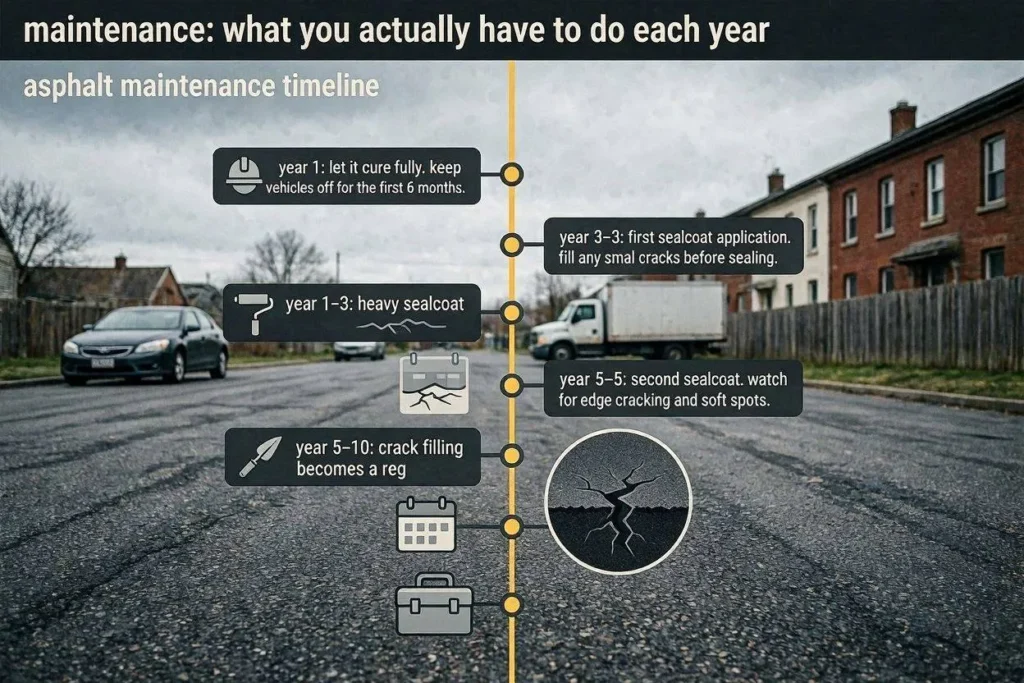
Maintenance is where most homeowners get a surprise. The cheaper upfront option — asphalt — demands more of your time and wallet every year.
Asphalt maintenance timeline
-
- Year 1: Let it cure fully. Keep heavy vehicles off for the first 6 months.
-
- Year 1–3: First sealcoat application. Fill any small cracks before sealing.
-
- Year 3–5: Second sealcoat. Watch for edge cracking and soft spots.
-
- Year 5–10: Crack filling becomes a regular job. Surface fading accelerates.
-
- Year 10–15: Pothole patching. Oxidation makes the surface brittle.
-
- Year 15–20: Resurfacing or full replacement decision.
Concrete maintenance timeline
-
- Year 1: Avoid deicing salts. Use sand instead in winter.
-
- Year 3–5: First sealant application to protect against stains and moisture.
-
- Year 5–10: Clean annually. Watch joint sealant for deterioration.
-
- Year 10–15: Reseal as needed. Crack repair if expansion joints failed.
-
- Year 20–30: Surface still intact with basic upkeep in most climates.
One real difference: stains. Oil leaks on asphalt are nearly impossible to remove — the petroleum-based surface absorbs them permanently. On concrete, a degreaser and a pressure washer handle most stains. Your driveway can look clean again.
Climate Performance: Heat, Cold, Rain, and Drainage
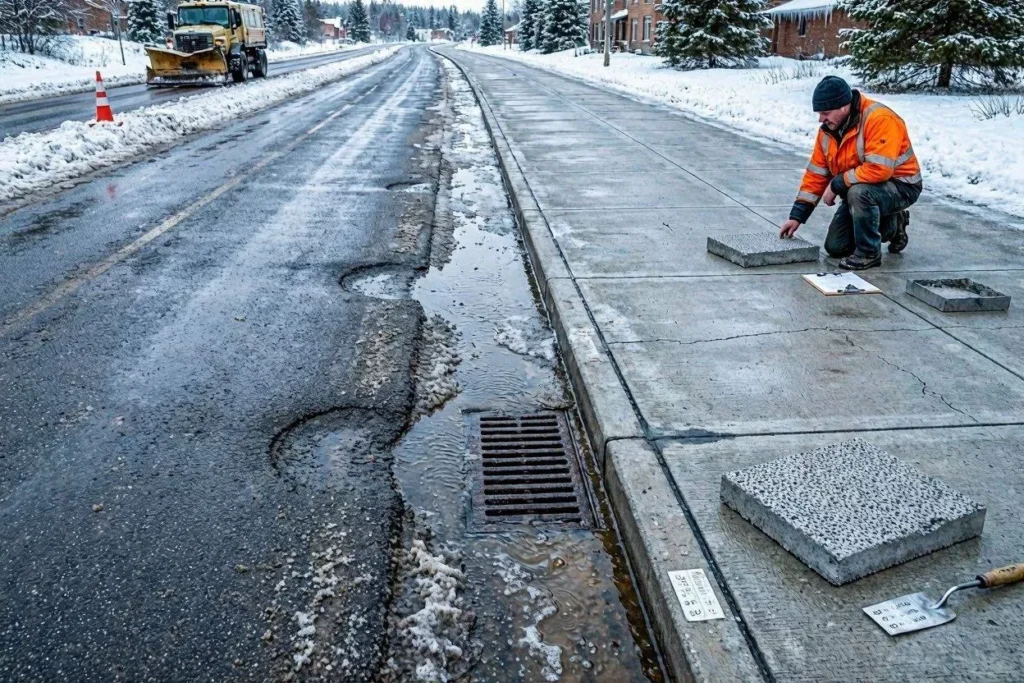
Cold climates
Asphalt handles freeze-thaw cycles better. It flexes slightly instead of cracking outright when the ground heaves. This is why Northern states default to asphalt for roads.
Concrete can crack in harsh winters if not installed with proper expansion joints and the right aggregate mix. Modern concrete with 5–8% air content handles freezing well. Ask your contractor specifically about air-entrained mixes if you live in a cold climate.
One catch with concrete in winter: deicing salts destroy it. Sodium chloride draws water into the surface, which then freezes and chips the concrete from the inside. Use sand or calcium magnesium acetate instead.
Hot and humid climates
Concrete wins in heat. It stays up to 10 degrees cooler than asphalt on a hot day. Asphalt absorbs heat, softens in extreme temperatures, and can develop ruts under heavy vehicles sitting on it in summer.
In humid climates like the Southeast, both materials need good drainage underneath. Poor subgrade drainage is the number one cause of premature driveway failure — for both materials. A contractor who skips proper subbase prep is setting you up for cracks within 3 years.
Drainage and water runoff
Standard concrete and asphalt are both impermeable — rainwater runs off the surface. If you are in an area with flooding concerns, municipal drainage requirements, or a lot on a slope, ask about permeable concrete or porous asphalt. Both allow water to pass through and recharge groundwater.
Some HOAs and municipalities now require permeable surfaces for new driveways. Check local rules before pouring anything.
Curb Appeal and Design Options
If you want a plain dark surface, asphalt delivers that at a lower cost. It has one look: black. Over time it fades to gray and needs sealcoating to restore color.
Concrete opens up options. You can go with standard gray or choose from stamped patterns (slate, cobblestone, brick), exposed aggregate, chemical staining in dozens of colors, or polished finishes. A well-designed stamped concrete driveway adds real curb appeal and matches the exterior of your home in ways asphalt never can.
On resale value, concrete consistently delivers a higher return on investment. Buyers see a concrete driveway as a long-term feature. Asphalt — especially older, faded asphalt — can actually lower perceived value. If you are thinking about selling in the next 5–10 years, concrete is the stronger investment.
Which Is More Eco-Friendly?
This one is more nuanced than most guides admit. Asphalt production releases fewer emissions upfront. But asphalt is petroleum-based — it contributes to heat island effects in urban areas and leaches compounds into groundwater over time. On the positive side, it is the most recycled material in the US. Old asphalt gets reprocessed into new asphalt constantly.
Concrete production involves burning limestone at very high temperatures, releasing significant CO2 — roughly 900 kg of CO2 per ton of Portland cement produced. That is a real environmental cost.
But here is what most guides miss: lifespan matters. A concrete driveway that lasts 40 years has lower total environmental impact than an asphalt driveway replaced twice in the same period. When you include permeable concrete — which reduces stormwater runoff and recharges local aquifers — concrete pulls ahead on sustainability.
If you want the lowest carbon choice, look into fly ash concrete. Fly ash (a coal combustion byproduct) replaces 15–40% of Portland cement in the mix, cutting production emissions significantly.
Concrete vs Asphalt: Full Comparison at a Glance
| Factor | Concrete | Asphalt |
| Upfront cost | Higher ($6–$12/sqft) | Lower ($4–$8/sqft) |
| Lifespan | 25–50 years | 15–20 years |
| Maintenance effort | Low | Medium-High |
| 30-year cost | $6,500–$8,000 | $8,000–$10,000 |
| Cold climate | Good (with right mix) | Excellent |
| Hot climate | Excellent | Fair (softens in heat) |
| Design options | Many (stamps, stains, polish) | Limited (black only) |
| Resale value impact | High | Moderate |
| Eco impact | High production CO2, long life | Petroleum-based, highly recyclable |
| Stain removal | Easy | Difficult |
| Install time to use | 7 days cure | 24–48 hours |
| EV / heavy vehicle load | Excellent (high PSI) | Fair |
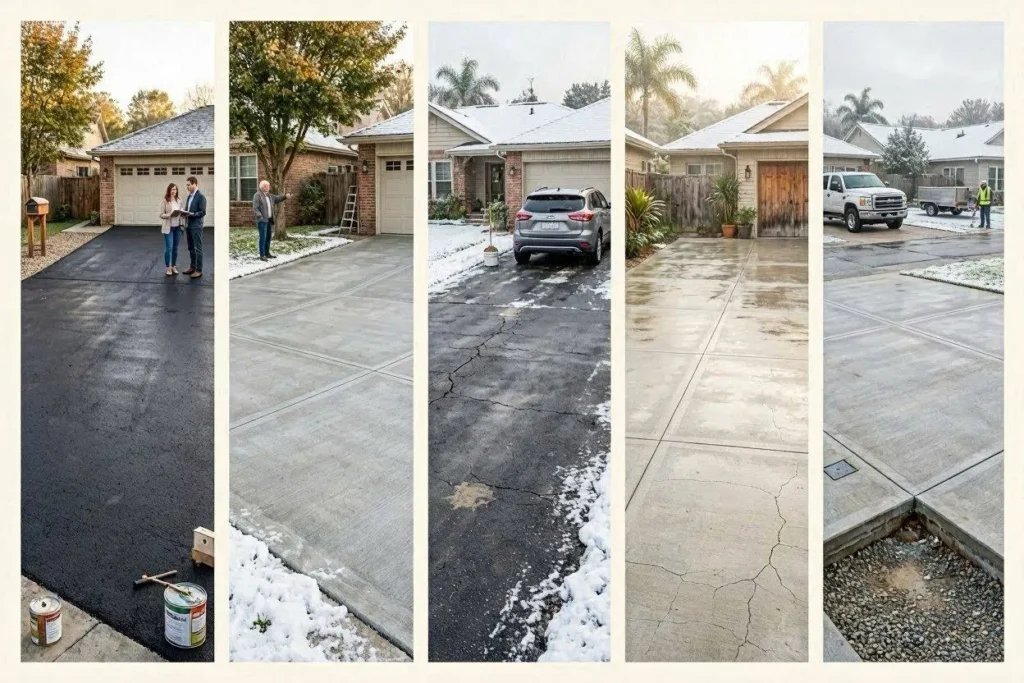
Which Driveway Should You Choose? (5 Scenarios)
-
- Tight budget right now: Go with asphalt. Lower upfront cost gets you a functional driveway. Plan for sealing costs every few years.
-
- Planning to stay 15+ years: Concrete wins. You will spend less over time and deal with far less maintenance.
-
- Living in a cold climate (Midwest, Northeast): Asphalt handles freeze-thaw better. If you go concrete, insist on air-entrained mix and avoid salt deicers.
-
- Living in a hot or humid climate (South, Southwest): Concrete. It stays cooler, does not rut in heat, and handles heavy vehicles better.
-
- Care about curb appeal or plan to sell: Concrete. Stamped or stained concrete adds visible value. Asphalt rarely does.
Frequently Asked Questions
Is concrete or asphalt cheaper?
Asphalt is cheaper upfront ($4–$8/sqft vs $6–$12/sqft for concrete). But over 30 years, concrete costs less due to lower maintenance needs.
Which driveway is better for cold weather?
Asphalt handles freeze-thaw cycles more naturally because it flexes. Concrete works well too if installed with air-entrained mix and expansion joints — just avoid salt deicers.
Does a concrete driveway increase home value?
Yes. Concrete consistently delivers a better return on investment than asphalt at resale. Buyers view it as a long-term feature that needs little upkeep.
How often does asphalt need to be sealed?
Every 3–5 years. Skipping sealing lets cracks form and spread faster, which shortens the driveway life significantly.
Which driveway is better for heavy vehicles or RVs?
Concrete. A 5-inch concrete slab matches the load capacity of an 8-inch asphalt surface. Asphalt can rut or sink under heavy parked loads, especially in heat.
Conclusion
Now you know what each material actually costs, how long it lasts, and which one fits your climate and situation. The next step is getting quotes from local contractors who know your soil conditions and weather.
Ask specifically about: base preparation depth, concrete mix type (air-entrained if cold climate), joint placement, and warranty on labor. Those four questions separate experienced contractors from the rest.
Get at least 3 quotes. Compare them on scope of work, not just price. Your driveway is a 20–40 year decision — a few hours of research now saves thousands later.

Related Posts