How to Diagnose Basement Water Problems Before Choosing a Waterproofing System
There’s rarely just one reason a basement gets wet. Water can push through a foundation wall, seep in where the floor meets the wall, drip from a pipe, or simply condense on cold concrete. At first glance these all look pretty much the same, which is why picking a waterproofing system before you know the source often means paying for work you didn’t need while the real problem keeps going.
Good diagnosis begins with paying attention. Where does the moisture show up? When does it appear? What seems to make it worse? Answer those questions and you and your contractor will have a much better idea of the cause before anyone talks about repairs.
Start with the location and pattern
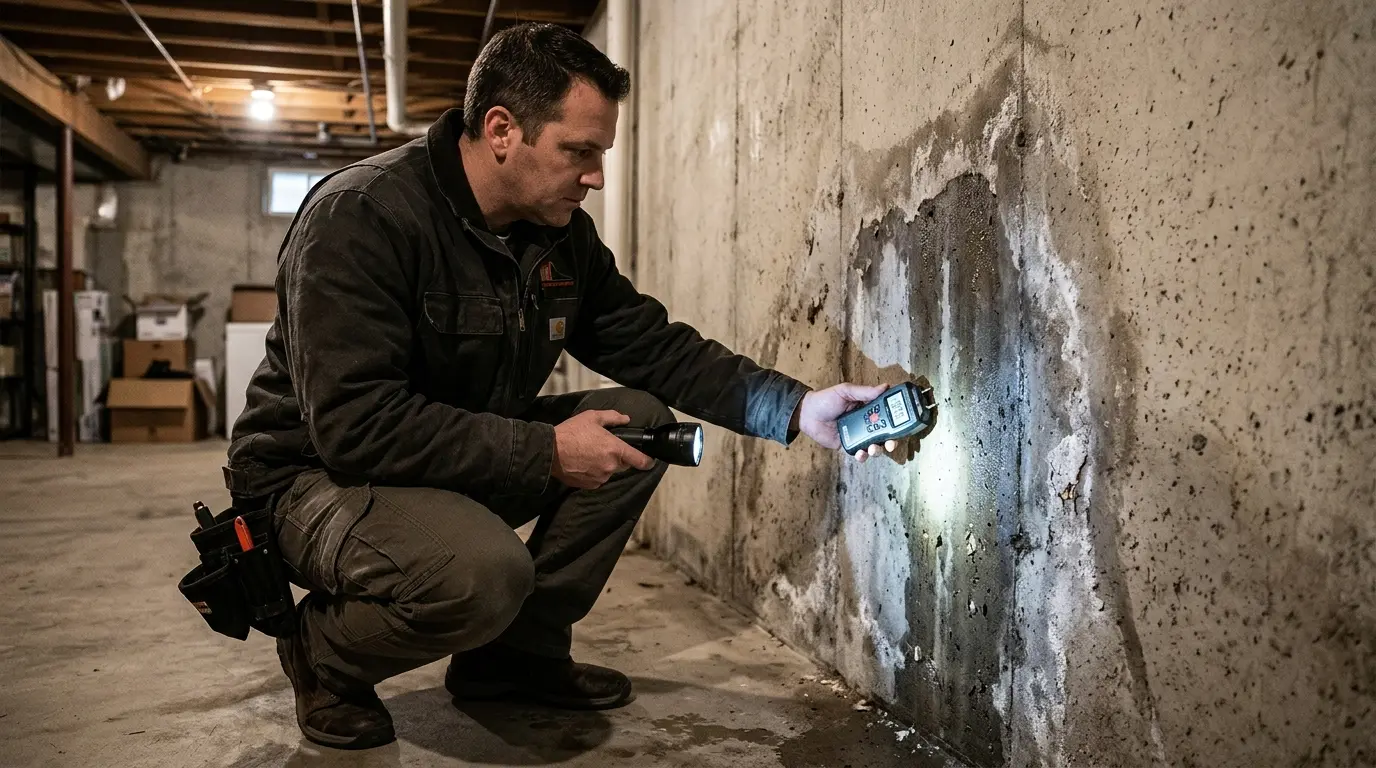
Write down exactly where the moisture is. Maybe it’s in one corner, along the bottom edge of a wall, around a window, or under a plumbing fixture. Is it a single spot, or are there damp areas in several parts of the basement?
The pattern tells you a lot. Water that appears at the base of a wall after heavy rain may be related to exterior drainage or water pressure around the foundation. A wet area near a sink, bathroom, laundry machine, or water heater could point to a plumbing leak. Moisture on pipes, windows, or broad areas of cool masonry may be condensation.
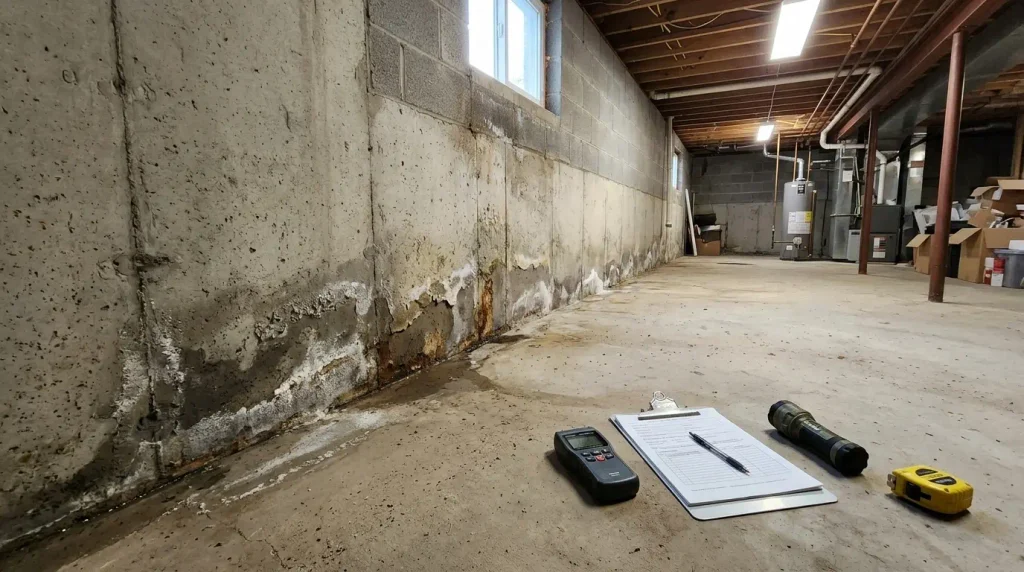
Keep an eye out for other clues too: water stains, peeling paint, warped trim, rust, a musty smell, or white chalky deposits on the masonry. They tell you moisture has been there, but not where it came from. Take photos of the affected areas and jot down the date, the recent weather, and anything that’s changed.
Track when the problem occurs
Timing is one of the most useful diagnostic clues. Notice whether the basement gets wet during a rainstorm or shortly after, when snow melts, on muggy days, or no matter what the weather’s doing.
If it shows up after storms, walk the property and look for ways rainwater might be getting to the foundation. If it’s there all the time, even when it’s been dry for a while, plumbing, groundwater, or condensation are more likely suspects. And if it mostly happens in warm, sticky weather, condensation could well be part of it.
When the problem comes and goes, keep a basic log for a few weeks. Record rainfall, outdoor temperatures, humidity if available, and where you notice moisture. A log can reveal patterns that are easy to miss during a single inspection and give a contractor more useful information.
Check for plumbing leaks
Before assuming water is coming through the foundation, inspect nearby plumbing. Look under sinks, around toilets and floor drains, behind the washer, and near the water heater. Check any exposed pipes for drips, rust, or insulation that feels damp.
If the wet spot is near plumbing, dry it off and watch it. Does it come back after someone runs a fixture, or even when nothing’s been used? If the pipes are hidden or you can’t pin down the source, it’s worth calling a licensed plumber.
A waterproofing system is not a substitute for repairing a leaking supply line, drain, or appliance connection. Confirming the plumbing is sound can prevent the wrong repair from being selected.
Look at drainage outside the foundation
Rainwater should drain away from the house rather than collect beside it. Walk around the exterior and check whether gutters and downspouts are clear, whether downspouts carry water away from the foundation, and whether the ground slopes toward or away from the home.
Watch for low spots, eroded soil, gutters that overflow, or puddles that form next to the house. Window wells and outside stairwells are worth a look too, since debris or standing water there can lead to moisture near a basement wall or window.
Fixing surface drainage often helps, but it won’t solve every basement water problem on its own. If water still gets in after those fixes, you’ll need a closer look.
Examine walls, windows, and the floor joint
Inspect foundation walls for cracks, gaps, or areas where water stains are concentrated. Check where walls meet the floor, since water can appear along that joint. Look at basement windows and window wells for deteriorated seals, blocked drains, or water marks.
A visible crack can be a clue, but it does not automatically show how much water is entering or what repair is appropriate. Avoid choosing a repair based only on the appearance of a crack. Its location, whether it changes over time, and the surrounding drainage conditions all matter.
If a crack appears to be growing, or if a wall is bowing or shifting, have it evaluated by a qualified professional. Structural movement may require a different assessment from a routine moisture issue.
Consider condensation and humidity
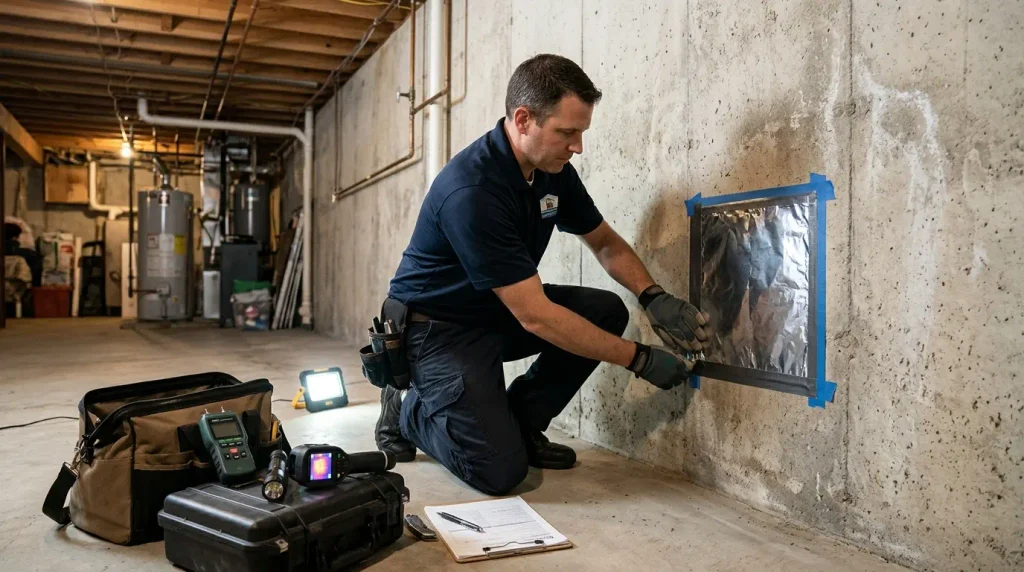
Not every damp basement has water coming in from outside. When warm, humid air hits cool pipes, windows, or foundation walls, it can condense, leaving droplets or damp patches with no obvious path from outdoors.
A humidity meter helps if you’ve got one. Notice whether condensation changes with the weather or with what’s happening inside, like showers, laundry drying, or cooking. It’s also worth checking whether the basement gets enough ventilation and whether air actually moves around those cool surfaces.
A dehumidifier may help control indoor humidity, but it will not stop water from coming through a foundation wall or repair a plumbing leak. If the condensation doesn’t go away, look at where the humidity is coming from and how the space is ventilated, and check the foundation too.
Understand the difference between symptoms and causes
Stains, smells, and damp flooring are only symptoms. Behind them could be a leak, bad drainage, condensation, or water working its way through the foundation. Several causes can occur at the same time, so solving one issue may not address the others.
This is why a system should be selected after the source and route of water are understood. Depending on the conditions, a professional may discuss drainage improvements, a sump pump, crack repair, humidity control, plumbing repairs, or another approach. The right option depends on the home and the observed problem.
Homeowners comparing solutions can discuss their findings with a qualified contractor, such as Blue Umbrella Waterproofing, and ask how the proposed work addresses the identified source of moisture.
Prepare useful information for a professional assessment
Before you book an assessment, pull together your photos, your moisture log, and any notes on plumbing or outside drainage problems. Be ready to say whether water shows up after rain, whether it stays in one area, and whether it’s gotten better or worse.
Ask the contractor what evidence led them to their recommendation, which areas the work will cover, and whether anything else should be fixed first. If different contractors suggest different systems, compare how each one diagnosed the problem and why, not just the equipment and the price.
Diagnose first, then choose the system
Figure out what’s causing the moisture before you pick new finishes or waterproofing equipment. Tracking when and where water appears, checking plumbing and exterior drainage, and distinguishing condensation from water entry can make the problem easier to understand.
A well matched repair begins with a clear diagnosis. By collecting useful observations and getting a professional assessment when needed, homeowners can choose a waterproofing approach that responds to the actual source of moisture and plan the work with greater confidence.

Related Posts