How Poor Yard Drainage Can Lead to a Wet Basement
A wet basement usually sends people straight to the walls and floor. That makes sense, but the real trouble often starts out in the yard. Rain that sits near the house pushes against the foundation, and sooner or later it finds a way in through a crack, a joint, a window, or some other weak spot.
Once you know how drainage outside affects the space below ground, you can catch problems sooner and fix things in a sensible order. So before you pick a waterproofing system, watch where the water actually goes on your property after a storm.
How water reaches the foundation
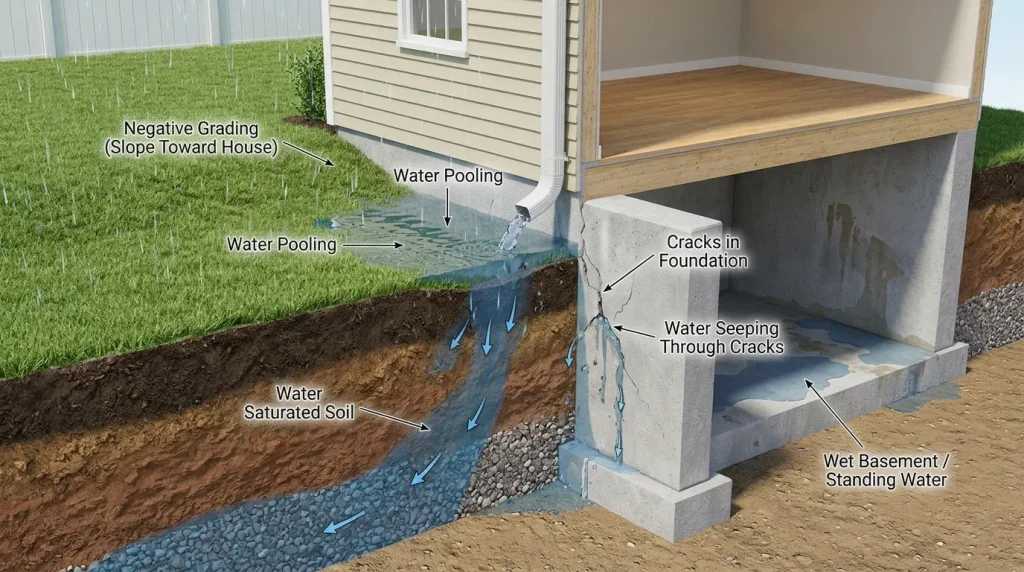
Rain hits the roof, the driveway, the patio, and the lawn. In a perfect world it all flows away from the house and ends up somewhere harmless. When it pools next to the foundation instead, or soaks into the soil by the basement, or runs into a window well, the walls end up dealing with a lot more water than they were built for.
Long, heavy rain can leave the soil completely soaked. Water then builds up around the foundation and can seep through cracks or gaps in the walls. It can also come in at the joint where the wall meets the floor, or through a basement window and its well.
How water gets in varies from house to house. The lot, the soil, and the state of the gutters and grading all play a part. And a wet basement isn’t always caused by one thing. Leaky plumbing and condensation can add to the problem too, so check inside the house as well as outside.
Check the ground around the house
Once the rain stops, take a walk around the house. Watch for puddles, mud, washed-out soil, or spots where water is running toward the walls. Pay particular attention to low spots near basement walls and to areas below roof edges or downspouts.
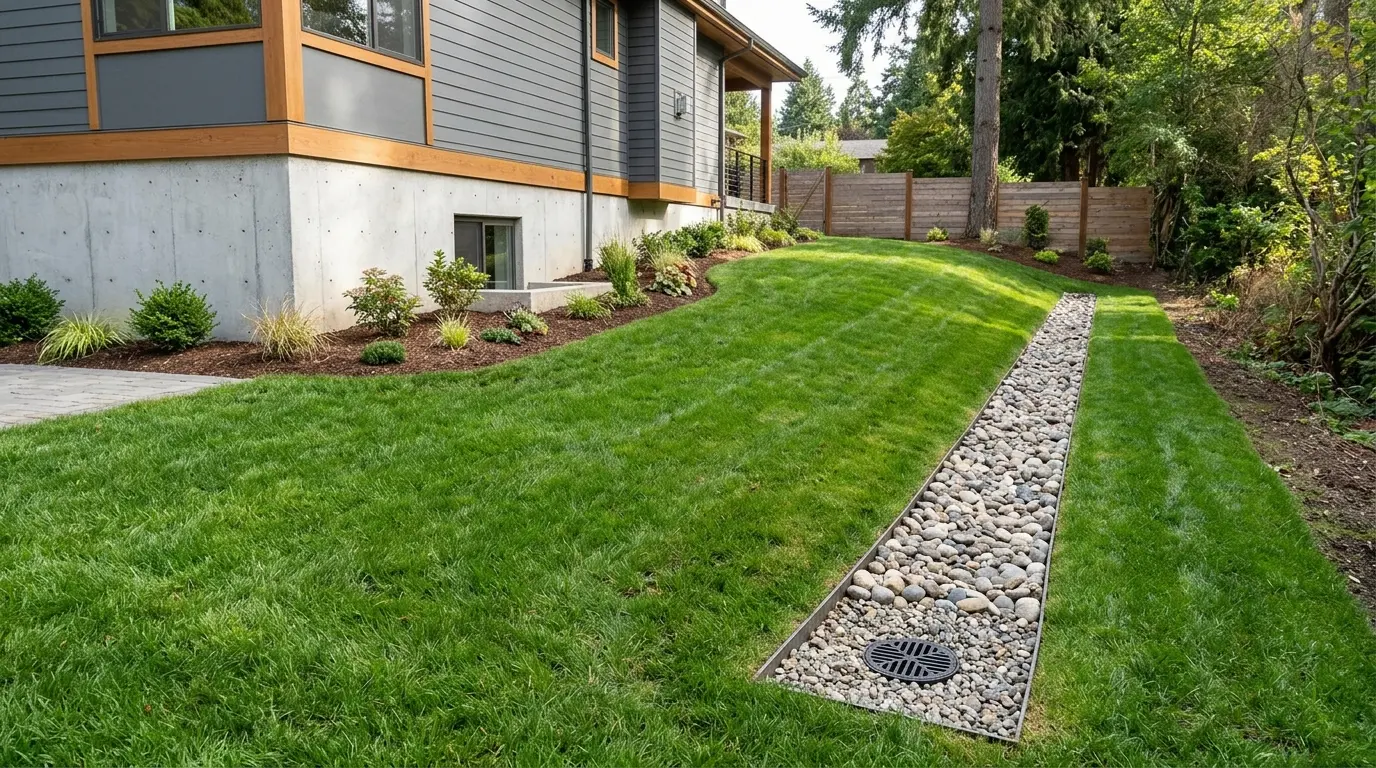
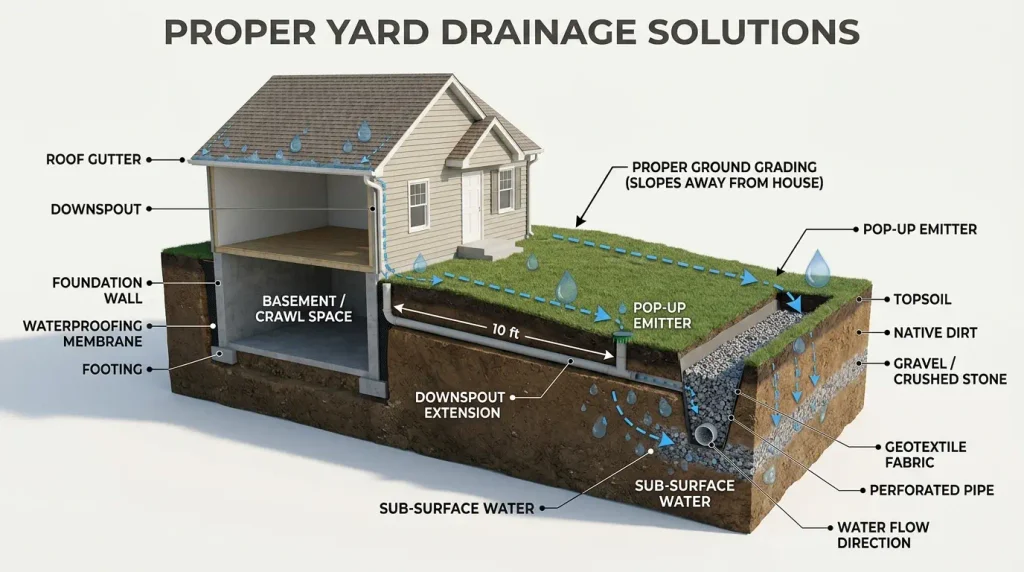
The ground should generally direct surface water away from the house. When the soil tilts toward the foundation, water tends to gather against the wall rather than run off. Ground also settles over the years, so a yard that drained fine a decade ago might not anymore. It’s worth a fresh look at the grading.
Be careful not to just push the water onto your neighbor’s lot or toward another side of your own house. What works for grading depends on how the property is laid out and what the local conditions are like. If the fix isn’t obvious, a landscaper or drainage pro can walk you through realistic options.
Inspect gutters and downspouts
Gutters catch the water coming off the roof, and downspouts bring it down to the ground. If a gutter is clogged, pulled loose, or overflowing, that water ends up spilling right next to the foundation. Same goes for a downspout that dumps water at the base of a basement wall. Every storm, that spot gets soaked again.
Clear leaves and gunk out of the gutters, and look for sagging sections or drips. Check that each downspout is actually attached and that it points water away from the house. The best time to look is during a rainstorm or right after one, when you can see whether water is spilling over or collecting nearby.
Downspout extensions, or other ways to carry water farther out, can help in some cases. Just think about where you put them: which way the yard slopes, and where that water ends up. The goal is to move water away from the foundation safely, rather than relocate the same drainage problem.
Look at basement windows and window wells
Basement windows and window wells can be vulnerable when water collects outside them. Look in the well for leaves and dirt, water lines, a broken cover, or water still sitting there after the rain. The ground around it shouldn’t funnel runoff toward the window either.
When a window well keeps filling up, the cause could be its own drain, the soil around it, or water running down from somewhere else. Scooping out leaves is good routine upkeep. It probably won’t solve a drainage problem that keeps coming back, though.
From the inside, check the window frame and the wall around it for damp patches, flaking paint, or stains. If you can trace a wet path, it often points straight back to the drainage problem outside.
Use timing and location to find clues
Make a note of when the basement gets wet and exactly where. If water shows up soon after a heavy rain, surface drainage or the soil around the foundation is a likely suspect. If a spot stays damp no matter the weather, look elsewhere. A pipe or condensation could be to blame.
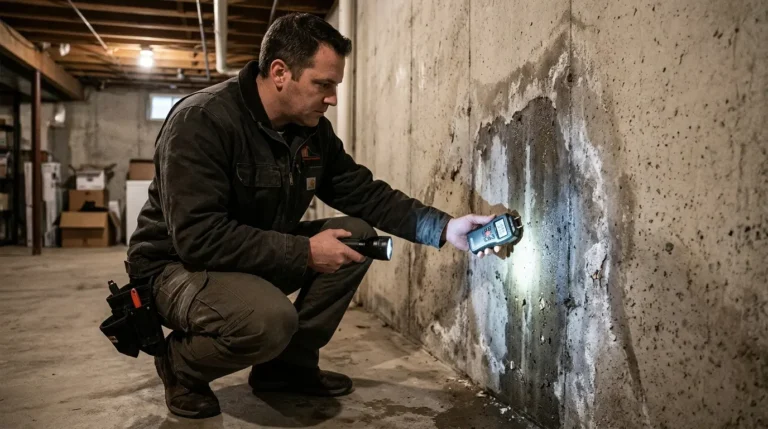
Is the water showing up in one spot, or all over? Check for stains, a musty smell, finishes that are peeling, and white chalky deposits on concrete or block. These signs can show where moisture has been present, though they do not confirm the cause by themselves.
Photos taken after storms can be particularly useful. If you document the yard, downspouts, window wells, and interior damp areas, you may begin to see a pattern. Share those observations with a contractor during an assessment.
Do not confuse drainage problems with every basement moisture issue
Poor yard drainage can contribute to water entering a basement, but not every damp basement is caused by outdoor runoff. A dripping pipe, a loose appliance hookup, or an aging water heater can all leave water on the floor. And when the air indoors is humid, moisture can condense on anything cold.
So check around the plumbing too. Damp spots near a sink, a bathroom, the laundry area, or the water heater mean it’s time to call a plumber. If you see beads of water on pipes or windows on muggy days, you’re probably looking at condensation.
A dehumidifier is fine for keeping humidity down. It won’t stop water from running toward your foundation, and it won’t fix a leaky pipe. Identifying the source first helps prevent homeowners from relying on a fix that only addresses part of the problem.
Address drainage before finishing the basement
If you are planning to remodel a basement, investigate recurring moisture before installing flooring, insulation, drywall, or built in storage. New finishes can make it harder to see a developing problem and may need repair if water continues to enter.
Start by noting what happens outdoors during rain. Look over the gutters, downspouts, grading, low spots, and window wells. Then match what you saw outside with where the water shows up inside. If the water keeps coming or you still can’t tell why, have a qualified pro look at the property and lay out your options.
Homeowners can discuss their observations with a local specialist, such as ACM Basement Waterproofing, and ask how the proposed work addresses the source and path of the water.
Choose a solution that fits the property
What you should do really comes down to what the inspection turns up. For some houses, better gutters or regrading the yard is enough. Others may require a foundation or basement waterproofing solution. If plumbing or condensation is involved, those issues should be addressed directly.
Ask a contractor to explain the evidence behind a recommendation, which areas the work will cover, and whether any drainage improvements should happen first. If you receive different recommendations, compare the reasoning and scope of each proposal, not only the equipment or price.
Keep drainage in the maintenance routine
Once the repairs are done, keep an eye on the gutters and downspouts, especially ahead of the rainy season and in the fall when leaves come down. Watch for changes in the yard that could redirect water toward the home. After a major storm, look for new pooling, erosion, or moisture inside the basement.
A wet basement can sometimes be connected to water that is not draining away from the home. Checking the yard, roof drainage, and window wells can reveal useful clues before a waterproofing system is selected. Finding the source first helps homeowners plan repairs that address the actual conditions around their home.

Related Posts