Bamboo Flooring Pros and Cons: Costs, Hardness & Care Guide
Bamboo flooring runs Janka hardness ratings from 1,180 up to 5,000+ pounds-force (lbf), costs $3 to $9 per square foot ($32 to $97 per square meter) in materials, and resists insects on its own. It also absorbs moisture, needs real humidity control, and swings wildly in quality from one manufacturer to the next. If you’re weighing bamboo against hardwood or luxury vinyl plank (LVP), you need both sides of that trade, not the highlight reel. Below are the actual numbers: hardness scores, price ranges, formaldehyde standards, and which rooms bamboo handles well versus which ones it doesn’t.
What Is Bamboo Flooring?
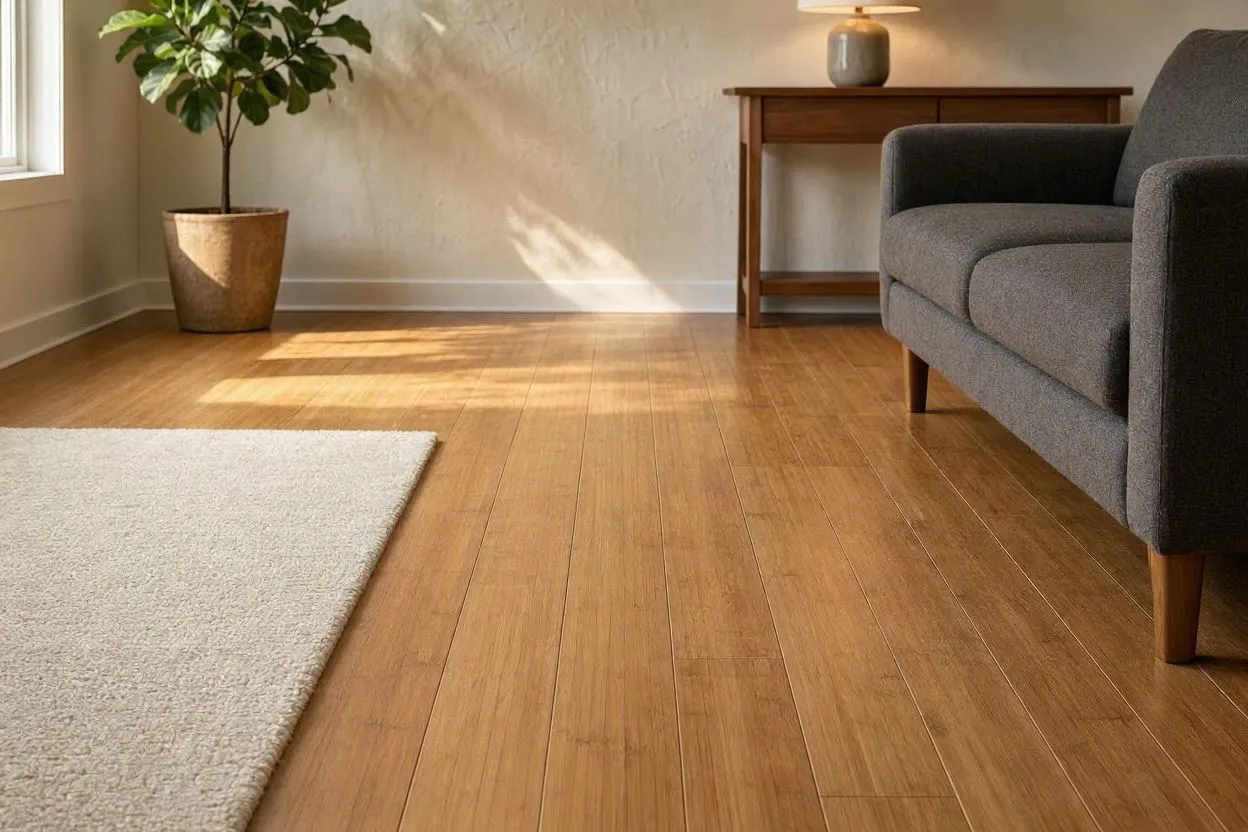
Bamboo flooring is an engineered wood-alternative made by slicing, boiling, and pressing bamboo grass strips into planks with resin binders. Manufacturers harvest bamboo culms, boil or steam out the starches and sugars, dry the strips, then press them into boards. Unlike oak or maple, bamboo isn’t a tree. It’s a grass, and that one biological fact drives most of what follows in this guide.
A bamboo stalk hits full height in three to four months. Full density and hardness take longer, three to seven years depending on species and growing conditions, but that’s still a fraction of the 20 to 120 years a hardwood tree needs to mature.
The Three Types of Bamboo Flooring
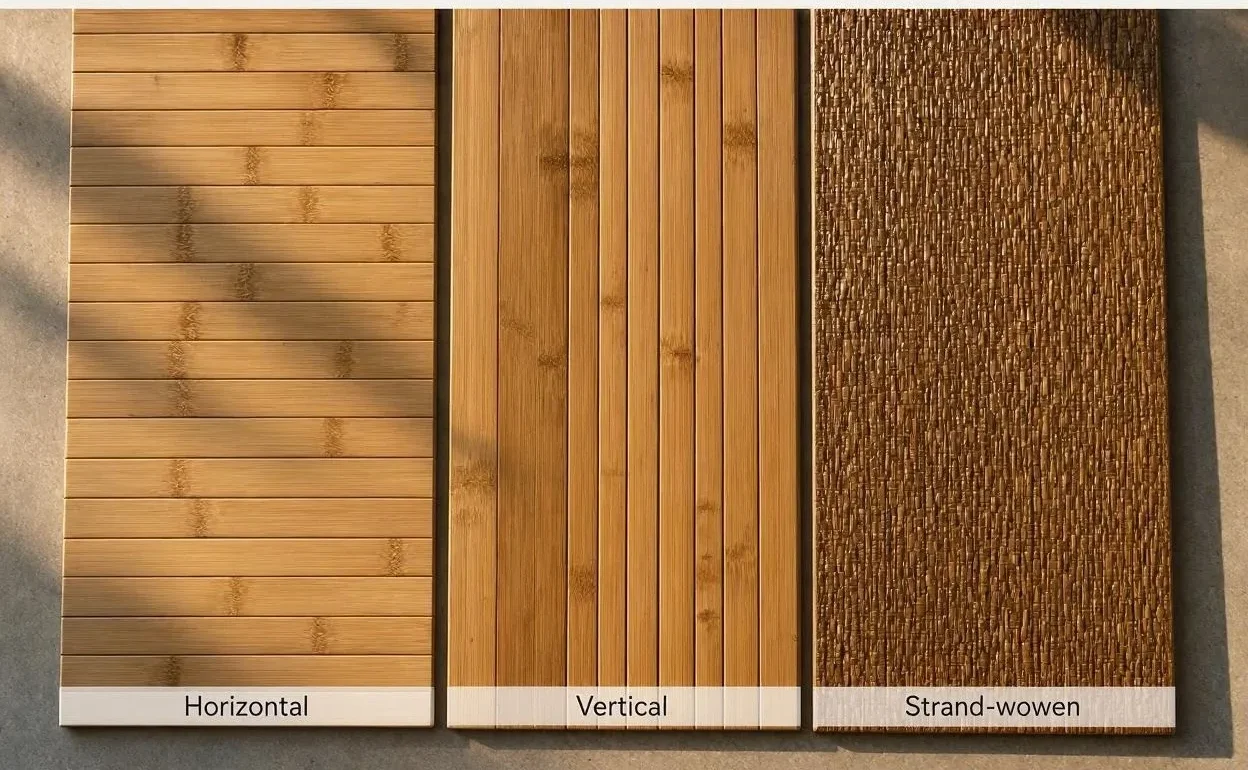
Bamboo flooring comes in three constructions, and each one changes the hardness, look, and price.
- Horizontal bamboo – strips laid flat, showing visible “knuckles” (the natural growth nodes on the bamboo stalk)
- Vertical bamboo – strips turned on edge for a uniform, striped look with fewer visible nodes
- Strand-woven bamboo – shredded bamboo fibers compressed under high pressure with resin, the hardest and priciest option
Strand-woven bamboo dominates the current US market because of that hardness advantage. Horizontal and vertical bamboo sit closer to standard hardwood in both density and price.
Bamboo Flooring Pros
How Hard Is Bamboo Flooring? (Janka Rating Data)
Strand-woven bamboo scores 3,000 to 5,960 lbf on the Janka hardness scale. Compare that to 1,290 lbf for red oak and 1,450 lbf for hard maple, and it’s easy to see why strand-woven sits among the hardest flooring materials sold in the US. Horizontal and vertical (natural, uncarbonized) bamboo score lower, typically 1,380 to 1,600 lbf, still competitive with oak but nothing dramatic.
Carbonization changes the math. That darkening process, done with heat treatment, softens the fiber structure and drops the Janka rating to roughly 1,180 to 1,300 lbf. A darker floor usually means a softer floor. If you’re picking a color over hardness, weigh that trade-off before you order samples.
Is Bamboo Flooring a Sustainable Choice?
Yes, bamboo ranks among the more renewable flooring materials out there, provided the manufacturer sources it responsibly. Bamboo regrows from its own root system after harvest. Hardwood trees don’t do that; they need replanting and decades to come back. A single bamboo grove can be harvested on a five-to-seven-year cycle indefinitely, without the deforestation impact tied to slow-growing hardwood species like teak or Brazilian cherry.
Sustainability claims fall apart fast without third-party verification, though. Forest Stewardship Council (FSC) certification confirms a supplier’s bamboo comes from managed, non-destructive harvesting. Skip that certification check and you’re trusting the label alone, and greenwashing shows up often enough in this category that the risk is real.
How Does Bamboo Flooring Cost Compare to Hardwood?
Bamboo flooring materials run $3 to $9 per square foot ($32 to $97 per square meter) in the US, versus $6 to $18 per square foot ($65 to $194 per square meter) for solid hardwood. Installation labor adds another $2 to $5 per square foot ($22 to $54 per square meter) no matter which material you pick. A 500-square-foot living room (46 square meters) runs roughly $2,500 to $7,000 in bamboo materials and labor combined, versus $4,000 to $11,500 for solid oak.
| Cost Factor | Bamboo Flooring | Solid Hardwood (Oak) |
| Material cost per sq ft | $3-$9 | $6-$18 |
| Material cost per sq meter | $32-$97 | $65-$194 |
| Installation labor per sq ft | $2-$5 | $2-$5 |
| Installation labor per sq meter | $22-$54 | $22-$54 |
| Total for 500 sq ft (46 sq m) room | $2,500-$7,000 | $4,000-$11,500 |
Strand-woven bamboo sits at the top of that range because of the extra manufacturing step. Basic horizontal or vertical bamboo lands closer to laminate pricing, which makes it one of the few flooring categories offering hardwood-level hardness at a laminate-adjacent price.
Is Bamboo Flooring Easy to Maintain?
Yes. Regular sweeping or vacuuming plus the occasional damp mop is really all it takes. A microfiber mop with a pH-neutral hardwood cleaner handles most spills and everyday grime. Steam mops and standing water are the two things to skip, since both push moisture into the seams between planks and speed up the warping risk covered below.
Pet owners get a bonus here too: bamboo’s smooth, tight grain doesn’t trap dander and allergens the way carpet fiber does, which matters if anyone in the house deals with allergies.
Can Bamboo Flooring Be Refinished?
Yes. Solid and thick-wear-layer bamboo planks can be sanded and refinished one to three times over their lifespan, depending on wear layer thickness. A 6-millimeter (0.24-inch) wear layer supports light refinishing, while thicker strand-woven planks, often 10 to 14 millimeters (0.4 to 0.55 inches), can take more aggressive sanding. Engineered bamboo with a thin veneer top layer is a different story; it often can’t be refinished at all without sanding straight through to the plywood core.
Bamboo Flooring Cons
Is Bamboo Flooring Waterproof?
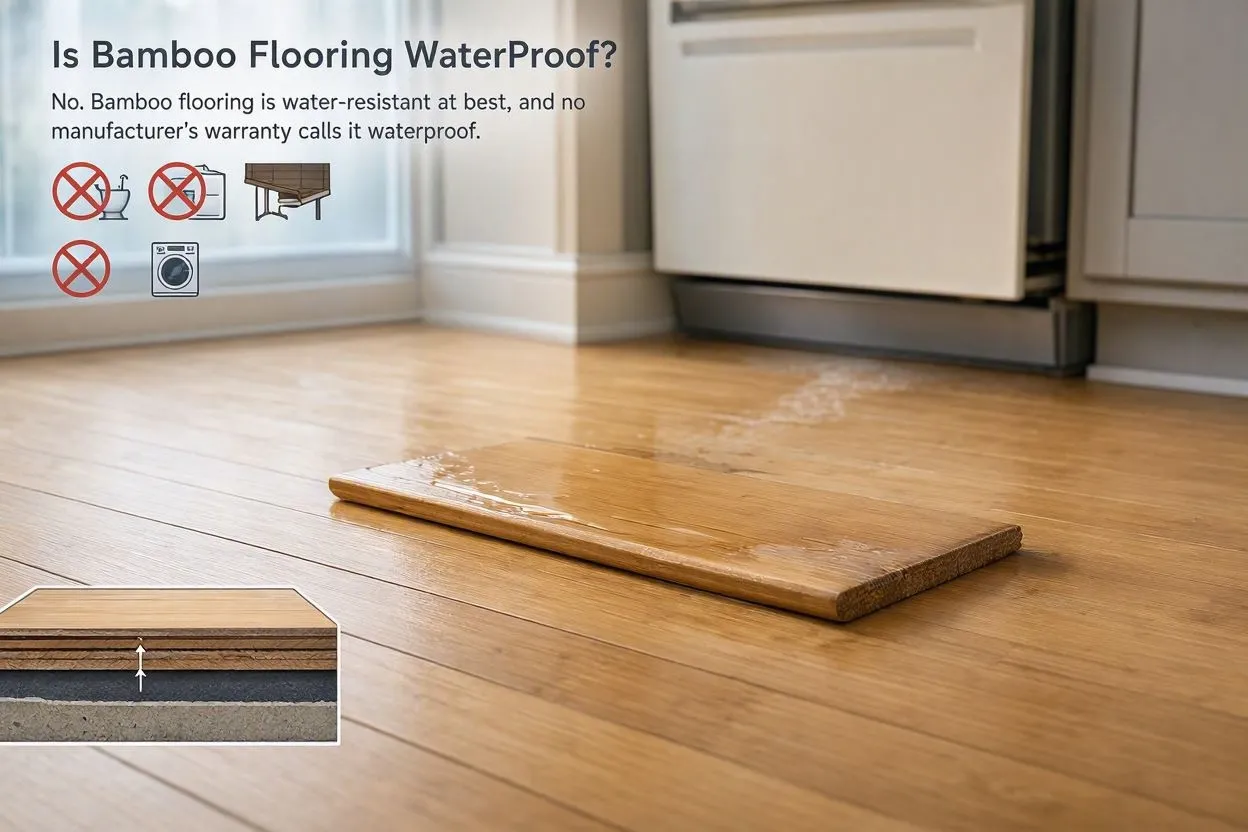
No. Bamboo flooring is water-resistant at best, and no manufacturer’s warranty calls it waterproof. Standing water left on a bamboo floor for more than a few hours typically causes swelling, cupping, or discoloration. A dishwasher leak that goes unnoticed overnight can permanently warp planks in that same window. Bathrooms, laundry rooms, and below-grade basements remain poor fits for bamboo unless the installer adds a moisture barrier and you’re willing to accept the added risk.
How Does Humidity Affect Bamboo Flooring?
Bamboo planks expand in humid conditions and contract in dry ones, and either extreme can cause gapping or cracking. The material performs best in homes holding 35% to 55% relative humidity, which happens to be roughly the range most HVAC systems already target for comfort anyway. Homes in humid regions, think Florida, coastal Texas, the Gulf Coast, need consistent air conditioning to keep bamboo stable through summer. Arid climates like Arizona or Colorado cause the opposite problem: excessive dryness can shrink planks and open up visible seams between boards.
Does Bamboo Flooring Scratch Easily?
Bamboo, including strand-woven varieties, can still scratch and dent despite the high Janka rating, particularly under unprotected furniture legs and pet claws. Felt pads under furniture and trimmed pet nails head off most surface damage. Sand, grit, and dust tracked in from outside act as an abrasive under shoe soles, so a doormat at every entry point does more for long-term wear than any factory coating ever will.
What Are the VOC and Formaldehyde Risks in Bamboo Flooring?
Lower-quality bamboo flooring can off-gas formaldehyde and other volatile organic compounds (VOCs) from the adhesives that bind the bamboo strips together. Urea-formaldehyde adhesives cost manufacturers less than phenolic resin alternatives, and that cost difference shows up directly in your indoor air quality. Confirm California Air Resources Board Phase 2 (CARB2) compliance or Toxic Substances Control Act (TSCA) Title VI certification before buying; both are formaldehyde emission standards that have applied to composite wood products sold in the US since 2018. Products without either certification come with no legal guarantee on emission limits.
Does Bamboo Flooring Have a Standardized Grading System?
No, and this trips up more buyers than it should. There’s nothing comparable to the grading standards used for hardwood species. Two planks labeled “premium strand-woven bamboo” from different manufacturers can differ substantially in Janka hardness, adhesive type, and harvest maturity, and no regulatory body enforces consistent labeling across the category. That puts the research burden on you: check harvest age, adhesive disclosure, and third-party lab testing documentation before you buy, rather than trusting marketing language.
Bamboo Flooring vs. Hardwood, Laminate, and LVP
| Material | Janka Hardness (lbf) | Cost per sq ft (materials) | Water Resistance | Refinishable |
| Strand-woven bamboo | 3,000-5,960 | $5-$9 | Moderate | Yes (1-3 times) |
| Red oak hardwood | 1,290 | $6-$12 | Low | Yes (3-5 times) |
| Laminate | 1,700-2,500 (surface rating) | $2-$8 | Moderate-High | No |
| Luxury vinyl plank | N/A (scratch resistance varies) | $2-$7 | High (often waterproof) | No |
Homeowners chasing hardness per dollar tend to land on strand-woven bamboo. Those who want guaranteed water resistance in kitchens or bathrooms generally go with LVP instead, since no bamboo product currently carries a waterproof warranty.
How to Choose Quality Bamboo Flooring
Picking a durable bamboo floor comes down to four checkpoints. Skip any one of them and you raise your odds of a disappointing installation.
- Confirm harvest age. Bamboo harvested before five years of growth produces softer, less stable flooring, no matter what the marketing on the finished plank claims.
- Request adhesive documentation. Phenolic resin adhesives cost more but emit far less formaldehyde than urea-based alternatives.
- Verify CARB2 or TSCA Title VI compliance. Either certification confirms the product meets US formaldehyde emission limits.
- Check for FSC certification. Third-party forest management verification is what separates genuine sustainability claims from greenwashing.
A supplier that won’t hand over documentation on any of these four points is one to walk away from, regardless of price or looks.
Where to Install Bamboo Flooring in a US Home
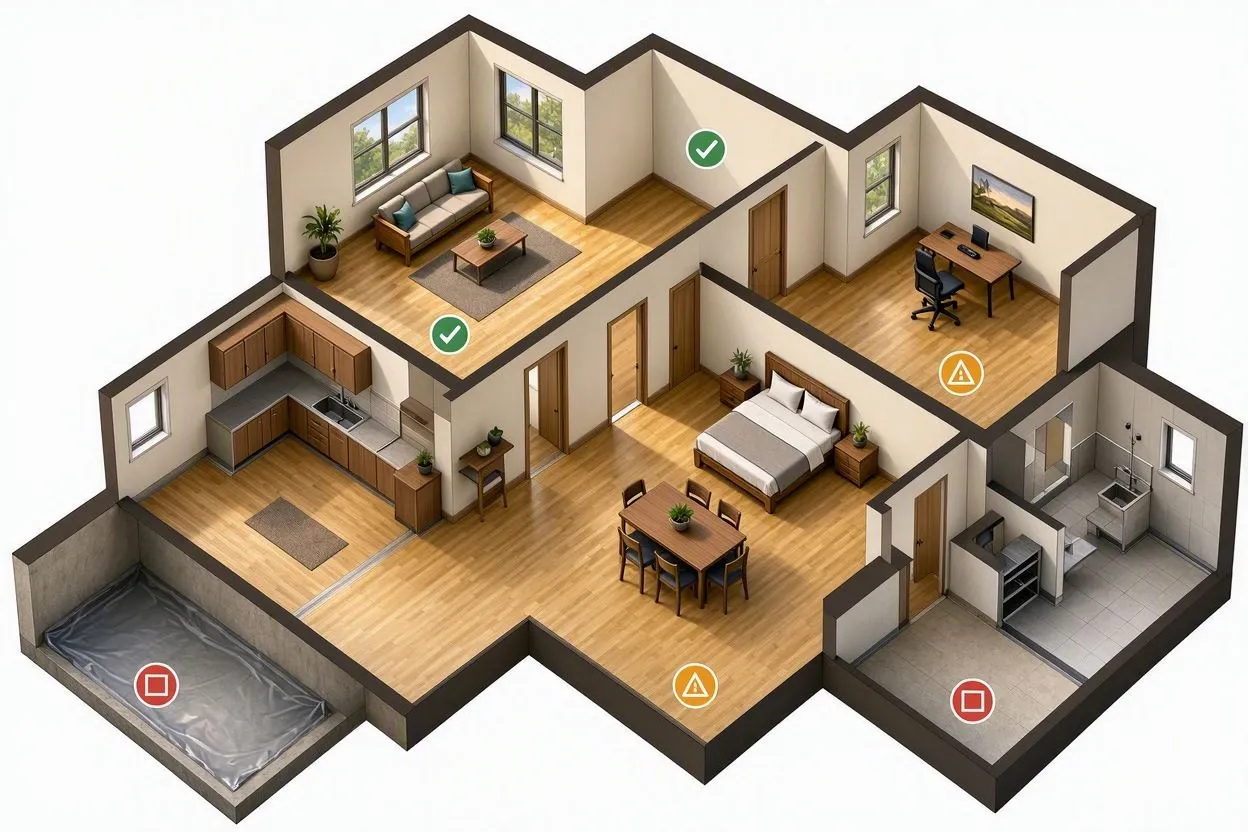
Living rooms, bedrooms, dining rooms, and hallways all suit bamboo well, since foot traffic stays moderate and moisture exposure stays low. Climate-controlled home offices work just as well, and bamboo’s acoustic properties actually dampen sound better than tile or LVP in that setting.
Bathrooms, laundry rooms, and below-grade basements sit at the opposite end. Kitchens fall into a gray zone: bamboo can work there with a sealed installation and quick spill cleanup, but one missed dishwasher leak carries a lot more consequence than it would with LVP or tile underfoot.
Does Bamboo Flooring Increase Home Value?
Yes, in roughly the same way hardwood does. Buyers tend to see it as a premium, natural material rather than a budget substitute. Listings that specify “bamboo hardwood flooring” tend to draw buyer interest comparable to oak or maple listings, especially in markets where sustainability messaging resonates with younger buyers. Appraisers, for their part, usually don’t distinguish bamboo from hardwood on paper. The value boost comes from buyer perception during showings, not a separate line item on the appraisal.
Conclusion
Bamboo flooring pros and cons ultimately come down to one trade: hardness-per-dollar against moisture vulnerability. Strand-woven bamboo beats red oak’s Janka score by more than double at a lower average price per square foot, and it holds up in living rooms, bedrooms, and hallways for decades as long as humidity stays between 35% and 55%. Kitchens, bathrooms, and basements are still the wrong call regardless of what the warranty promises, since no bamboo product on the US market is rated waterproof. The buyers who end up happy with the choice are the ones who checked harvest age, adhesive type, and CARB2 or TSCA Title VI certification before ordering, not the ones who picked based on sample color alone.
FAQs

Rachel Park
Rachel Park leads ConstructionSpedia’s sustainability, roofing, and building materials content. She holds a Master of Science in Sustainable Building Systems from the University of California, Berkeley and is a LEED Accredited Professional (LEED AP BD+C).
With over 10 years of experience in commercial and residential construction, Rachel specializes in roofing systems, sustainable building practices, energy-efficient materials, waterproofing, insulation, and building performance. At ConstructionSpedia, she researches, reviews, and publishes expert content on roofing, construction, home improvement, and green building to help homeowners and industry professionals make informed decision
Related Posts