Types of Waterproofing: Methods, Materials & Costs
Waterproofing methods and materials are the building products contractors specify to keep water out of a structure, and the right choice always comes down to matching material to substrate, exposure, and movement. This guide covers the three application methods used across the construction industry (positive side, negative side, and blind side), the nine waterproofing materials most commonly stocked by building material suppliers in the United States, and the installed costs contractors and property owners should expect to budget for each one.
What Is Waterproofing in Construction?
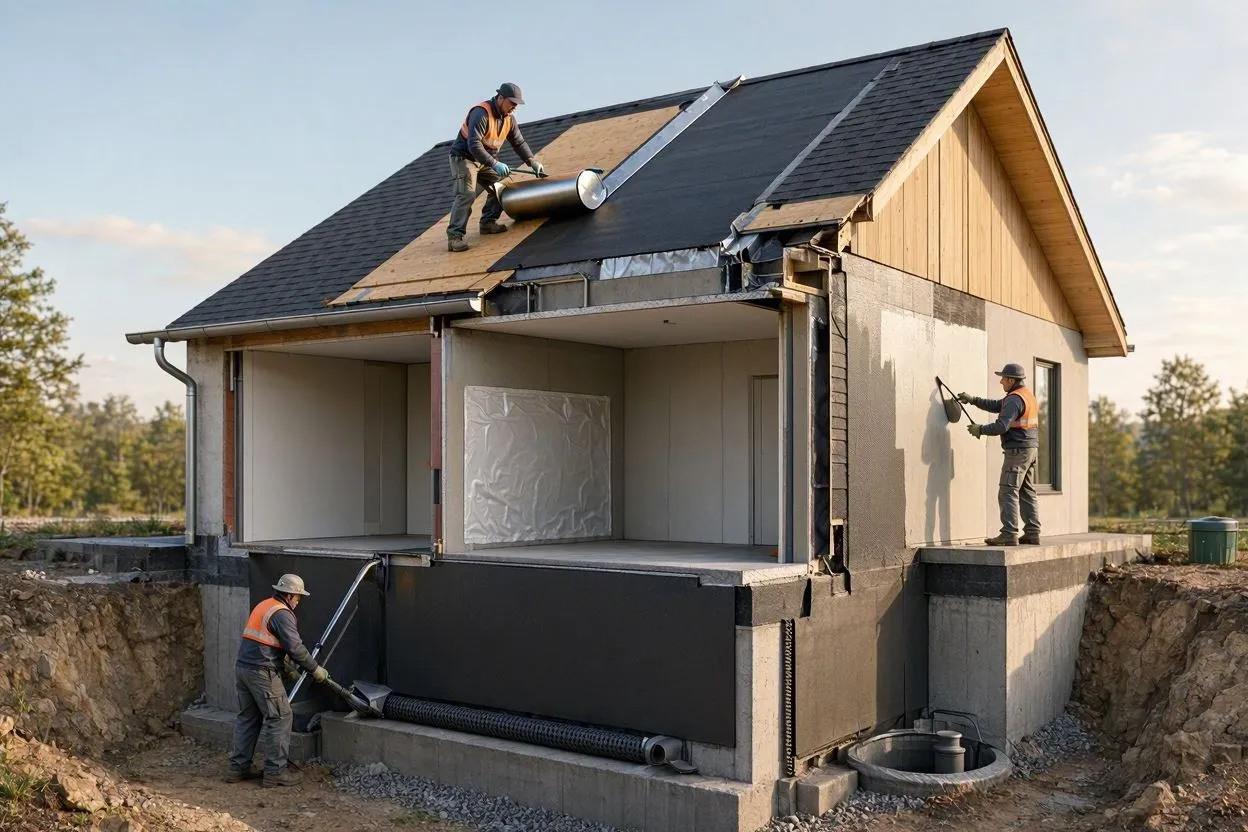
Waterproofing is the process of applying a building material, membrane, or coating to a structure so water can’t pass through it. Contractors and construction crews use waterproofing products on roofs, foundations, basements, decks, and walls to block moisture before it reaches structural steel, wood framing, or interior finishes. The right waterproofing material depends on the water source (rain, groundwater, or standing water) and how much the substrate moves under hydrostatic pressure or temperature swings. A parking garage foundation eight feet underground behaves nothing like a rooftop deck that expands and contracts between winter and summer, which is why building material suppliers stock multiple categories of waterproofing product rather than a single universal solution.
What Are the Main Types of Waterproofing Methods?
The three main waterproofing methods used in the construction and building trades are positive side, negative side, and blind side, and each one is defined by where the waterproofing membrane sits relative to the water source. Contractors select a method based on site access and construction sequencing, not personal preference. New construction projects usually allow positive side application, while repair and maintenance work on occupied buildings often forces a negative side approach instead.
| Method | Membrane Placement | Typical Use Case | Access Required |
| Positive Side | Exterior face, directly against the water source | New construction, exposed foundations | Full excavation access |
| Negative Side | Interior, dry side of the wall | Retrofits, buried exteriors, occupied buildings | Interior access only |
| Blind Side | Installed before the concrete pour, against shoring or lagging | High-rises at property lines with no exterior access | Access before the pour, not after |
Positive Side Waterproofing
Positive side waterproofing places the membrane on the exterior face of the structure, directly against the water source. Construction crews apply the waterproofing material before backfilling a foundation wall, so it blocks water before that water ever reaches the concrete substrate. This method requires full excavation access, which is why it’s standard practice on new builds or projects where the building envelope is already exposed. Cementitious systems, sheet membranes, and fluid-applied membranes, three of the most widely stocked waterproofing building materials, can all be installed on the positive side.
Negative Side Waterproofing
Negative side waterproofing applies the waterproofing coating to the interior, or dry side, of the wall. Contractors specify this method when the exterior of a foundation is buried under an existing driveway, an adjacent structure, or finished landscaping, and re-excavating the site isn’t practical. Cementitious coatings dominate the negative side segment of the building materials market because they resist hydrostatic pressure and stay breathable, letting water vapor escape without trapping moisture behind the coating.
Blind Side Waterproofing
Blind side waterproofing installs the membrane before the concrete is poured, sandwiching the building material between the new wall and an adjacent structure or shoring system. A high-rise built right up against a property line, with no room to access the exterior after construction, is the textbook case in commercial construction. Crews attach the membrane to lagging or a shoring wall, then pour concrete directly against it. The membrane bonds to the fresh concrete and self-seals around small punctures as the concrete cures, a property that makes it a preferred building material for dense urban construction sites.
What Are the Types of Waterproofing Materials?
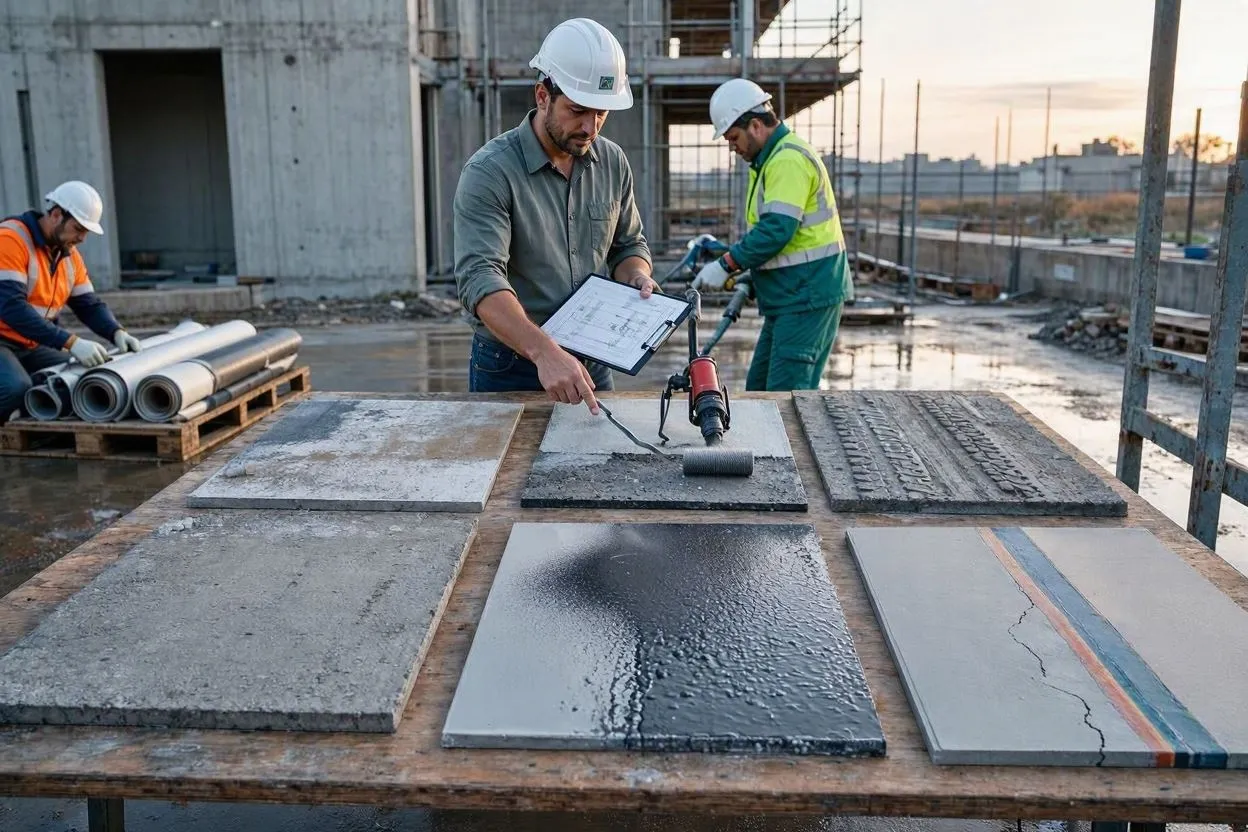
Nine building materials cover most waterproofing projects in the United States construction supply chain: cementitious coating, polyurethane, bituminous membrane, EPDM rubber, PVC membrane, TPO membrane, acrylic coating, silicone coating, and spray polyurea. Each waterproofing product trades off installed cost, flexibility, and long-term durability differently, and specifying the wrong material for a moving joint or a sun-exposed roof can shorten a 20-year building system to five.
| Material | Installed Cost | Lifespan | Flexibility | Best For |
| Cementitious Coating | $2–$4 / sq ft | 5–10 yr warranty | Rigid, cracks with substrate | Basements, crawl spaces, water tanks |
| Polyurethane Liquid Membrane | ~$10 / sq m | 15–20 yr warranty | Highly elastic, bridges cracks | High-traffic decks, chemical exposure |
| Bituminous Membrane | $2.73–$5.21 / sq ft | 10–20 yr | Self-healing, UV-sensitive | Low-slope roofs, below-grade walls |
| EPDM Rubber Membrane | $3.25–$15 / sq m | 25–30 yr | Flexible across temperature swings | Low-slope and flat roofs |
| PVC Membrane | ~$55 / linear ft | 20+ yr | Rigid but puncture- and UV-resistant | High-traffic, chemically exposed roofs |
| TPO Membrane | Lower than PVC | 20+ yr | Moderate, reflective finish | Low-slope commercial roofs |
| Acrylic Coating | Low, among the cheapest | Shorter, sun-stable | Can’t bridge large cracks | Sunny sloped roofs, decks |
| Silicone Coating | Mid-range | Long, holds up to ponding | Rigid, slick when wet | Flat roofs with standing water |
| Spray Polyurea | Highest of the nine | 15–20+ yr | Highly abrasion- and impact-resistant | Parking structures, high-traffic decks |
Cementitious Waterproofing
Cementitious waterproofing is a powdered building material, a mix of sand, cement, and additives, that becomes a rigid, water-blocking coating once mixed with water and applied to a concrete or masonry substrate. Contractors and building material suppliers favor it for basements, crawl spaces, water tanks, and tunnels because it costs between $2 and $4 per square foot installed and doesn’t require specialized application equipment. The tradeoff shows up in flexibility: if the substrate cracks or shifts, the cementitious coating cracks right along with it, since the material doesn’t stretch or bridge structural movement the way a liquid-applied membrane does.
Polyurethane Liquid Membrane
Polyurethane liquid membrane is a fluid-applied waterproofing material that cures into a seamless, highly elastic barrier over a concrete substrate. It penetrates into the surface pores of the concrete, cutting water absorption at a deeper level than surface-only coatings achieve, and it stretches enough to bridge cracks up to several millimeters wide. Material and application costs run around $10 per square meter, a mid-tier price point in the waterproofing building materials category. Polyurethane also resists oils, detergents, and de-icing chemicals better than most competing products, though cure time runs longer than acrylic or cementitious systems, and installers need proper site ventilation because the product carries higher levels of volatile organic compounds (VOCs).
Bituminous Membrane
Bituminous membrane is a sticky, viscous waterproofing sheet material made from bitumen combined with polymers, fillers, and reinforcing fiber, a staple product line among roofing and building material suppliers. Roofing crews torch-apply or self-adhere it to low-slope roofs, and it’s a standard specification for below-grade walls in both commercial and residential construction. Installed cost sits between $2.73 and $5.21 per square foot. The membrane is self-healing on small punctures, since the bitumen re-flows slightly under heat, but sunlight breaks the material down over time unless a protective cap sheet or coating covers it. It’s also not a renewable building material, since it’s derived from crude oil.
EPDM Rubber Membrane
EPDM rubber membrane, short for Ethylene Propylene Diene Monomer, is a synthetic rubber roofing material used mainly on low-slope and flat commercial roofs. It’s manufactured in two standard thicknesses, 45 mils and 60 mils, and stays flexible through repeated expansion and contraction cycles caused by temperature swings on the building envelope. Pricing ranges from $3.25 to $15 per square meter depending on thickness and manufacturer. A single EPDM membrane can last 25 to 30 years in service when seams are properly welded by a trained installation crew; poor seam work is the most common cause of early product failure in the field.
PVC Waterproofing Membrane
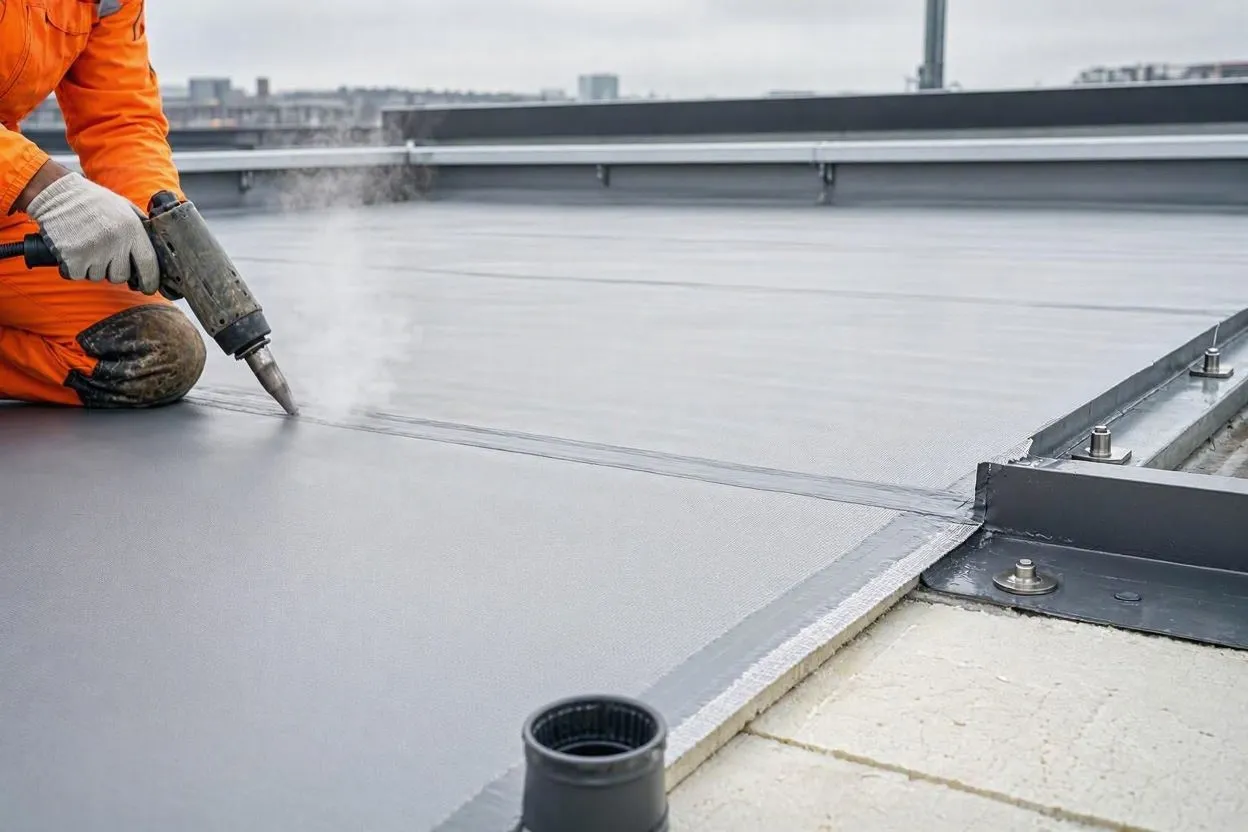
PVC waterproofing membrane, made from Polyvinyl Chloride, is a heat-welded sheet material specified on roofs that need both water resistance and vapor permeability. Manufacturers reinforce the material with polyester scrim for added durability on high-traffic or mechanically fastened installations, and welded seams create a continuous, watertight roofing surface rather than relying on adhesive alone. Material cost runs around $55 per linear foot of membrane, placing PVC at the premium end of the commercial roofing materials category. In exchange, the product resists chemical exposure, punctures, and UV degradation for 20 years or longer.
TPO Membrane
TPO membrane, or Thermoplastic Polyolefin, is a single-ply roofing material that combines the heat-weldability of PVC with a lower material cost. Manufacturers reinforce it with polyester fabric and finish it in reflective white, gray, or tan to reduce roof surface temperature and cooling load, an energy-efficiency feature that has helped drive demand across the commercial building supply market. TPO has become one of the most widely installed low-slope commercial roofing membranes in the United States over the past decade, largely because it costs less than PVC while offering comparable seam strength. Formulation quality varies between manufacturers, though, and lower-grade TPO sheets are more prone to seam splitting after a decade of UV exposure.
Acrylic Coating
Acrylic coating is a water-based waterproofing product that dries into a flexible, UV-stable film over roofing, decking, and foundation substrates. It’s applied with a roller, sprayer, or trowel, standard building-trade application equipment, and dries fast enough to walk on within hours, which shortens installation timelines on occupied buildings. Acrylic runs low in VOCs and holds up well under direct sun, but it can’t bridge large substrate cracks and isn’t durable enough for garage floors or areas with regular chemical exposure. A homeowner sealing a sunny rooftop deck in Phoenix, Arizona gets strong performance from an acrylic building material; a warehouse loading dock with forklift traffic does not.
Silicone Coating
Silicone coating is a high-solids, single-coat waterproofing product built specifically for flat commercial roofs that hold standing water. Unlike acrylic, silicone doesn’t degrade when water pools on the roofing substrate, and it reflects close to 90 percent of sunlight, cutting rooftop surface temperatures and lowering building cooling costs in warm climates. The coating contains no solvents and stays low in VOCs, but it turns dangerously slick when wet and attracts dirt faster than competing roof coating products, adding a cleaning step to routine building maintenance.
Spray Polyurea Coating
Spray polyurea coating is a fast-curing elastomeric waterproofing material applied with plural-component spray equipment, forming a fully cured, walkable surface within minutes rather than hours. Industrial and commercial contractors specify it on secondary containment, parking structures, and high-traffic decks because the material resists abrasion, chemical exposure, and impact better than acrylic or cementitious building products. That rapid cure time cuts construction project downtime significantly compared to polyurethane, which can take a full day to cure between coats. The tradeoff: equipment and labor costs run higher than most other waterproofing systems, and application requires trained, certified installers rather than a general construction crew.
Above-Grade vs. Below-Grade Waterproofing: What Is the Difference?
Below-grade waterproofing protects building structures in direct contact with soil and groundwater. Above-grade waterproofing protects exposed building surfaces from rain, humidity, and temperature swings.
| Factor | Below-Grade | Above-Grade |
| Water source | Groundwater, hydrostatic pressure | Rain, humidity, condensation |
| Typical surfaces | Foundation walls, basements, tunnels | Roofs, exterior walls, balconies |
| Primary defense | Continuous membrane rated for hydrostatic pressure | Air barriers and moisture barriers |
| Exposure pattern | Constant | Intermittent |
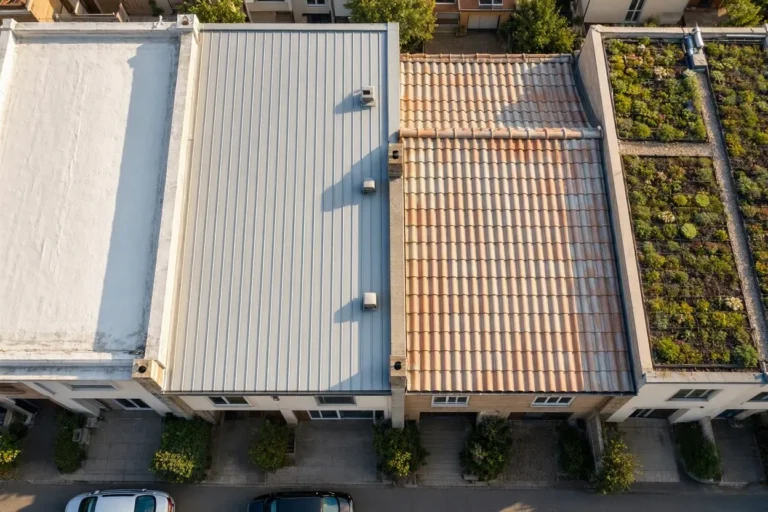
| Common building materials | Cementitious coating, bituminous membrane, sheet membrane | Acrylic, silicone, TPO, PVC |
| Edge case | Parking garages, tunnels | Green roofs, plaza decks over occupied space |
A foundation wall eight feet underground faces constant pressure pushing groundwater toward the structure, so it needs a continuous, hydrostatic-pressure-rated membrane. A rooftop or exterior wall only faces intermittent rain and UV exposure and typically relies on air and moisture barrier building products instead. Parking garages and green roofs blur that line in commercial construction. If a structure combines below-grade contact with heavy above-grade traffic or planting soil, structural engineers often specify a below-grade-rated membrane even though the building surface sits above ground.
How Do You Choose the Right Waterproofing System?
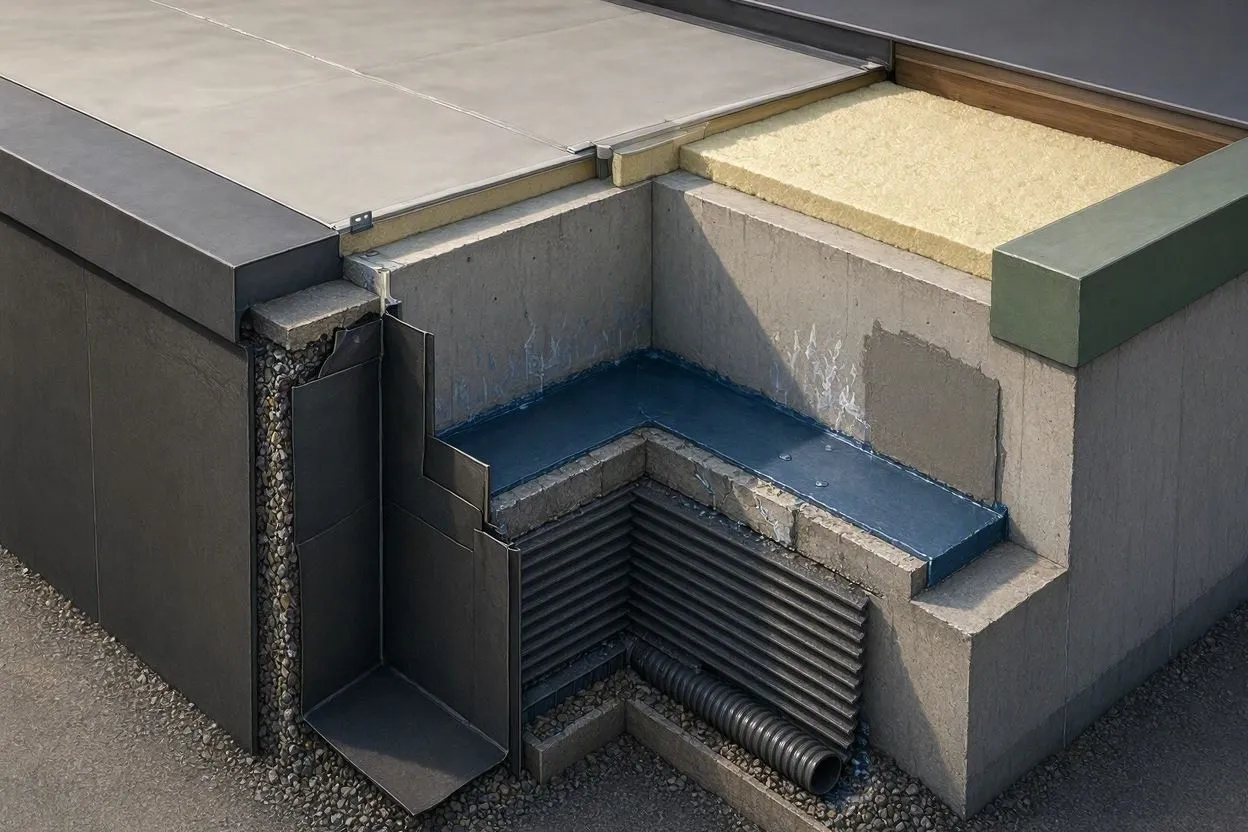
Choosing the right waterproofing system for a construction project means matching six factors to the building material: substrate type, water exposure level, movement and cracking, sun exposure, foot or vehicle traffic, and surface preparation quality. Skip any one of these during material selection, and you’ve got the most common reason waterproofing systems fail early on the job site, according to industry reports on coating failures.
- Substrate: Concrete, masonry, wood decking, and existing roofing membranes each bond differently, and a coating rated for concrete substrates may not adhere to a plywood deck.
- Water exposure: Occasional rain calls for a different building material than constant groundwater contact or standing water on a flat roof.
- Movement and cracking: Rigid materials like cementitious coating crack under structural movement, while polyurethane and silicone stretch to accommodate it.
- Sun exposure: UV-stable materials such as acrylic and silicone hold up outdoors for decades; unprotected bituminous membrane degrades within a few years under direct sun.
- Traffic: Silicone becomes hazardous underfoot when wet, so decks and walkways need polyurethane, spray polyurea, or a slip-resistant topcoat instead.
- Surface preparation: Even a premium building material fails prematurely if installers apply it over a contaminated, wet, or poorly cleaned substrate.
A property manager waterproofing a 15-year-old parking structure in Chicago, Illinois would rule out acrylic immediately because of vehicle traffic, then weigh polyurethane against spray polyurea based on how much downtime the garage can tolerate during the construction project.
How Much Does Waterproofing Cost?
Waterproofing costs, as stocked and priced by building material suppliers, range from $2 per square foot for basic cementitious coating to $55 per linear foot for premium PVC roofing membrane, with most residential and commercial construction projects landing between $3 and $15 per square foot. Material cost is only part of the total project price, though. Labor, surface preparation, primer, and access equipment often add 30 to 50 percent on top of material cost alone.
Warranty length offers a useful cost comparison across building material categories. Cementitious and bituminous systems typically carry 5- to 10-year manufacturer warranties, while silicone and polyurethane systems often reach 15 to 20 years. A lower upfront price on a short-warranty building material can end up costing more over a 20-year period than a premium system installed once, particularly on a roof or foundation where re-access means tearing out finished construction work.
Conclusion
Waterproofing methods and materials cover nearly every building surface a contractor, builder, or homeowner encounters, from a below-grade foundation wall to a sun-scorched commercial roof. The right building material choice always traces back to three questions: where is the water coming from, how much does the substrate move, and how much traffic or sun exposure will the finished construction system face? A basement in Ohio needs a different waterproofing specification than a parking deck in Nevada. Matching the building material to those specific site conditions, not to the lowest price tag, is what determines whether a waterproofing system lasts five years or twenty-five.
FAQs

Rachel Park
Rachel Park leads ConstructionSpedia’s sustainability, roofing, and building materials content. She holds a Master of Science in Sustainable Building Systems from the University of California, Berkeley and is a LEED Accredited Professional (LEED AP BD+C).
With over 10 years of experience in commercial and residential construction, Rachel specializes in roofing systems, sustainable building practices, energy-efficient materials, waterproofing, insulation, and building performance. At ConstructionSpedia, she researches, reviews, and publishes expert content on roofing, construction, home improvement, and green building to help homeowners and industry professionals make informed decision
Related Posts